
- What is Performance Management Software?
- How to Choose the Right Performance Management Software in 2026
- Why Businesses Need Performance Management Software
- How Performance Management Software Works
- Key Features of Performance Management Software
- Benefits of Using Performance Management Software
- Types of Performance Management Software
- Cost of Performance Management Software
- Common Challenges in Performance Management Systems
- Conclusion
- Frequently Asked Questions (FAQs)
According to research by Gartner, organizations are increasingly adopting AI-driven HR technologies to improve performance management, workforce analytics, and employee engagement. That being said, 2026 is certainly the year of automation, especially for businesses. Every crucial business aspect is being digitized, and performance management is one of those.
Companies rely upon automated performance management systems to track employee performance, share feedback, and improve workforce productivity.
Modern performance management tools are powered by AI, analytics, and automation. This guide explains all about performance management software, its features, benefits, costs, and how to select one.
What is Performance Management Software?
Performance management software is a digital HR tool that helps organizations to evaluate, track, and share feedback and conduct performance reviews regularly.
The software is designed to ensure that the employee performs at their best potential and contributes to the business growth. It further helps companies to align performance with their objectives and expansion goals with the help of data and analytics provided by the tool.
The tool can also aid managers in forming an improvement plan by identifying the performance gap and devising training sessions for employees falling behind.
The software usually includes these basic features:
- Goal setting and performance tracking.
- Regular feedback and communication.
- Employee performance data.
- Personalized training and development plans.
- Analytics and dashboard for employees.
How to Choose the Right Performance Management Software in 2026
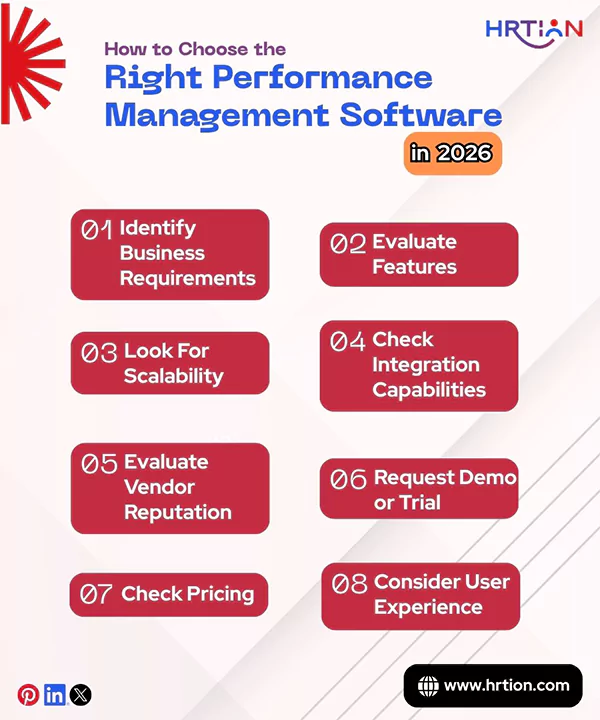
Choosing the right performance management system is essential for optimizing HR efficiency and boosting employee productivity.
1. Identify Business Requirements
The first crucial thing is to identify what your business requires specifically. For example, whether your company needs continuous feedback, improved performance, or goal tracking.
After getting a clear idea of what your business’s objectives are, narrow down the features that align perfectly and find the tool consisting of those features.
2. Evaluate Features
The performance management tool must include a broad range of features fitting your business’s needs. The important features to look for are goal management, feedback tools, performance reviews, and an analytics dashboard. These features will help HR and managers make data-driven decisions.
3. Check Integration Capabilities
The tool you are selecting must be able to integrate with your existing systems, such as HR software, payroll systems, HRIS/HRMS, and recruitment platforms. The ability to sync with other tools and platforms allows management to transfer data automatically, eliminating the need for manual data entry. This improves data accuracy, helping HR to access and manage employee data in one unified system.
4. Consider User Experience
User experience is a non-negotiable aspect when selecting software to manage performance. A user-friendly interface ensures that every user can easily navigate the platform without any technical expertise.
Furthermore, mobile access is another useful feature to have for a better user experience. This empowers employees working from remote locations by sharing reviews and managing goals.
5. Look For Scalability
The tool must be able to scale as your company grows. It must be able to handle an increasing number of users and a complex workflow. This way, one tool works for a longer time, eliminating the hustle of switching platforms.
6. Evaluate Vendor Reputation
Vendor reputation is significant to consider if you are looking for a reliable performance management system. Check customer reviews, industry reports, and certifications to analyze the credibility of the software provider. A vendor with a trustworthy and strong track record can provide you with the support and reliability your staff is seeking.
7. Check Pricing
Pricing models can affect your choice widely. Compare different options that fit in your budget and pick one that offers the best range of features and scalability and is most reputable. Some vendors offer subscription-based planning, whereas others provide tiered fees according to the size of your organization. The plan must offer value and flexibility at the same time.
8. Request Demo or Trial
Demos and trials allow you to explore the features and functionality of the tool. So, test the tool thoroughly before investing in it. The hands-on usage helps you understand if the tool fits your needs. Also, this will help your staff and HR gain confidence in its usability before actually paying a large sum for it.
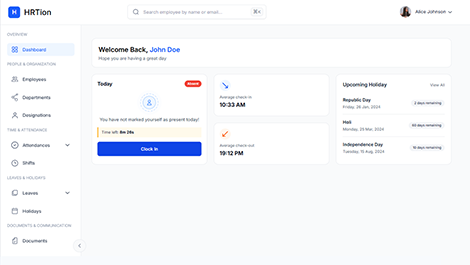
Manage the payroll, attendance, shift roles, and more in an all-encompassing HR suite. Your ultimate HR toolkit is just a click away.
Why Businesses Need Performance Management Software
Organizations today are looking for ways to thrive in a highly volatile and competitive environment. The manual and traditional ways to manage employee reviews through spreadsheets can be inefficient and inaccurate.
Performance management software offers great help to businesses for creating a progressive, people-centric, and supportive environment, resulting in improved productivity and employee growth.
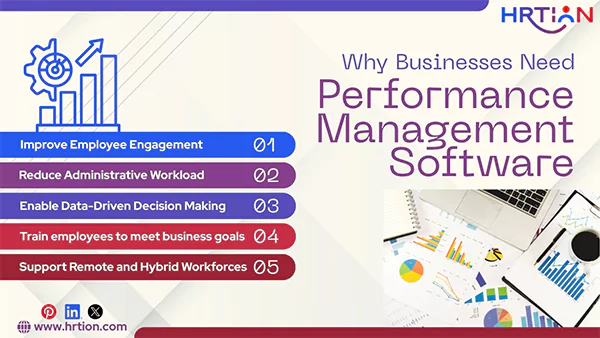
- Train employees to meet business goals
The main purposes of a performance management system are to ensure that employees align their goals with the business’s progress. The tool ensures that the employee and the business have shared objectives. When employees understand how their contributions can contribute to the company’s success, they become more focused and motivated.
- Improve Employee Engagement
With regular feedback and appreciation, the employee feels valued, heard, and seen. The modern tool encourages employees to pivot their efforts in the right direction by filling in the communication gap within the organization. Research from Gallup says, “When leaders prioritize their employees’ engagement at each touchpoint, they empower them to thrive — which is great for employees and great for business.”
- Enable Data-Driven Decision Making
The performance tool collects and analyzes data so that managers can use the sorted information to make informed decisions. It helps in planning promotions, increments, training, and overall workforce planning.
- Reduce Administrative Workload
The automated performance software digitizes the manual work, such as documentation, reviews, scheduling, and data entry. This helps HR professionals to focus on better strategy-making by streamlining the operational tasks.
- Support Remote and Hybrid Workforces
Remote and hybrid models have become the new reality of work culture. But managing the distant workforces can be daunting without automation. To keep the remote teams updated, a performance management system provides a centralized platform for real-time monitoring and even task distribution.
How Performance Management Software Works
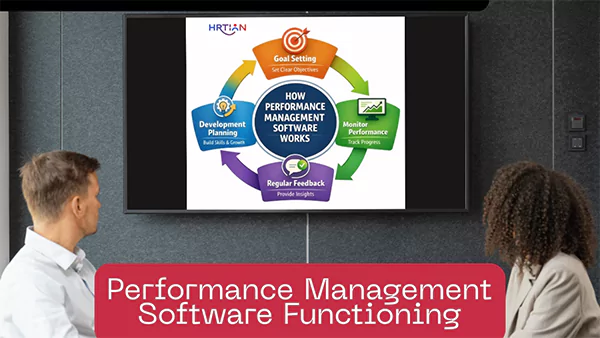
Goal Setting: The tool uses interfaces like SMART (Specific, Measurable, Achievable, Relevant, Time-bound) and OKRs (Objectives and Key Results) to align employee tasks with the company’s objectives.
Monitor Performance: It consistently tracks employee performance through the dashboard and reports, enabling managers to monitor progress and productivity and find out the areas for improvement.
Regular Feedback: The system shares ongoing feedback with managers, employees, and administration. This helps find out the problematic areas, achievements, and communication gaps.
Development Planning: A performance management tool develops a platform that helps create development plans. Furthermore, it enables employees to identify skill gaps, suggest training, and design learning opportunities to support career growth.
Key Features of Performance Management Software
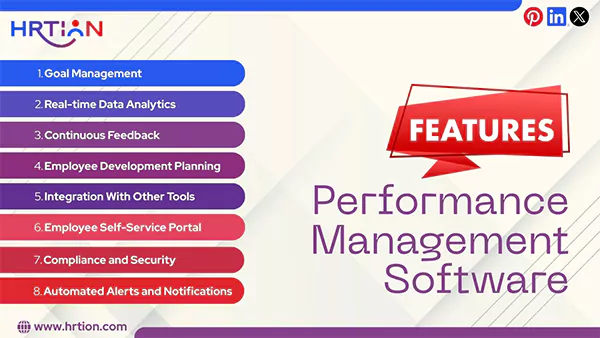
The performance management software includes a wide array of features that help improve performance and efficacy.
- Goal Management
Employees and managers can design a performance goal strategy throughout their tenure. With goal tracking, the employee remains aligned with the business objectives.
- Real-time Data Analytics
The software offers real-time data and key insights about how an employee is performing and contributing to business progression. Managers can track progress instantly through a dedicated dashboard and make decisions based on that.
- Continuous Feedback
The ongoing communication between employees and managers can result in a motivated environment. Instead of conducting reviews and feedback on certain periods, managers can share them regularly through the dashboard.
- Employee Development Planning
Creating personalized development plans is easier with the automated solution. Managers can identify the skill gap and suggest training and mentoring programs.
- Integration With Other Tools
The performance software can integrate with other businesses’ software, such as payroll systems, HRIS, and recruitment platforms, for smoother data flow and automatic data entry.
- Employee Self-Service Portal
Employees are the backbone of any business; thus, they should be able to access the reports and reviews regarding their performance, and the performance management tool does the same. It offers a self-service portal that lets workers view goals, self-assessments, and track feedback and development throughout their work tenure.
- Compliance and Security
The software is loaded with security features to keep the private employee data encrypted and secured. It also means that the organization complies with the legal regulations. It protects sensitive HR information and maintains data privacy.
- Automated Alerts and Notifications
A performance management tool sends automatic reminders for performance reviews, goal updates, feedback, and deadlines. The notifications keep employees and managers updated and ensure regular progress.
Benefits of Using Performance Management Software
Performance management tools are loaded with benefits that can support businesses in creating plans and strategies for rapid business evolution:
- Ensures improved goal management to help managers and employees to maintain organizational development.
- Promotes regular communication between employees and management for continuous feedback.
- Offers development opportunities by finding the skill gaps and suggesting training sessions.
- Saves time and reduces manual workload, such as automated reviews, feedback collection, and reporting.
- Enhances productivity by setting clear goals and providing instant feedback.
- Supports integration with HR tools like payroll, HRIS, and recruitment software for better management.
- Sets reminders and notifications for timely completion of reviews, feedback, and goal updates.
- Ensures data security to protect sensitive data and ensures regulatory compliance.
Types of Performance Management Software
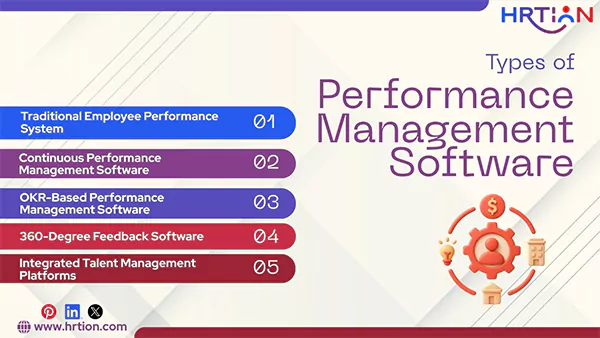
There are different types of performance management systems available in the market; the major types are:
- Traditional Employee Performance System
The employee performance system is designed to focus on annual performance reviews and evaluations so that timely appraisal can take place. According to insights from the Society for Human Resource Management (SHRM) “modern performance management should move beyond annual reviews to continuous feedback, coaching, and data-driven analytics that align employee goals with organizational objectives.” So, it is clear how important timely reviews are for employees.
- Continuous Performance Management Software
This type of performance management solution provides regular feedback, check-ins, and goal tracking instead of just providing annual reviews.
- OKR-Based Performance Management Software
OKR (Objectives and Key Results) helps organizations to track strategic goals and performance progress.
- 360-Degree Feedback Software
These systems gather feedback data from different sources, such as managers, stakeholders, and more, for the comprehensive evolution of workforce management processes.
- Integrated Talent Management Platforms
Some modern HR systems include performance management features combined with other tools. One such tool is HRtion, which offers the following:
- Recruitment
- Learning management
- Compensation management
- Succession planning
Cost of Performance Management Software
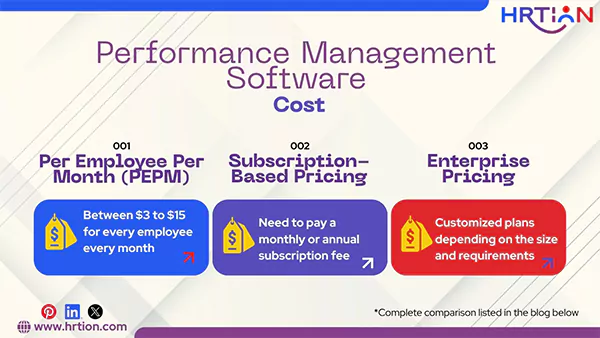
The cost of a performance management solution may vary depending on features, company size, and model.
Common pricing models are:
- Per Employee Per Month (PEPM): Most providers charge between $3 to $15 for every employee every month.
- Subscription-Based Pricing: The businesses need to pay a monthly or annual subscription fee.
- Enterprise Pricing: For large or scaling organizations, purchase customized plans depending on the size and requirements.
Factors that may affect pricing are:
- Number of employees in the company.
- Features and modules required
- Model types from cloud or on-premises
- Integration tendencies
- Customization capabilities
- Vendor Support Services
Performance management software is a smart investment that can generate higher ROI by improving productivity, reducing turnover, and increasing the performance rate.
Common Challenges in Performance Management Systems
Though the performance management system is a great option for businesses that seek order and development, there are a few challenges that cannot be overlooked while deploying a performance management solution.
- Sudden change to an automated system can be difficult to adopt, especially when they are habituated to traditional methods.
- The poor goal-setting in the system can adversely affect the transition.
- It requires a lot of training for managers to use the system efficiently.
- Sometimes, incorrect data can lead to poor performance evaluations.
- Poor integration with other HR systems can cause duplicate or compromised data.
- Some tools only provide it annually or semi-annually, and they can lack real-time feedback.
- High costs can disturb the company’s budget. Apart from the subscription fee, it also requires costs related to implementation, training, lost productivity, and the LMS.
- As performance tools include important and sensitive data, weak security will cause a data breach or legal risks.
Conclusion
Performance management software is one of the most crucial components of modern HR advancements. With organizations seeking refuge in automated reviews and data-driven management systems, the traditional annual reviews have taken a back seat.
These digital solutions offer a 360-degree view of an employee’s performance so that managers and administration can create an optimal-performance culture for long-term business benefits.
Frequently Asked Questions (FAQs)
What types of organizations need performance management systems, and how do they benefit from them?
Organizations of all sizes, namely small and mid-sized businesses and large enterprises, can benefit from a performance management system. These tools can help track employee performance, improve productivity, and meet business goals.
What is the process of performance management?
The performance management includes setting goals, monitoring employees, providing regular feedback, conducting performance reviews, and forming development plans.
What businesses can a performance management system fix?
Performance management tools can solve issues like poor productivity, lack of engagement, unclear goals, communication gaps, or inconsistent feedback.
What are the types of performance management software?
The types of performance management software are goal management tools, feedback tools, employee appraisal systems, and integrated HR systems. Each type focuses on different areas of employee performance.
How to choose the right performance management software?
To select the right performance software, first identify your business needs, evaluate key features, check for integration capabilities, and review vendor reputation. After narrowing down, ask for a trial version to test the software before making a purchase commitment.

Sunita Kumari is a Freelance Contributor Writer at HRTion, writing accurate, reliable, and informative content. She completed her Bachelor's from Rajdhani College of the University of Delhi. She has been a Human Resources Recruiter for almost 2 years, including over 1 year with Battersea Web Expert. Drawing on her recruitment and HR processes experience, she writes clear and practical payroll-related guides that help employees and job candidates better understand HR procedures and workplace practices.