
- What is Employee Engagement?
- Best Employee Engagement Strategies in 2026
- Key Elements of Employee Engagement Strategies
- Long-term Benefits of Employee Engagement Strategies
- How to Create an Effective Employee Engagement Strategy
- Top Employee Motivation Ideas
- Overcoming Challenges While Introducing Employee Engagement Strategy
- Hrtion: Digital Tool To Boost Employee Engagement
- Conclusion
- FAQs
What drives an employee to work better? Is it a high salary, better incentives, or something else?
While money and power are truly essential, what else keeps an employee loyal and dedicated is purpose, meaning, recognition, learning opportunities, and growth. And all this engenders from engagement.
Employee engagement is not only about “nice gestures,” but it requires consistent and thoughtful efforts by companies to ensure that their employees are satisfied and motivated.
A disengaged workforce can cost businesses billions annually; thus, prioritizing employee engagement strategies is no longer optional but absolutely necessary.
Here is everything to help you drive more employee engagement by forming practical strategies and implementing motivational ideas in the competitive year of 2026.
What is Employee Engagement?
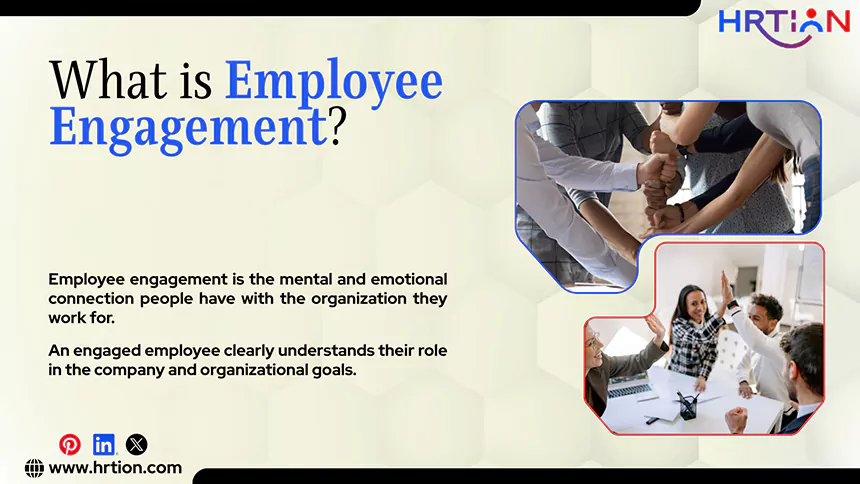
Employee engagement is the mental and emotional connection people have with the organization they work for. Engaged employees feel valued and recognized, rather than just being tools for the business to meet deadlines and make profits.
According to a recent Gallup survey, only 23% of employees globally are actively engaged, which means 77% of employees still feel left behind. This data makes clear that organizations are disengaged and not actively participating.
An engaged employee clearly understands their role in the company and organizational goals. Engagement involves both “head” and “heart” as the employee must understand the company’s growth (by head) and be willing to contribute to it (by heart).
Best Employee Engagement Strategies in 2026
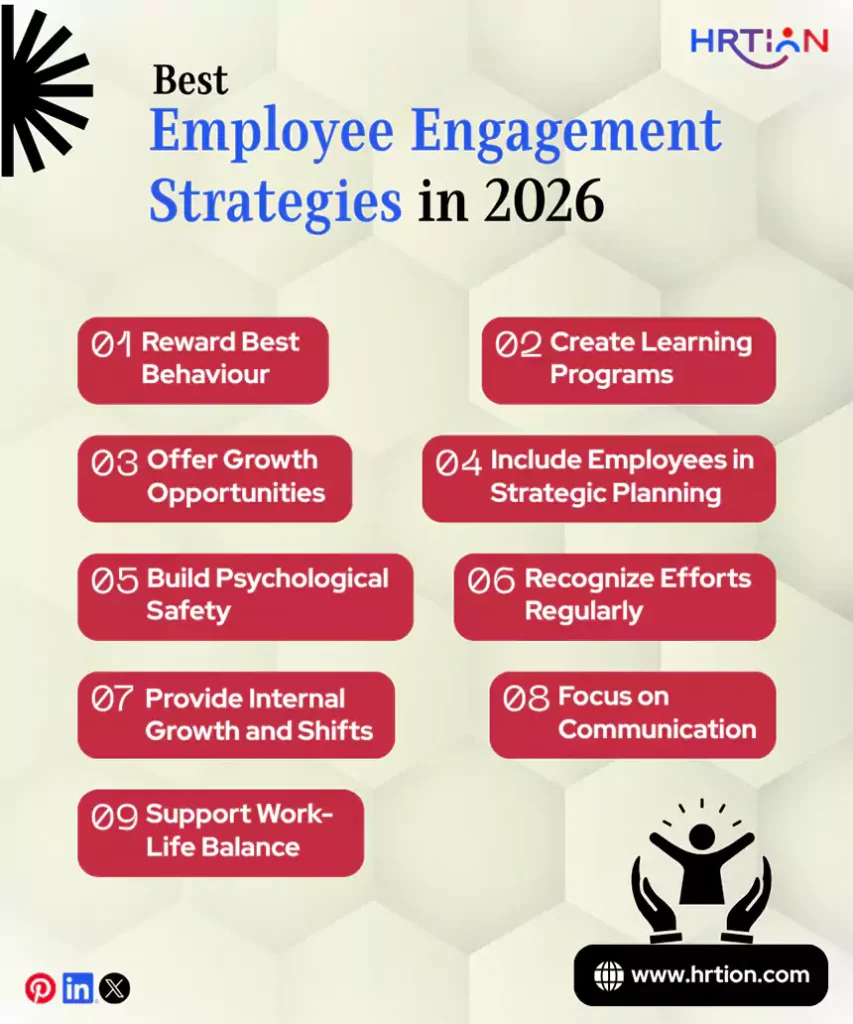
Employee engagement is not a trick but a conscious effort made through different actions and activities. Here are the simple yet effective employee engagement best practices to implement right away.
- Reward Best Behaviour
Rewarding exceptional behavior is one of the most powerful ways to recognize dedication and discipline. When the contributions are recognized, it reinforces positive actions and builds confidence among employees. This may include thanking them for their efforts, peer recognition, and performance-based rewards.
- Create Learning Programs
Learning something new every day is what keeps engagement and excitement alive. This is why organizations must focus on designing learning programs that help develop skills and build expertise. The recent stats on instride reveal that “80% of employees say they feel more engaged when they are learning.”
- Offer Growth Opportunities
Designing growth is natural, and when employees can clearly see a future within the organization, they are more likely to stay committed. Growth opportunities can be offered in multiple forms, such as promotions, leadership roles, or new responsibilities. When a company invests in career progressions, it motivates employees to perform at their best.
- Include Employees in Strategic Planning
Have you ever felt motivated when you feel heard and included? This is what employees feel when their ideas are taken into consideration while decision-making, brainstorming, or planning. It provides a sense of authority and importance. Instead of just following instructions, employees must participate in shaping the company’s future. This will help boost engagement and commitment.
- Build Psychological Safety
People work best when they feel safe to speak. That’s what psychological safety is about; the workplace must promote open discussion, accept shortcomings and mistakes, and value opinions. Fostering this type of environment helps employees innovate, collaborate, and stay engaged.
- Recognize Efforts Regularly
Recognition is a consistent practice and not something that occurs once in a while. When the efforts are acknowledged regularly, the employee feels their work is being valued and evaluated. Taking feedback, appreciation in meetings, small rewards, and incentives keeps the energy and commitment levels high.
- Provide Internal Growth and Shifts
Doing the same boring work every day becomes monotonous and that’s where internal and role shifts come into play. When workers are given opportunities to explore new roles, work on different projects, and switch departments.
- Focus on Communication
Clear communication makes a huge difference in how connected you feel at work. When expectations are unclear or information is kept hidden, it causes confusion, distrust, miscommunication, and disengagement. But with open, transparent, and two-way communication, the employees feel informed and more aligned with organizational goals.
- Support Work-Life Balance
The company must foster a supportive atmosphere for work-life balance. This includes offering flexible working hours, remote work options, and encouragement to take breaks. A well-rested and balanced employee brings more productivity and efficiency to the organization.
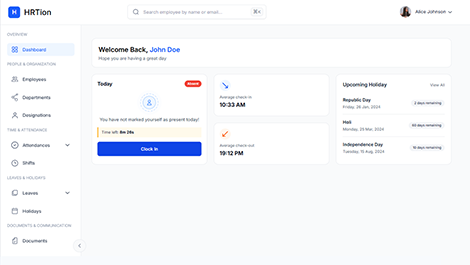
Manage the payroll, attendance, shift roles, and more in an all-encompassing HR suite. Your ultimate HR toolkit is just a click away.
Key Elements of Employee Engagement Strategies
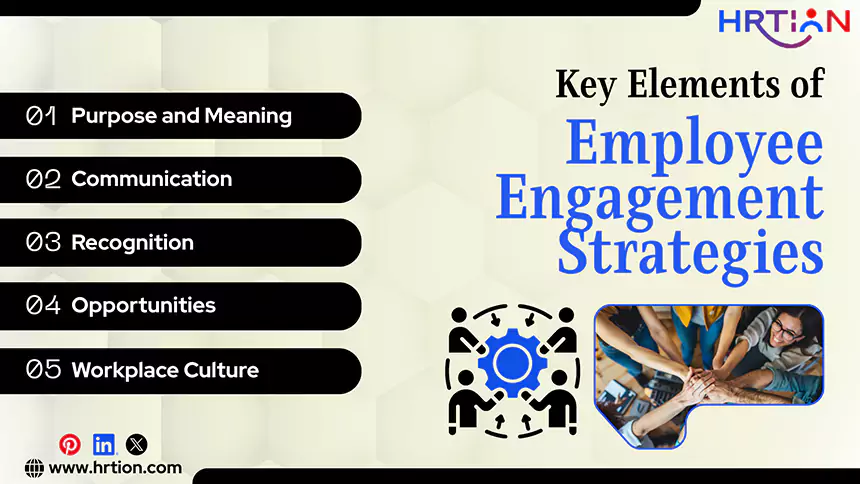
An effective employee engagement strategy drives growth and progress by keeping employees happy and satisfied. A strong engagement strategy is built by combining several basic elements that shape communication and connection.
- Purpose and Meaning
The clear purpose and goal of an organization is essential for ensuring alignment and efficiency. When employees get a clear picture of how their roles contribute to business objectives and vision, they feel more empowered.
- Communication
Effective communication is the backbone of organizational progress. Companies must ensure that the information is shared consistently, transparently, and clearly. It helps reduce confusion, improve overall coordination, and enhance professionalism.
- Recognition
Recognition is a powerful tool to fortify best behavior and improve company culture. When companies acknowledge employee contributions in a proper way, it increases motivation and reinforces a sense of value. Including performance awards, peer recognition, and different appreciation programs boosts morale, engagement, and retention rates.
- Opportunities
Employee retention depends on the number of opportunities a company provides and growth an employee witnesses. Organizations must invest in training programs, learning pathways, and internal hiring/movements to keep employees engaged and inspired.
- Workplace Culture
The culture of the workplace is the most influential factor in determining employee engagement rate. A positive, inclusive, trusting culture and environment offer stability, respect, and value. Companies that are people-oriented and foster a healthy culture impact engagement, brand reputation, and performance.
Long-term Benefits of Employee Engagement Strategies
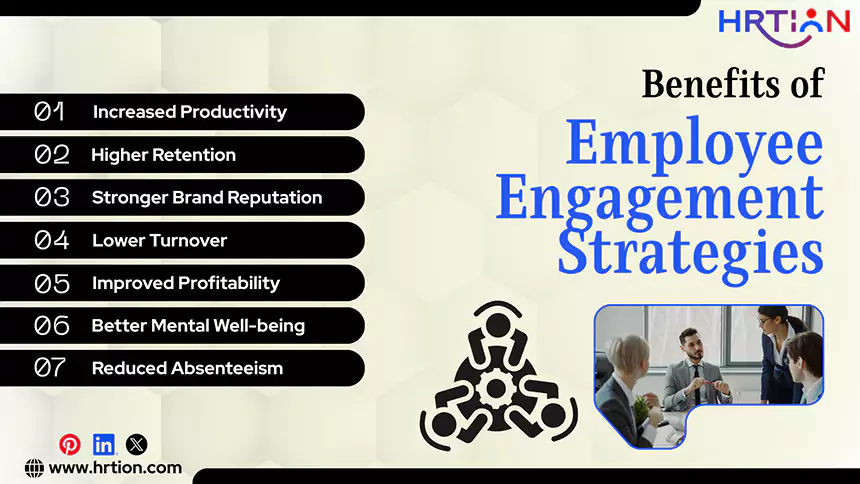
Employee engagement brings profit, retention, and popularity. Here is how an organizational engagement strategy can lead to growth and harmony.
- Increased Productivity
Companies with engaged employees have a 21% higher productivity rate because they feel focused, motivated, and committed. People can overlook basic shortcomings as they mainly focus on innovation, progress, and efficiency.
- Higher Retention
Reportedly, a highly engaged workforce has a 43% lower turnover rate. This helps companies retain skilled and talented people as they feel satisfied with the organization and its authorities. Engagement is directly proportional to loyalty, which reduces the intention to leave.
- Stronger Brand Reputation
Engaged staff tend to stand up and advocate for the organization. They share positive feedback, make recommendations, and provide higher ratings, which spikes the business’s reputation organically. Businesses with engaged workforces are often perceived as more appealing workplaces, which can further attract the best talent and retain those already hired.
- Lower Turnover
Employees usually exit a company when they feel disengaged. Thus, dedicated strategies that work in favor of the workforce and keep them engaged can significantly reduce the voluntary turnover. It will eventually save the cost of the new recruitment and training.
- Improved Profitability
It has been very clearly observed that an increase in employee engagement leads to higher profitability (up to 23%). Increased productivity, better customer service, and a reduction in operational costs facilitate this increase in profitability, and engaged employees are shown to be more efficient at their respective tasks.
- Better Mental Well-being
Prioritizing recognition, support, and work-life balance results in an overall development of improved mental health among employees. Engaged employees have reported lower stress and burnout levels, resulting in higher job satisfaction. Healthier mental health in the workforce has been proven to make employees more resilient, productive, and consistent.
- Reduced Absenteeism
Engaged employees show more commitment to their work, and this causes them to take fewer unnecessary leaves. High engagement levels have been shown to lower absenteeism (up to 78%), lead to better team coordination, and minimize disruptions. Low levels of absenteeism also ensure smoother workflow, and hence, an increase in overall productivity can be observed.
How to Create an Effective Employee Engagement Strategy
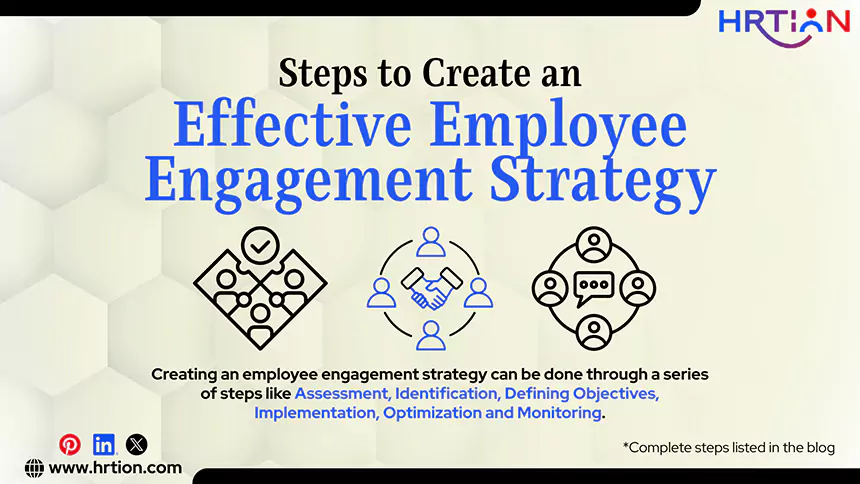
Creating an employee engagement strategy can be done through a series of steps that need to be followed consecutively. Follow these steps and witness a positive change in the workplace:
Step 1: Assessment of Current Engagement Levels
Understanding where your organization stands regarding current engagement levels is a crucial step in creating an effective strategy for the improvement of engagement. This leads to analysis and detection of gaps and areas of improvement, both qualitatively and quantitatively.
Engagement levels can be assessed by:
- Measurement of satisfaction by using employee engagement surveys such as eNPS and pulse surveys.
- Analysis of performance metrics like productivity levels and absenteeism rates.
- Gathering deeper insights through one-on-one meetings and feedback sessions.
Organizations that conduct regular pulse surveys have been shown to report higher engagement improvements over time, as employee concerns are reported and resolved much more quickly.
Step 2: Identification of Key Pain Points
After collecting the necessary information on current engagement levels, it is important to figure out what the real underlying issues are that are affecting engagement. Most organizations tend to take initiatives regarding engagement levels but fail to consider what the real problems employees face could be.
Some of these obstacles to engagement are:
- Stress and burnout are usually connected to an intense workload.
- Inadequate growth opportunities result in poor engagement.
- Improper communication leading to uncertainty in decisions.
- Absence of recognition, causing demotivation.
Recorded globally, it is seen that burnout is by far the strongest cause for low engagement, and employees lacking in career development opportunities usually quit to chase more stimulating jobs.
Step 3: Defining Objectives
Analysis of the obstacles to engagement should be followed by setting clear goals for the removal of these obstacles. The organization must define these goals accurately and precisely so as to prevent them from becoming vague and ineffective. Defining the goals also allows their progress to be measured using specific metrics.
Some of these goals may include the following, but are not limited to:
- Reduction of turnover rates (by about 10-20%).
- Improving performance metrics.
- Boosting employee engagement scores by certain percentages.
- Amplifying employee satisfaction and well-being.
One easy way to clarify goals is by using the SMART method (Specific, Measurable, Achievable, Relevant, Time-bound). Organizations that are successful in defining measurable goals are able to improve engagement.
Step 4: Implementation of Initiatives
Now that the goals are clearly defined, it is necessary to design and implement initiatives to reduce or remove the issues with engagement levels. Most of the time, generic programs tend to be less impactful and less effective than targeted actions.
Key initiatives comprise the following:
- Recognition programs for rewarding performance and spiking morale.
- Development and learning programs to promote career growth.
- Wellness initiatives targeting mental and physical health.
- Improving work-life balance through flexible work policies.
- Allowing transparency and feedback using improved communication channels.
Investing in structured recognition and developmental programs is a powerful step for encouraging growth and significantly increasing engagement levels. It is also quite important to ensure that such initiatives are relevant, consistent, and aligned with employee needs.
Step 5: Optimization and Monitoring
Employee engagement is a complex process that requires continuous monitoring and improvement. An organization must be able to track progress using strategies and adjust them using data insights, as well as use key performance indicators (KPIs) for analysis of engagement levels.
Important metrics for tracking can include:
- Absenteeism levels.
- Performance indicators.
- Turnover rates and employee retention.
- Engagement survey scores and trends.
It is imperative that a company measure and continuously refine its strategies for improving engagement to sustain itself long-term and ensure its success. Some methods for ensuring the organization stays responsive and adaptable include regular feedback loops, quarterly reviews, and data analysis.
Top Employee Motivation Ideas
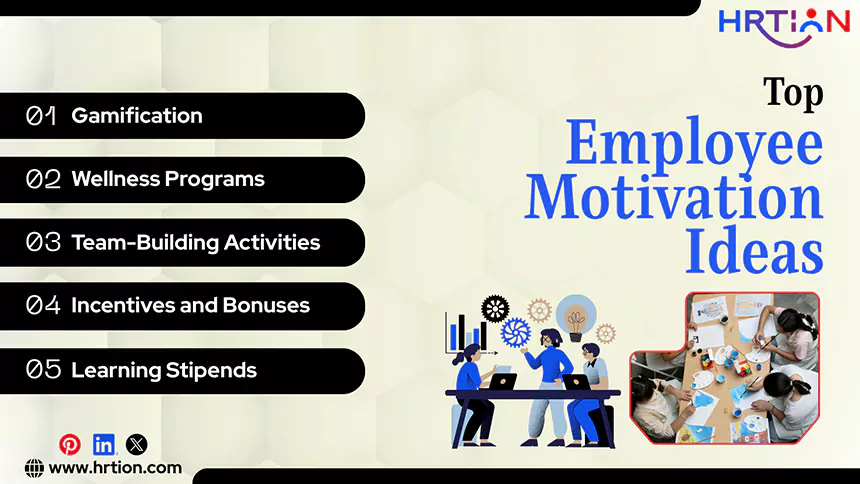
A few practical ideas to keep the workforce motivated are:
Gamification: Include leaderboards, point systems, and rewards for creating a more engaging and competitive atmosphere. Adding fun and goal-oriented challenges will keep employees engaged and motivated.
Plan Wellness Programs: Support employees mentally and physically through initiatives like fitness sessions, counseling, or well-being days. A healthy workforce is always more productive and happy.
Team-Building Activities: Plan group activities such as workshops, outings, games, or celebrations to strengthen team bonds. It improves collaboration and communication, creating a positive work culture.
Incentives and Bonuses: Reward employees with bonuses, gifts, and performance-based incentives to recognize their efforts and encourage higher-quality performance.
Learning Stipends: Provide financial support for courses, certifications, and skill development programs. By investing in the growth of employees, companies can boost value and motivation.
Overcoming Challenges While Introducing Employee Engagement Strategy
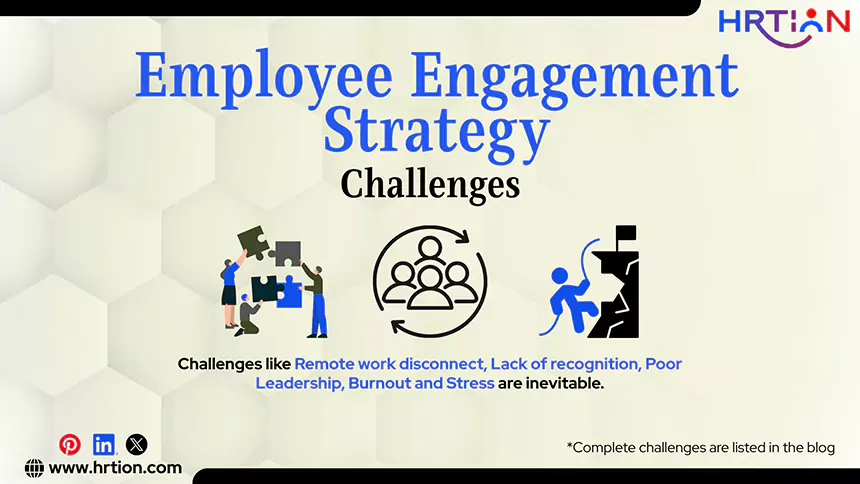
Challenges in any new plan or strategy are inevitable; similarly, when applying an engagement strategy, businesses may come across certain pitfalls. Here are some basic challenges and their solutions for a successful implementation:
Remote work disconnect: A lack of personal interaction with the remote employees can create a distance and disconnection. This sense of isolation often occurs due to limited face-to-face communication. To overcome this challenge, use collaboration tools, schedule regular check-ins, and include them in team bonding activities.
Lack of recognition: When employees are not appreciated for their work, they feel undervalued. Thus, implementing well-designed recognition programs that reward their contribution can create a motivated space.
Burnout and Stress: High workload and reduced engagement can create constant pressure, leading to stress and burnout. This negatively affects both productivity and the mental health of employees. Thus, to fix this, introduce wellness programs that support both mental and physical health.
Poor Leadership: Unhelpful managers can affect the morale of employees. Ineffective leadership can create poor communication, a lack of direction, and low team bonding. Thus, it is important to provide intensive training to managers and leaders and equip them with support abilities and empathy.
Hrtion: Digital Tool To Boost Employee Engagement
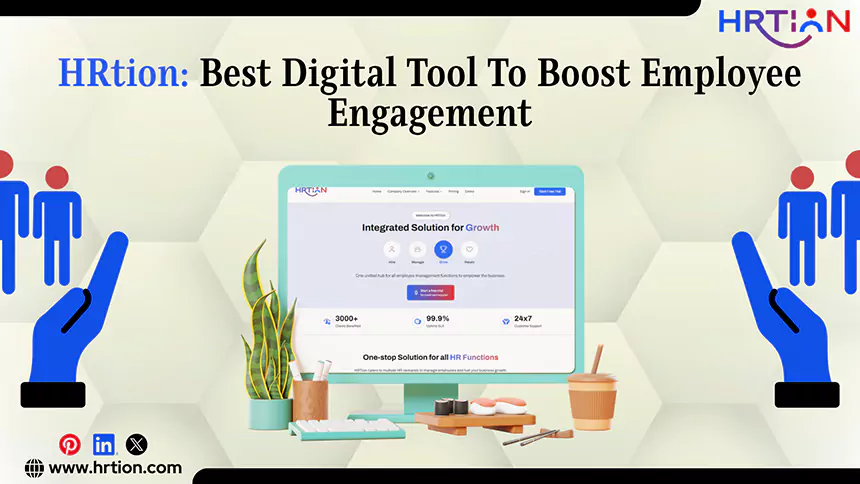
HRtion is a powerful HR management tool that is designed to help leaders and employees alike. This helps in creating a more interactive and connected workplace. By offering communication tools, a centralized platform, and feedback support, HRtion acts as a true companion to boost engagement and productivity.
- Offers a self-service platform to keep employees updated.
- Makes communication faster and more efficient through built-in features.
- Includes an analytics dashboard to make progress transparent and tangible.
- All company documents, initiatives, and schemes are stored in one place for quicker and smoother access.
Conclusion
Employee engagement can not be overlooked in this competitive era, where real talent has an abundance of opportunities available. Make the workforce valued, heard, seen, and appreciated by implementing a robust employee engagement strategy.
By combining good planning, leadership training, and digital tools, businesses can establish a motivated and well-performing workforce that drives nothing but success and positivity.
FAQs
What are the 5 C’s of employee engagement?
The 5 C’s of employee engagement are Clarity, Confidence, Connection, Credibility, and Culture.
Why is employee engagement important?
It is essential to boost productivity, profitability, and brand reputation by reducing absenteeism, stress, and burnout.
How can HR improve employee engagement?
HR can improve employee engagement by introducing recognition programs, feedback systems, training, and employee wellness initiatives.
How to measure employee engagement?
It can be measured through surveys, eNPS (Employee Net Promoter Score), employee retention rate, and KPIs.

Bhavesh is a Guest Writer at HRTion with an academic background in HR. He did an HR management course in 2025. Before transitioning to HR content writer, he worked as an Academic Content Writer at Trident Management for over 6 years. His expertise in recruitment processes & strategies helps him write detailed and clear content that is not only informative but also accessible for everyone.