
In today’s business dynamics, companies are embracing HR technology not only to improve outcomes but also to enhance employee experience and strengthen employee retention plans.
Let’s walk through the guide explaining how HR technology tools can shape the future and what HR technology trends will look like in the coming years.
What is HR Technology?
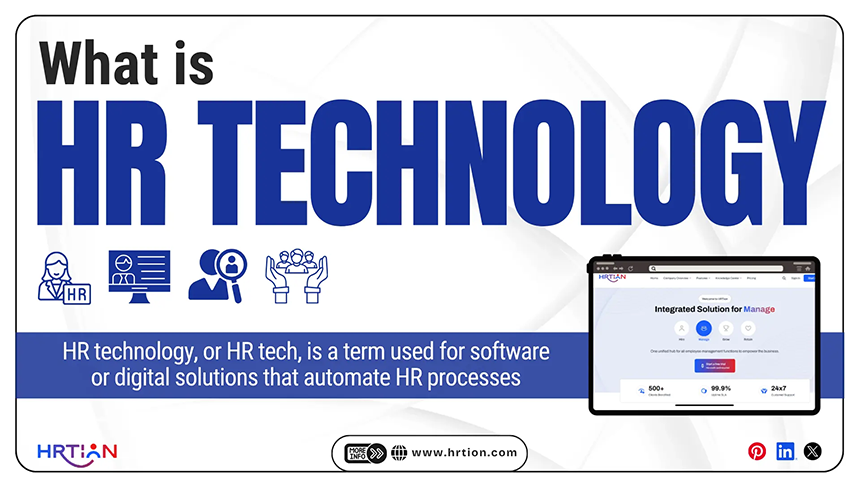
HR technology, or HR tech, is a term used for software or digital solutions that automate HR processes like hiring, workforce management, and payroll management.
Nowadays, handling HR operations manually can be both time-consuming and cost-heavy, and HR technology is the only way to streamline tasks, reduce errors, and make data-driven decisions.
Here are the top 10 HR technology trends that are ruling the market in 2026 and are futuristic.
Best 10 HR Technology Trends in 2026
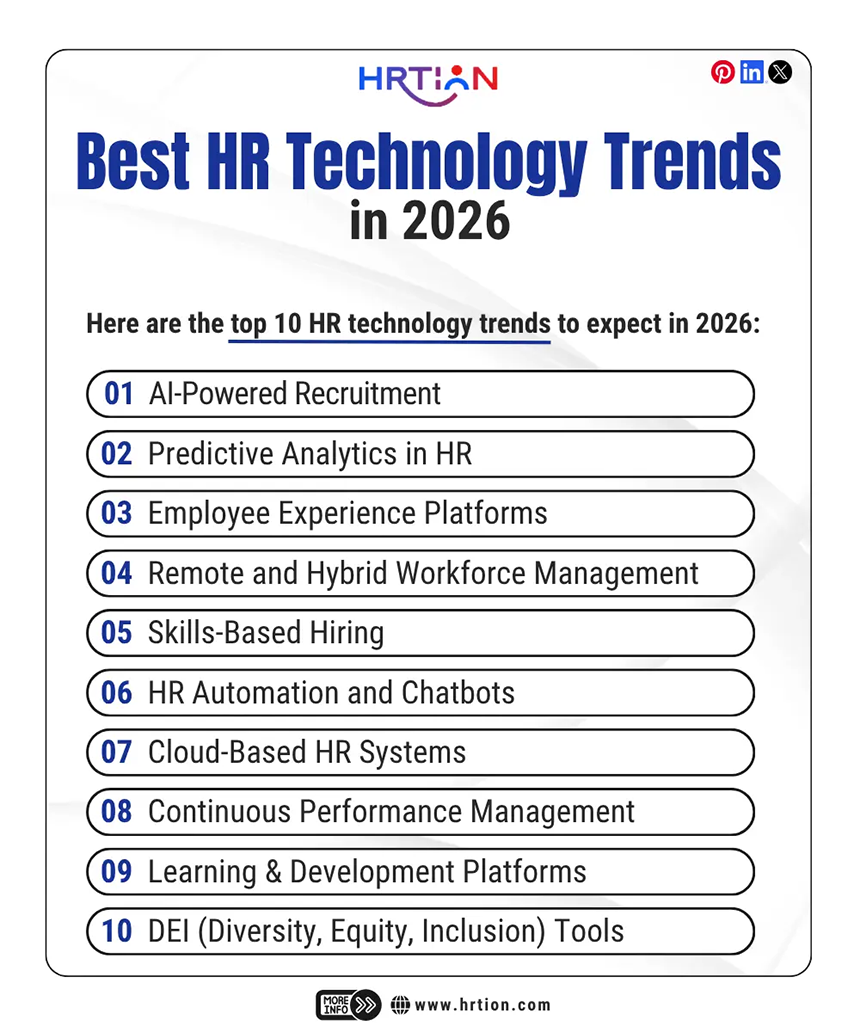
Human Resources is the field that rapidly evolves and requires organizations to keep up with the pace. The future of HR is automation and people-driven policies; here are the top 10 HR technology trends to expect in 2026.
1. AI-Powered Recruitment
Repetitive and time-consuming tasks like resume screening, candidate shortlisting, and interview scheduling are being automated through the use of artificial intelligence. Advanced AI tools are helpful in analyzing thousands of applications within seconds, reducing the hiring time and increasing the efficiency of the process. These tools evaluate candidates based on skills, experience, and behavioral indicators.
Apart from just speed, AI also enhances the quality of hiring decisions. It uses predictive models, assesses cultural fit, and even inspects video interviews for communication skills and sentiment. The chatbots provided by some AI-driven recruitment platforms also provide instant updates and personalized communication.
2. Predictive Analytics in HR
Predictive analytics refers to the enabling of HR teams to move from reactive to proactive decision-making. Utilization and evaluation of historical and real-time data can allow organizations to forecast trends such as employee turnover, absenteeism, and future hiring needs. This can help HR leaders to take preventive actions, improving workforce stability and planning, proving to be the best HR technology example.
While predicting trends is a feature of predictive analytics, it also has additional uses, like uncovering hidden patterns that traditional HR methods often miss. Some of these patterns are employee dissatisfaction, burnout, and retention. Identifying these factors early allows organizations to address them.
3. Employee Experience Platforms
Employee experience platforms are designed to improve the quality of an employee’s journey within an organization. These platforms provide tools for communication, feedback, recognition, and engagement and integrate them into a single interface. It has been studied that organizations investing in employee experience boost productivity by up to 20% and also improve retention rates.
These platforms also focus on personalization, which enables employees to receive tailored content, feedback, and development opportunities. Some features help organizations stay connected with their workforce, which include pulse surveys, recognition programs, and wellness tracking.
4. Remote and Hybrid Workforce Management
It’s been seen that remote and hybrid work models have been rising in number, and with that, it is necessary that HR technology support distributed teams. Some tools offer features like virtual onboarding, remote attendance tracking, and productivity monitoring. More than 60% of organizations have adopted a hybrid work model approach, which highlights the importance of these tools for effective workforce management.
These technologies also have the added benefit of ensuring that remote employees remain engaged and aligned with organizational goals. Integration with collaboration platforms has made communication seamless, and performance tracking tools help managers evaluate productivity fairly.
5. Skills-Based Hiring
Skills-based hiring is based on the principle of hiring candidates for their competencies and abilities rather than traditional and subjective qualifications. HR technology has developed tools that assess candidate skills through tests, simulations, and AI-driven evaluations. This allows the talent pool to expand significantly, with research even showing a 10x increase in candidate availability.
This trend also encourages diversity and inclusion by removing barriers related to formal education requirements. Additionally, skills-based hiring is able to ensure better alignment between job roles and employee capabilities, which leads to an improvement in performance and higher job satisfaction.
6. HR Automation and Chatbots
Automation and chatbots streamline HR operations by managing and automating routine tasks such as answering employee queries, processing leave requests, and tracking onboarding workflows. As these tools are able to manage more than 70% of repetitive HR tasks, they drastically reduce workload and improve efficiency.
It’s also worth mentioning that the HR chatbots also provide further value by delivering instant responses and giving 24/7 support, which enhances the quality of the employee experience. Automation also helps to minimize the chance of human errors in processes like payroll and compliance reporting.
7. Cloud-Based HR Systems
Due to the need for flexibility and scalability, cloud-based HR systems are becoming the standard for modern organizations. These platforms allow HR teams to access employee data from any location at any time, which enables better collaboration and decision-making.
These platforms are also supported by their value in supporting seamless integration with other enterprise tools, creating a unified digital ecosystem. They also offer advanced data security, regular updates, and lower maintenance costs when compared to traditional systems. As businesses continue to expand globally, the organization must be able to manage diverse and distributed workforces.
8. Continuous Performance Management
Traditional annual reviews have been replaced by continuous performance management, which allows regular feedback and evaluation instead of an annual review. Annual reviews were often unable to properly convey feedback due to various biases. However, a continuous performance management model allows employees to receive real-time insights into their performance, making it easier to improve continuously.
This model has also opened a way to build trust between managers and employees through transparency and regular communication. Tools that are able to support goal-tracking, real-time feedback, and peer reviews help align individual contributions with organizational goals.
9. Learning & Development Platforms
Learning and development platforms have evolved to provide personalized and data-driven training experiences. These systems utilize AI to recommend courses based on individual skills, career goals, and organizational requirements. Studies show that 94% of employees are more likely to stay with organizations that invest in their learning and development.
These platforms also provide access to continuous upskilling and reskilling. This is quite critical in today’s transient and fast-changing job markets. Engagement and effectiveness of these learning processes are improved by using features like microlearning, gamification, and mobile accessibility.
10. Focus on DEI (Diversity, Equity, Inclusion) Tools
DEI-focused HR tools are actively helping organizations build an inclusive and diverse workplace. These tools not only help in compliance with regulations relating to discrimination, but they also eliminate bias in recruitment, analyze pay equity, and provide access to diverse talent pools. Companies that use these tools have reported more than 35% improvement in diversity hiring outcomes.
In addition to their usefulness in hiring, these tools are also able to help organizations foster inclusive cultures by monitoring employee engagement and identifying disparities across different groups. As more businesses are being held accountable for DEI outcomes, organizations must utilize these tools along with other methods to promote diversity in the workplace.
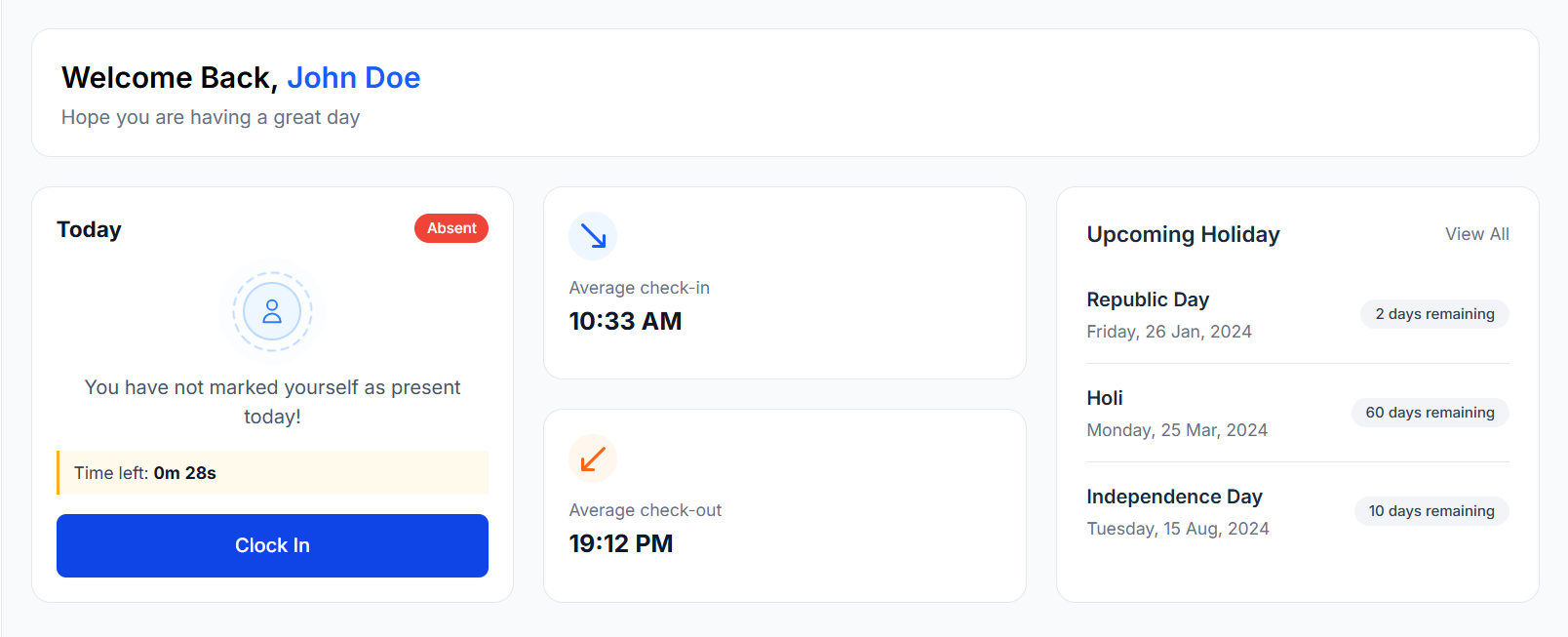
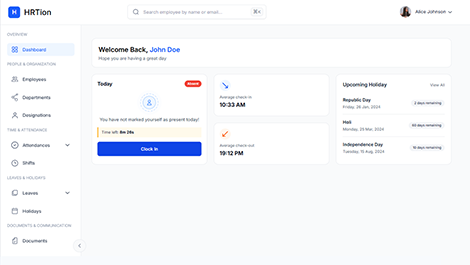
Manage the payroll, attendance, shift roles, and more in an all-encompassing HR suite. Your ultimate HR toolkit is just a click away.
Benefits of Future-Ready HR Technology
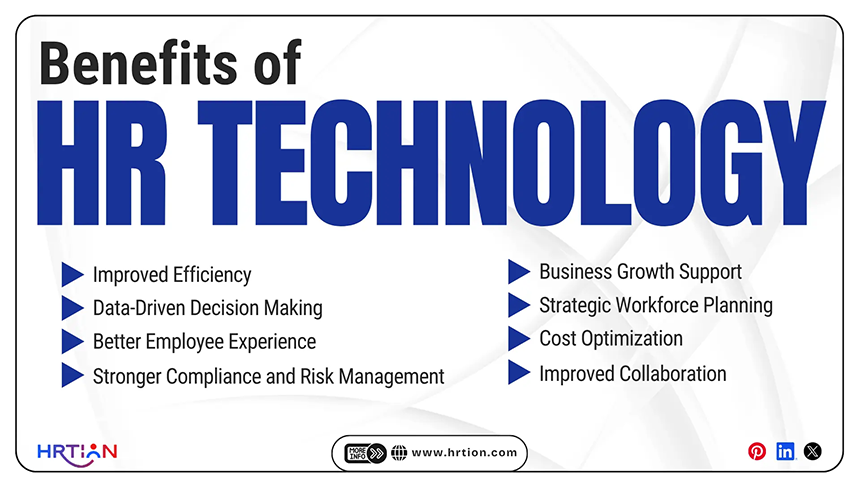
As technology and the digitalization of business environments continue to increase in quality and quantity, HR technology has become an important factor for organizational success. Some benefits of these future-ready HR systems and technology are provided below:
1. Improved Efficiency
Processes such as payroll management, attendance tracking, recruitment workflows, and employee onboarding can all be time-consuming, and even a small error in their calculations can lead to legal and compliance issues. Future-ready HR tools and systems are able to automate these repetitive tasks, reduce the chances of error, and ease their burden, increasing efficiency.
2. Data-Driven Decision Making
Traditional HR systems often led to biases in decision-making. Modern HR systems, however, analyze and report data before providing insights into metrics like employee performance, turnover rates, hiring effectiveness, and engagement levels. As these insights are based on data, there is no bias, and informed decisions can be made without relying on assumptions.
3. Better Employee Experience
HR technology has become a powerful tool for meeting the constantly evolving employee expectations. Self-service portals allow employees to manage their own data and information, apply for leave, access payslips, and even update personal details without the need for HR intervention. Features like instant communication tools, feedback systems, and personalized learning platforms are also helpful in creating engaging work environments.
4. Stronger Compliance and Risk Management
It is quite difficult to manage and comply with the shifting regulations and labor laws, especially when the organization has more branches in different places. HR technology helps organizations stay compliant by maintaining precise records, automating statutory filings, and generating audit-ready reports. By using HR technology, an organization is able to significantly reduce the risk of legal issues and penalties by ensuring that all policies and procedures align with current regulations.
5. Scalability and Business Growth Support
Businesses have to expand to allow for growth and development, which naturally leads to a more complex and larger workforce. This makes managing the workforce a very difficult process. HR technology provides scalable solutions that can adapt to organizational growth without needing a proportional increase in HR staff. HR technology helps in handling larger employee databases, expansions to multiple locations, and managing diverse teams. This allows for consistency and efficiency and helps companies grow while keeping HR operations streamlined.
6. Strategic Workforce Planning
Future-ready HR systems enable long-term planning. This is done by identifying skill gaps, forecasting workforce needs, and aligning talent strategies with organizational goals. Using the analysis provided by these systems, organizations can proactively prepare for future obstacles and ensure they have the right talent in place at the right time.
7. Cost Optimization
Although the early investment in HR platforms may seem costly and significant, it is often able to make up for it in its usage, leading to long-term cost savings. Automation reduces administrative overhead, minimizes errors that often cause heavy financial losses, and improves overall productivity.
8. Improved Collaboration and Communication
In hybrid or remote work environments, it is crucial that different teams and departments are able to properly communicate and exchange ideas. Modern HR platforms allow for consistent and clear communication, which strengthens team dynamics and ensures alignment across the organization.
How to Stay Prepared for HR Technology in 2026
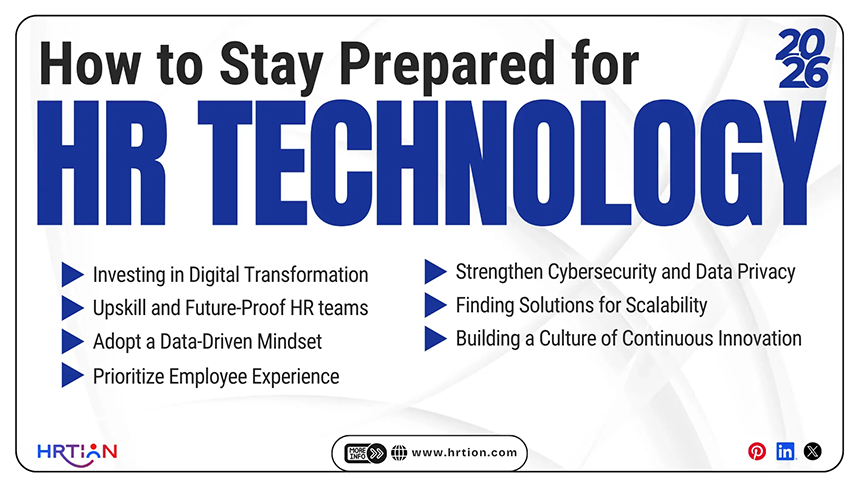
HR technology is evolving rapidly, and it is becoming a necessity for organizations to stay relevant and competitive. Planning and utilizing HR technology to its fullest potential is a powerful way for businesses to ensure resilience in dynamic work environments. Some approaches for this are provided below:
1. Investing in Digital Transformation
Preparation starts by committing to digital transformation. Organizations should take the time to assess their existing HR processes, like payroll, recruitment, performance management, and employee engagement, and find any gaps or inefficiencies. Businesses should also take the time to understand how the implementation of modern HR platforms would affect the business, as automation provided by the platforms streamlines many operations and enables high accuracy in calculations and HR functions.
2. Upskill and Future-Proof HR teams
HR technology is only as useful as how it’s used. HR professionals must be taught and trained through continuous learning and development programs focused on data analytics, artificial intelligence (AI), and digital HR tools to help them understand the new technology and ensure they develop the skills in interpreting data insights, managing digital platforms, and adapting to new technologies quickly.
3. Adopt a Data-Driven Mindset
In 2026, successful HR strategies will rely heavily on data. This makes the collection and analysis of workforce data to gain insights into employee performance, engagement, productivity, and retention a crucial task for organizations. Using dashboards and analytics tools, HR leaders can identify trends, predict challenges, and make proactive decisions. Data-based decisions are also more accurate and help a business lead to better business outcomes.
4. Prioritize Employee Experience
Modern employees expect a workplace experience to be seamless, personalized, and engaging. This frames how HR technology should be selected by keeping the employee journey in mind from recruitment to exit. Tools that help in easier communication, real-time feedback, learning, and development opportunities are able to significantly enhance employee satisfaction.
5. Strengthen Cybersecurity and Data Privacy
HR systems frequently store sensitive employee data, which can be personal, financial, or performance data. This makes it vital to keep it secured and private. Organizations should implement strong cybersecurity measures such as data encryption, multi-factor authentication, and regular security audits in order to keep the information protected. Compliance with data protection regulations is equally important to avoid legal risks.
6. Finding Solutions for Scalability and Flexibility
HR technology should be able to adapt to future growth and the changes in business needs that occur when an organization scales its operations further. Selecting the right platforms for scalability ensures that systems are able to manage increasing complexity regarding increases in the number of employees, new locations, and evolving processes without any disruptions. Flexibility allows these systems to integrate with other business tools, which creates a unified digital ecosystem for long-term success.
7. Building a Culture of Continuous Innovation
Organizations should encourage experimentation with new tools and regularly review HR tech performance. HR technology will have its own trends, and a business must foster a culture that allows for changes, maintaining its agility and staying responsive to the rapidly evolving digital landscape. HR technology is not supposed to be a one-time effort; it needs a continuous commitment to innovation.
How to Choose The Right HR Technology
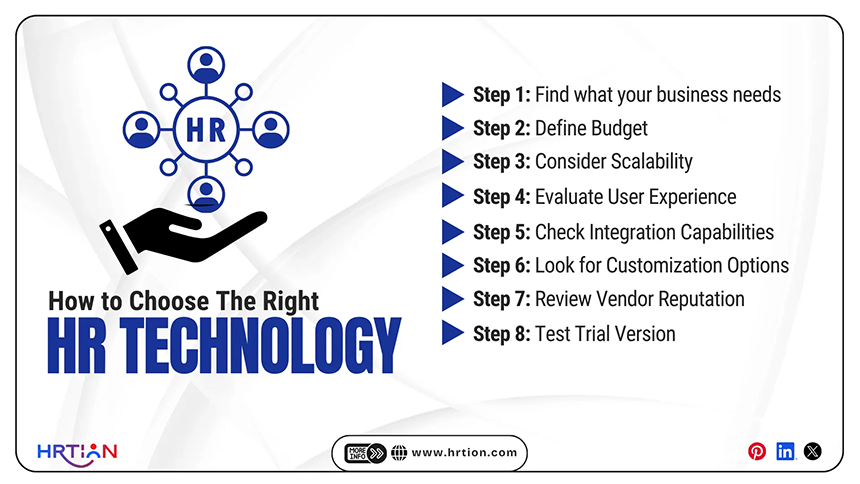
Selecting HR technology is a crucial decision that can influence the entire workforce management process. With numerous options available, choosing the right technology is like finding a needle in a haystack. Thus, here is a structured approach that can help you find an HR tool that can support your company’s growth.
Step 1: Find what your business needs
Identifying the needs of your business is the first step in picking the right HR tech. So, evaluate the current business process and identify the pain points. This will ensure that the software you are selecting will solve the challenges and remove the unnecessary complexity.
Step 2: Define Budget
The next thing is to determine how much you are willing to invest in the digital solution. Not only the initial cost, but also calculate the ongoing expenses such as subscription, upgrades, and maintenance costs.
Step 3: Consider Scalability
The system you are selecting must be able to scale as your business grows. HR needs evolve rapidly, and the tool must be able to cope with the changes. The tool must offer flexibility, allowing feature upgrades and module additions without switching to a new system.
Step 4: Evaluate User Experience
A user-friendly interface is crucial for smoother adoption of the tool. If the system is too complicated to work with, HR teams may avoid using it, wasting the money spent. Thus, find the software that is easy to use and implement, not requiring technical expertise to operate.
Step 5: Check Integration Capabilities
HR software needs to work in integration with other HR systems. It must integrate smoothly with existing tools such as accounting systems, management platforms, and communication tools. Seamless integration ensures automated data flow, eventually reducing errors.
Step 6: Look for Customization Options
Every company has its unique needs, and the tool must match the current workflow, reporting needs, and company structure. This helps in aligning the system closely with the operational requirements.
Step 7: Review Vendor Reputation
A good technology provider offers customer support and regular updates, which are quite essential to keep the system up and running. Therefore, select a software provider that offers training resources, onboarding assistance, and readily available support services when a technical issue arises.
Step 8: Test Trial Version
Before making a final decision, try the trials or pilot versions. Testing software in the real environment will help you judge its strengths and weaknesses that can affect your processes in the long run.
HRTion: A Trending HR Tool for Future
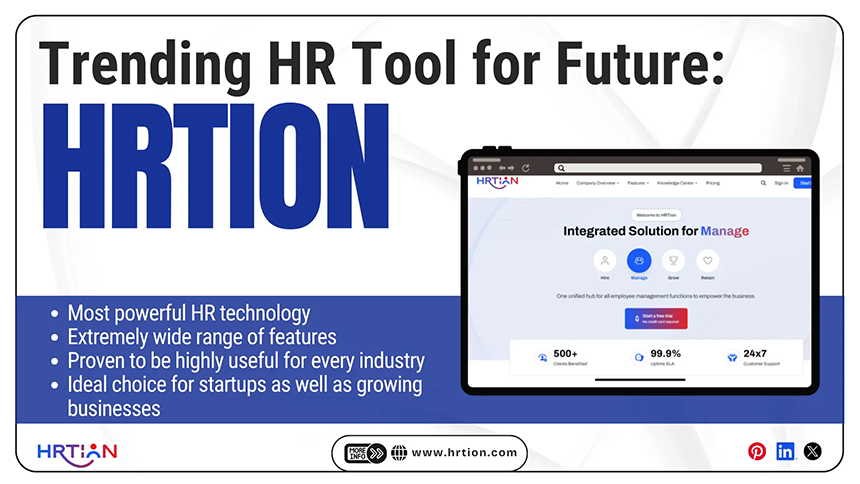
HRtion is undoubtedly emerging as the most powerful HR technology due to its comprehensive approach. It offers a wide range of features ranging from attendance tracking and payroll processing, reporting and analysis, to compliance management
By transforming the manual processes into automated tasks, HRtion has proven to be highly useful for every industry. Its scalable design makes it an ideal choice for startups as well as growing businesses to future-proof their HR operations.
Conclusion
HR technology is not an option anymore because it has become essential for every business irrespective of size, the reason being ever-increasing market competitiveness.
Organizations that invest in the right HR tools witness improved efficiency, better engagement, and a more satisfied workforce. The key lies in successful implementation and adoption.
If your goal is to stay future-ready for upcoming challenges, progressions, and innovations, do not sleep on HR tech, and pick the one that can upgrade your HR processes.
FAQs
What is HR technology used for?
HR technology is frequently utilized for automation and management purposes. This is helpful for repetitive and time-consuming processes like recruitment, payroll, employee engagement, performance tracking, and compliance.
Why is HR technology important in 2026?
In the increasingly digital era that 2026 brings, HR technology helps businesses stay competitive by improving their efficiency, enabling data-driven decisions, and making employee experience better in a digital-first workplace.
What are the latest HR technology trends?
Some key trends in HR technology include AI recruitment, predictive analytics, cloud HR systems, employee experience platforms, and skills-based hiring.
How does HR technology improve employee experience?
HR technology provides various features like self-service tools, faster communication, personalized learning, and continuous feedback. This helps make employees more comfortable and engaged in a workplace setting.
How do I choose the best HR software?
Choosing the right HR software requires an understanding of your own business needs, scalability, ease of use, integration capabilities, and vendor support.

Bhavesh is a Guest Writer at HRTion with an academic background in HR. He did an HR management course in 2025. Before transitioning to HR content writer, he worked as an Academic Content Writer at Trident Management for over 6 years. His expertise in recruitment processes & strategies helps him write detailed and clear content that is not only informative but also accessible for everyone.