
- What is DEI Hiring and Inclusive Recruitment
- Why Diversity Hiring is Important
- How to Ensure Inclusive Recruitment
- How to Build a Diversity and Inclusive Hiring Strategy
- Top 11 Diversity and Inclusive Hiring Strategies
- Challenges and Their Solutions with Diversity Hiring
- How Does HRTion Help in Diverse and Inclusive Hiring?
- Conclusion
- FAQs
DEI (Diversity, Equity, and Inclusion) hiring is not just a progressive idea, but it’s a measurable strategy that drives success and innovation and helps businesses attract top talent. Studies from McKinsey & Company show that “companies with higher diversity are 36% more likely to outperform financially.”
It is also observed by Cloverpop’s research that diverse teams make 87% better decisions, resulting in higher profits. In the current world, where inclusive recruitment is the best hiring strategy, implementing it takes a systematic approach.
Here is a complete guide explaining what diversity and inclusion hiring process is and how to incorporate it effectively.
What is DEI Hiring and Inclusive Recruitment
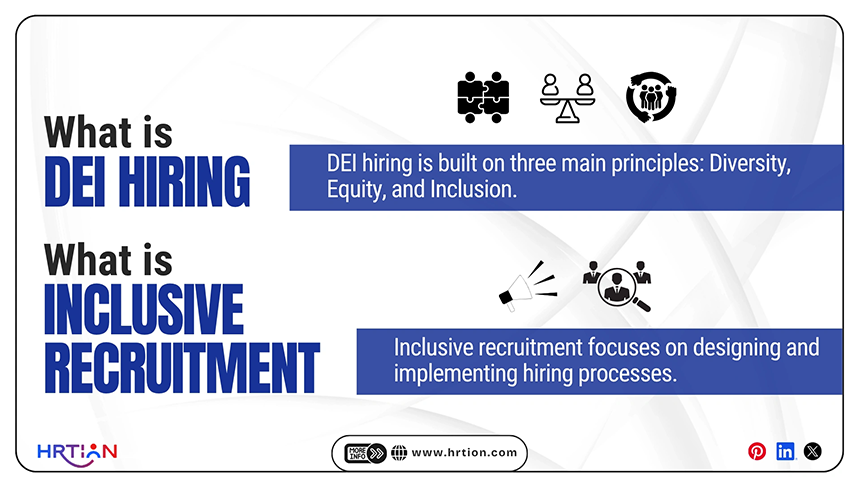
DEI hiring (Diversity, Equity, and Inclusion) refers to a recruitment approach aimed at building teams that reflect varied identities, backgrounds, and perspectives while also ensuring fairness and equal opportunity for all candidates. DEI hiring is built on three main principles:
- Diversity by representation across gender, ethnicity, age, abilities, education, and socio-economic backgrounds
- Equity by implementing fair and transparent hiring practices that remove systemic barriers.
- Inclusion by creating an environment where all employees are respected and valued, and can contribute.
Inclusive recruitment focuses on designing and implementing hiring processes that are unbiased, accessible, and welcoming to people from different cultures and ways of life.
Why Diversity Hiring is Important
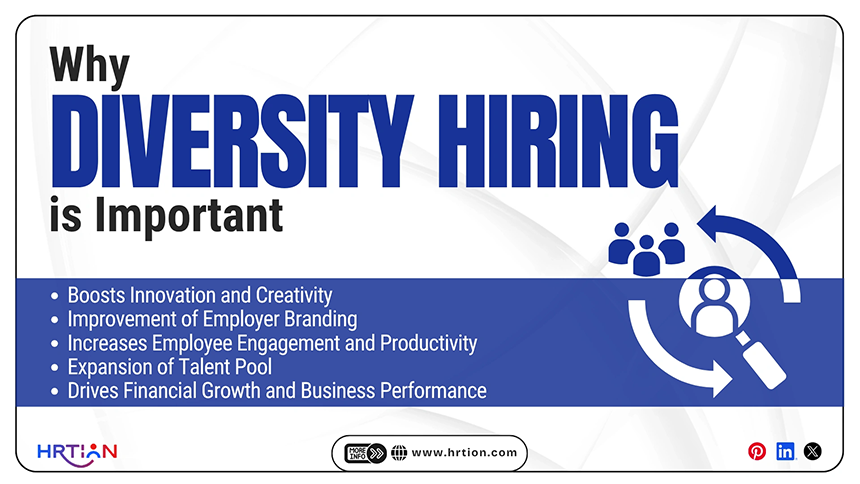
Diversity hiring is a very important factor in business strategy. Not only is it a social initiative, but it also paves the way for innovation, better employee experience, and long-term organizational success. Its key benefits are provided below:
1. Boosts Innovation and Creativity
Diverse teams often bring together people with different perspectives, cultural experiences, and ways of thinking. This leads to more creative problem-solving and better decision-making. By including diverse perspectives, teams will challenge assumptions rather than reinforce them. This helps create a wider range of ideas, which leads to more innovative products and services.
2. Improvement of Employer Branding
Today’s workforce is actively searching for employers who value inclusion and fairness. A strong diversity hiring strategy helps build the reputation of an employer as an employer of choice. It has been observed that inclusive companies attract younger, more socially aware talent, and around 67% of job seekers value workplace diversity when evaluating offers.
3. Increases Employee Engagement and Productivity
Employees are more motivated and contribute their best work when they are respected and included in an organization. This has been proven by studies, which have shown that inclusive workplaces see up to 22% higher productivity. Inclusion helps improve engagement as the individuals feel a sense of belonging, and employees are more likely to collaborate and share their own ideas in such an environment.
4. Expansion of Talent Pool
Older and traditional hiring practices often overlooked highly capable candidates from underrepresented groups, which led to companies missing out on uniquely talented individuals. Diversity hiring has since led to organizations accessing untapped talent across different demographics and backgrounds. This has also reduced hiring times up to 30%, and the chances of finding candidates with high-demand skills have increased.
5. Drives Financial Growth and Business Performance
With better decision-making in diverse organizations, business strategies can be consistently improved, broader market understanding allows further customer reach, and higher innovation has opened new revenue streams. This has led and is still leading to stronger financial outcomes.
Manage the payroll, attendance, shift roles, and more in an all-encompassing HR suite. Your ultimate HR toolkit is just a click away.
How to Ensure Inclusive Recruitment
It takes a consistent, intentionally designed, and continuously improved initiative to build an inclusive recruitment process. Organizations that form a structured, transparent hiring process are twice as likely to improve hiring quality, as every decision is analyzed objectively and backed by data.
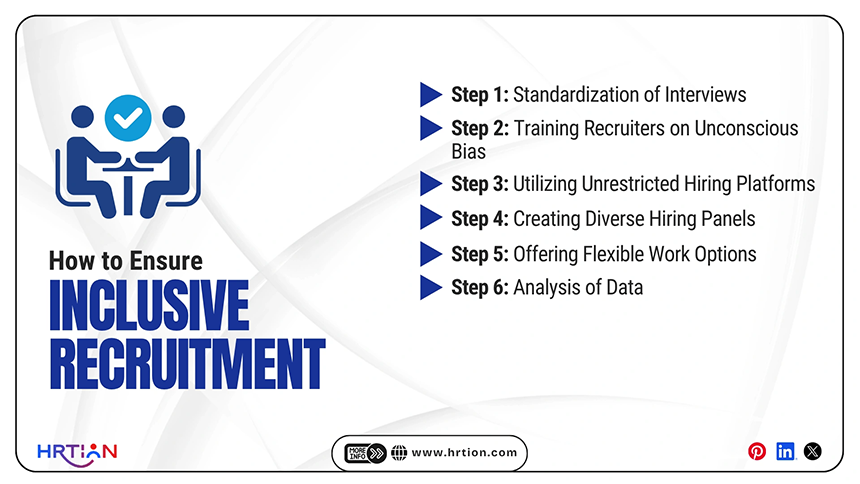
Some steps for building an inclusive recruitment process are given below:
1. Standardization of Interviews
Interviews that ensure that every candidate is assessed on the same criteria allow organizations to reduce hiring bias by up to 40%. A business can ensure that the interviews are objective by using predefined questions aligned with job requirements, applying consistent scoring systems for evaluating responses, and focusing on skills, competencies, and real-world scenarios.
2. Training Recruiters on Unconscious Bias
Even the most experienced hiring managers carry unconscious biases that can affect decisions. To help reduce or remove these biases, a business needs to conduct training sessions and workshops to help recruiters recognize bias in resume screening and interviews. This allows for more objective and evidence-based evaluations, increasing fairness.
3. Utilizing Unrestricted Hiring Platforms
An inclusive process must be accessible to all candidates, including those with disabilities. This can be ensured by implementing screen-reader-friendly career pages, providing alternative formats for assessments, and offering accommodations like extended time or different interview formats.
4. Creating Diverse Hiring Panels
Inclusive decision-making can be improved further by including interviews from varied backgrounds. This helps in reducing the likelihood of groupthink or cultural bias, makes candidates feel represented and more comfortable, and also leads to multiple different perspectives in the evaluation process.
5. Offering Flexible Work Options
Flexibility is a major factor that attracts diverse candidates to an organization. Flexible hours support caregivers and individuals with different needs; part-time or returnship roles allow non-traditional candidates to participate; and remote or hybrid roles attract talent from different geographies. This can lead to a 30-40% increase in applications from underrepresented groups.
6. Analysis of Data
It is necessary that insights regarding the improvement of hiring strategies and identifying gaps are derived from precise data. This helps to remove assumptions, measure hiring outcomes, and adjust strategies objectively. It is also important to analyze drop-off rates to identify potential bias points.
How to Build a Diversity and Inclusive Hiring Strategy
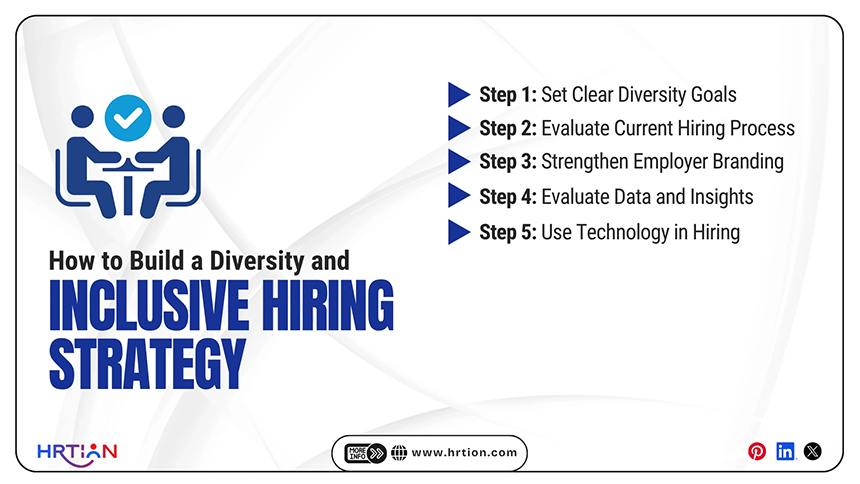
While building a Diversity, Equity, and Inclusion (DEI) hiring strategy, it is important to follow an approach that is fair, innovative, and high-performing. With a well-planned DEI strategy, a company can attract top talent from different backgrounds, ultimately strengthening its culture and environment.
1. Set Clear Diversity Goals
A well-built DEI hiring strategy starts with setting clearly defined goals. The company must identify what “diversity” means within its context and determine the objectives it wants to achieve. These goals act as a foundation for future planning and subsequent actions.
2. Evaluate Current Hiring Process
Once the goals are established, the company should evaluate its current hiring practices. Start by reviewing job posting methods, sourcing channels, interview processes, and selection criteria. This will help identify the biases and gaps. The regular audits will help improve the diversity by 25%.
3. Strengthen Employer Branding
Employer branding is crucial for attracting talents to the globe. The candidates prefer organizations with visible diversity and inclusion commitments. Uses the social platforms to share employee stories, inclusive policies, and communication values to enhance credibility and global appeal.
4. Evaluate Data and Insights
Use the data extracted from different company tools to make an informed decision. KPIs and metrics like diversity ratios, hiring trends, and employee retention rate help understand the changes required in current DEI policies and practices.
5. Use Technology in Hiring
Incorporating technology in the hiring processes, this will speed up the process of selection while removing bias altogether. The AI-driven resume screening, blind recruitment platforms, and inclusive job description analyzers will help streamline the candidate evaluation and ensure that a diverse candidate pool is formed.
Top 11 Diversity and Inclusive Hiring Strategies
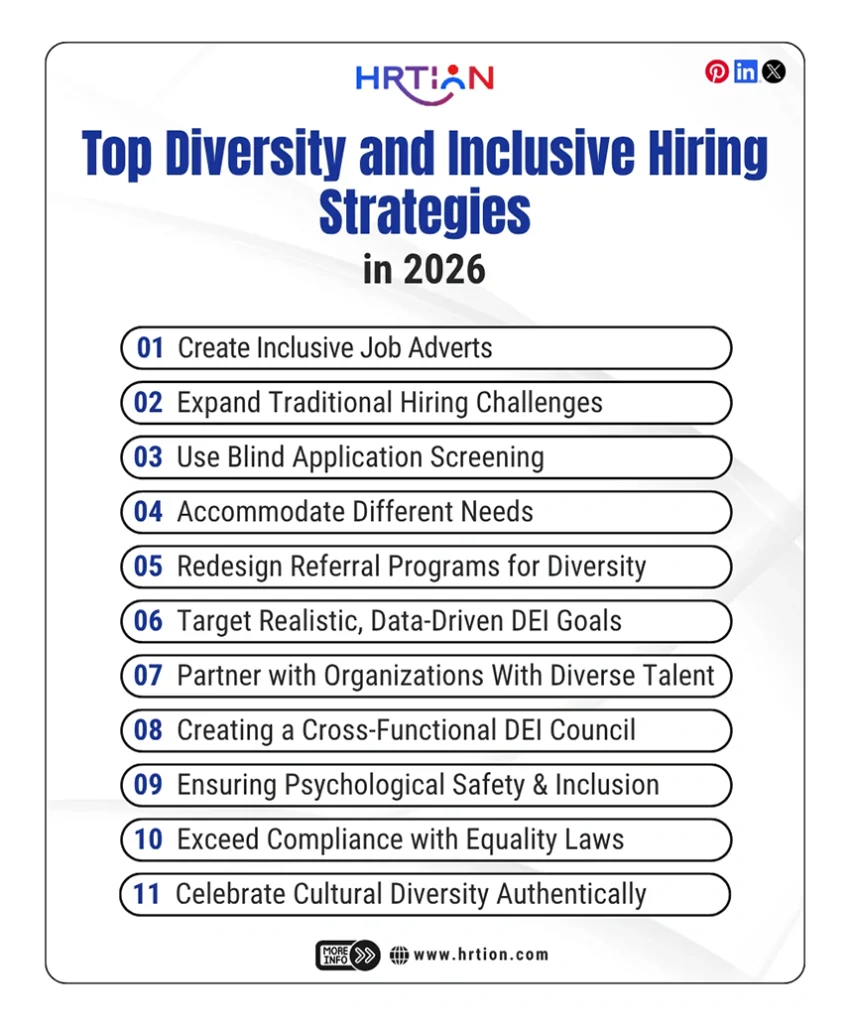
1. Create Inclusive Job Adverts
Inclusive job adverts and descriptions are written to attract diverse talent. As an example, research by Witty.works reveals, “gender-neutral job descriptions can increase applications from women by up to 42%.”
Avoid adding gender-specific jargon, unnecessary qualifications, and biased language for broader accessibility.
2. Expand Traditional Hiring Challenges
Expand or re-evaluate current hiring requirements, and this helps remove the systemic barriers. When companies remove the rigid criteria such as elite degrees or years of experience, they can experience a significant rise in diverse candidate pools (often 20-30%).
This approach is mainly focused on the potential of the candidate and not privilege.
3. Use Blind Application Screening
Blind application screening removes the bias-generating identifiers such as names, gender, photos, and educational institutions. This helps the company purely focus on talent and capabilities and improves diverse candidate selection rates by up to 30%.
To maximize the effectiveness of this practice, companies can integrate the blind screening feature in their application tracking systems. But this approach should be combined with the structured interview process to maintain fairness all along.
4. Accommodate Different Needs
Create a strategy that recognizes the needs of different candidates. It means offering flexible interview schedules across time zones and different assessment formats such as written, verbal, or technical tasks.
This provides accessibility to candidates with disabilities or living in remote locations, showing that the company prioritizes diversity and inclusion.
5. Redesign Referral Programs for Diversity
Referral programs have always been an effective hiring tool, but they can lead to homogeneity if employees refer to people who are similar to themselves. Diversity can be introduced in referral programs by restructuring them, introducing incentives for diverse referrals, and providing guidance on inclusive networking. It has been shown that by restructuring referral programs to encourage diversity, organizations have been able to improve representation by 15-20%.
6. Target Realistic, Data-Driven DEI Goals
There must be clarity in the diversity goals to ensure accountability. The goals should be measurable, specific, time-bound, and realistic. An organization should also be able to track progress in these goals by implementing specific metrics for measuring progress.
Regular reporting and leadership accountability ensure that DEI goals remain a priority rather than a one-time initiative. There should also be transparency in the progress of these goals to build trust and encourage employees and candidates.
7. Partner with Organizations Supporting Diverse Talent
Many companies collaborate with diversity-focused organizations to increase the company’s diversity and also access talent pools they may not reach through traditional channels.
These partnerships can increase access to diverse candidates by over 25%. Businesses can strengthen their relationships with such organizations by hosting joint events, mentorship programs, or targeted hiring drives. Over time, these partnerships help create sustainable diversity in hiring processes.
8. Creating a Cross-Functional DEI Council
A dedicated DEI council ensures that diversity initiatives are implemented throughout the organization and not just within HR. These councils often include representatives from various departments and leadership levels, which leads to higher diversity and variety in perspectives and decision-making.
They are also responsible for setting strategy, monitoring progress, and driving cultural change. Companies with DEI structures have reported higher success rates in achieving diversity goals.
9. Ensuring Psychological Safety & Inclusion
Employees in an organization must be allowed to share feedback, express their ideas and beliefs, and be themselves without fear of judgment or discrimination to foster a psychologically healthy work environment. Organizations are able to ensure such environments by promoting clear and open communication, encouraging diverse viewpoints, and addressing any bias or discriminatory issues promptly.
Employees in inclusive environments have been studied and shown six times more engagement and three times as high a retention rate.
10. Exceed Compliance with Equality Laws
Although it is crucial that an organization complies with equality and anti-discrimination laws, the leading organizations tend to go further and implement fairness in every aspect of hiring. This includes transparency in policies, consistent documentation, and unbiased evaluation criteria.
Companies that go beyond compliance not only reduce legal risks but also actively build stronger employer brands and show genuine commitment towards fairness and equity.
11. Celebrate Cultural Diversity Authentically
Organizations can create a strong sense of belonging and respect among diverse groups of employees by celebrating different cultures and actively promoting cultural awareness. This can include recognizing global festivals, hosting cultural events, and encouraging employees to share their traditions and cultural experiences. By focusing on making these efforts educational and fostering participation, companies can increase their significance from just symbolic gestures to meaningful efforts.
Challenges and Their Solutions with Diversity Hiring
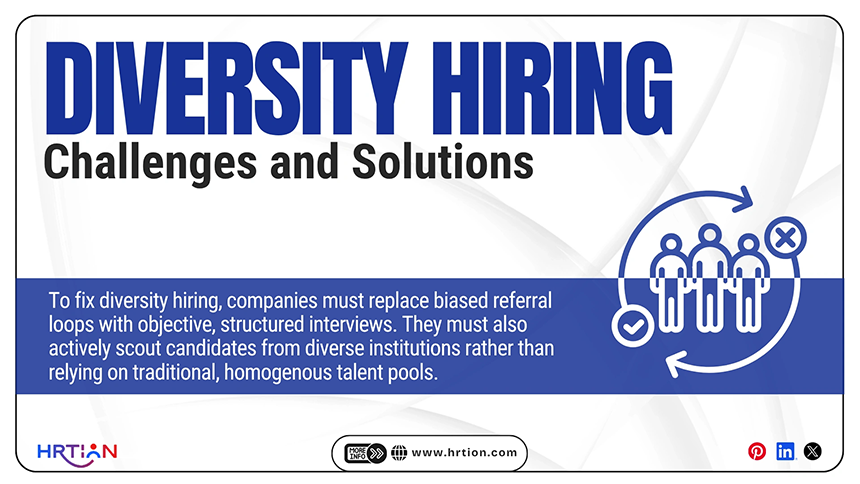
- Problem: Unconscious biases relating to names, gender, educational background, or even communication styles lead to unfair advantages or disadvantages.
Solution: Implementation of blind hiring practices, structured interviews, and continuous bias-awareness training to reduce subjectivity.
- Problem: Reliance on traditional hiring channels, such as mainstream job boards or internal networks, can limit the talent pool reach and access to diverse candidates.
Solution: Expansion of sourcing strategies, partnering with community organizations, and participating in career fairs targeting diverse candidates are some methods to overcome this problem.
- Problem: Resistance to change and hesitation towards diversity, as well as viewing diversity as a disruption, can slow down the progress and effectiveness of DEI initiatives.
Solution: Addressing resistance by presenting clear and data-backed evidence and showing the benefits of diversity regarding innovation, business performance, and decision-making is a powerful way to remove resistance to diversity and change.
- Problem: Lack of clarity in DEI metrics makes it difficult to track progress, identify gaps, or hold teams accountable, reducing the impact of DEI initiatives.
Solution: Establishing clear, measurable DEI goals, tracking metrics like candidate diversity at each stage of the hiring funnel, regular reporting, and data analysis for improvement are good methods for clarity in DEI metrics.
- Problem: Low retention of diverse talent due to exclusion discouraging workplace culture can lead to underrepresented groups feeling isolated or undervalued, leading to high turnover rates.
Solution: Focusing on building an inclusive and supportive workplace culture, ensuring equal opportunities for growth and development, and recognizing diverse contributions are some methods for retaining diverse talent.
How Does HRTion Help in Diverse and Inclusive Hiring?
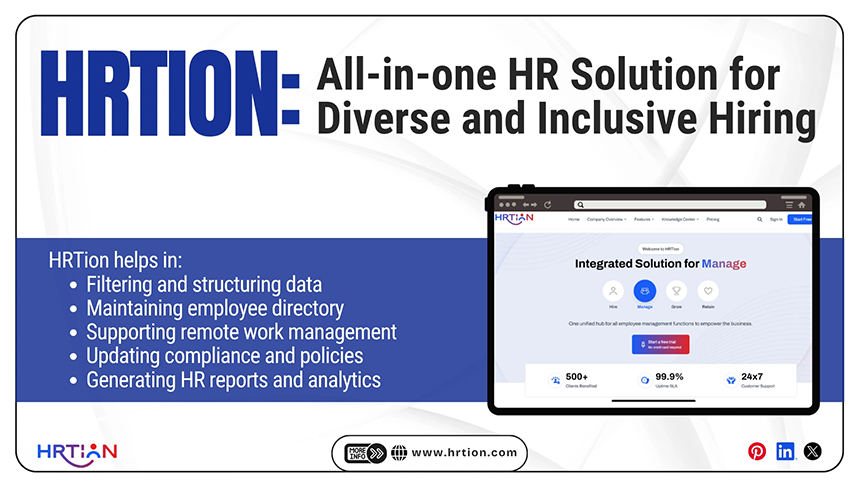
The pillars of diverse and inclusive hiring are talent sourcing, screening processes, unbiased interviews, and data tracking, and there is one solution that can provide it all: HRtion. It is an all-in-one HR solution that automates tasks related to pre and post recruitment.
It helps in:
- Filtering and structuring data
- Maintaining employee directory
- Supporting remote work management
- Updating compliance and policies
- Generating HR reports and analytics
With all these features, HRtion helps build an all-inclusive hiring strategy, helping attract a diverse talent pool and manage unbiased recruitment.
Conclusion
Diversity hiring is about making a workplace safe and secure for different ethnicities, genders, and backgrounds. It ensures that every employee is provided with equal opportunities to succeed.
To start with DEI hiring, proceed with small steps, but ensure that consistency is maintained. Over time, continuous efforts can create an inclusive workplace that benefits both employees and the company.
FAQs
What is DEI hiring?
DEI hiring is a system that focuses on creating a diverse workforce while ensuring fairness and inclusion in the hiring process.
Why is inclusive recruitment important?
Inclusive recruitment helps in reducing biases, improves hiring quality, and also attracts a wider range of talent, which allows for more diversity in decision-making.
What are some examples of inclusive hiring practices?
Some common examples of inclusive hiring practices are blind resume screening, structured interviews, diverse hiring panels, and inclusive job descriptions.
How can companies measure DEI success?
Certain metrics like diversity ratios, hiring rates, employee retention, and engagement levels are important when measuring DEI success.
What tools can help with DEI hiring?
Tools like applicant tracking systems, AI recruitment platforms, and analytics dashboards, notably HRTion, are powerful tools that can help with DEI hiring.

Bhavesh is a Guest Writer at HRTion with an academic background in HR. He did an HR management course in 2025. Before transitioning to HR content writer, he worked as an Academic Content Writer at Trident Management for over 6 years. His expertise in recruitment processes & strategies helps him write detailed and clear content that is not only informative but also accessible for everyone.