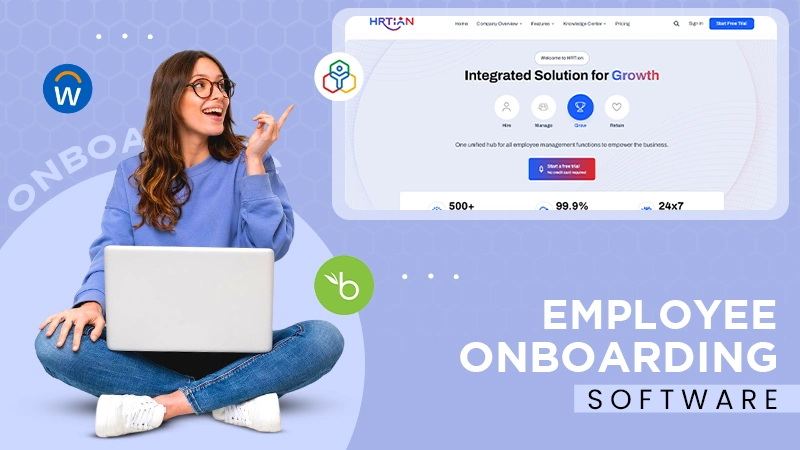

Recent studies by the Society for Human Resource Management have shown that “companies with structured onboarding programs improve employee retention by up to 50%.” This is why employee onboarding software has become a need of the hour.
Hiring the right talent and ensuring smooth onboarding have always been priorities for growing organizations, irrespective of size. Here is a complete guide on how to implement and adapt employee and HR onboarding software for a smoother transition from a candidate to an employee.
What is Employee Onboarding Software?
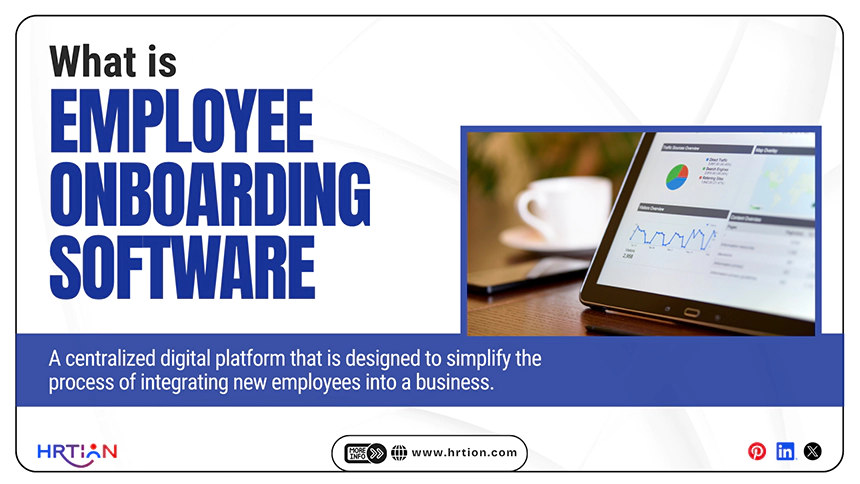
Employee onboarding software is a centralized digital platform that is designed to simplify the process of integrating new employees into a business. It automates paper-based workflows that manage tasks like the collection of employee information, the verification of documents, and the provision of training modules.
Using onboarding software allows HR teams to create structured workflows that guide new employees step-by-step through various processes like understanding company policies, signing offer letters, completing paperwork, and accessing role-specific resources.
Onboarding software not only enhances efficiency but also leads to better employee experience by providing a smooth, organized, and engaging preface to the organization.
Top 10 Employee Onboarding Software in 2026
Choosing the right employee onboarding software can significantly improve the new-hire experience, reduce administrative workload, and accelerate employee productivity. From automation and compliance management to document handling and employee engagement, the following onboarding platforms offer a range of features to help businesses streamline hiring and create a seamless onboarding journey in 2026.
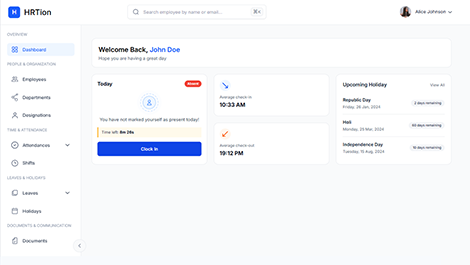
1. HRtion
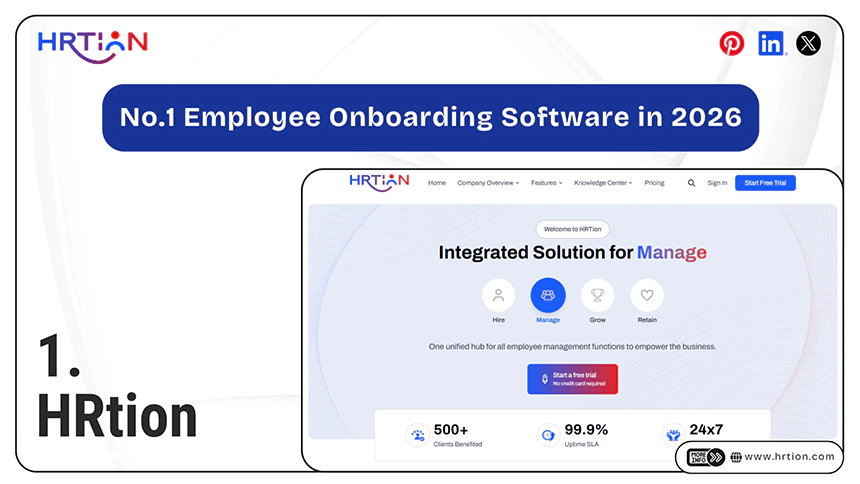
HRtion is a modern all-in-one HRMS designed to streamline the onboarding process. From hiring to onboarding, HRtion supports and facilitates every step of recruitment, making it a panacea for HR operations. This platform primarily focuses on employee management, workflow optimization, and faster onboarding.
HRtion reduces manual hard work and helps companies enhance employee experience without investing a whole lot of fortune.
Key features:
- Automated onboarding process
- Employee data and profile management
- Secure document storage
- role-based access
- Attendance and leave tracking
- HR analytics and reports
2. BambooHR
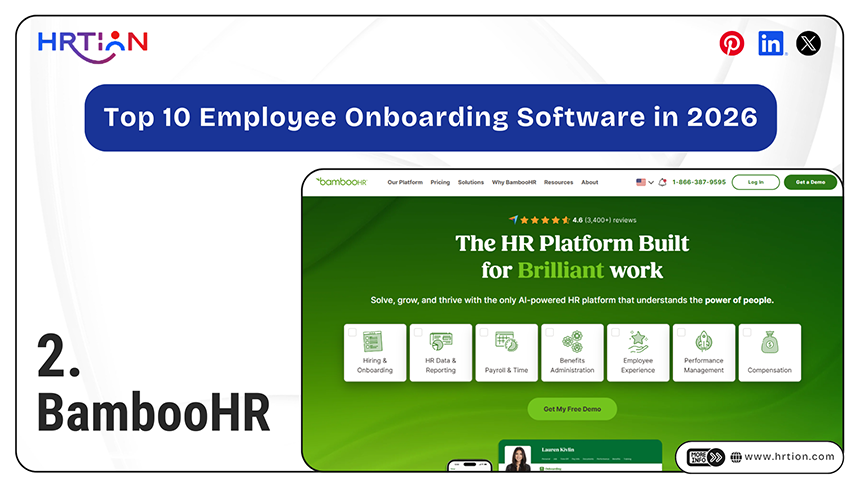
BambooHR is a user-centric HR solution best-suited to small and mid-sized businesses. It simplifies the entire onboarding process by offering a structured workflow, digital forms, and centralized employee data.
This platform reduces paperwork and ensures a smooth transition for new hirings. Its intuitive interface helps both employees and HR managers alike.
Key features:
- Custom onboarding process
- E-signatures and digital forms
- Employee self-service portal
- Built-in applicant tracking system.
- Time-off tracking.
- Integration with third-party tools.
3. Workday
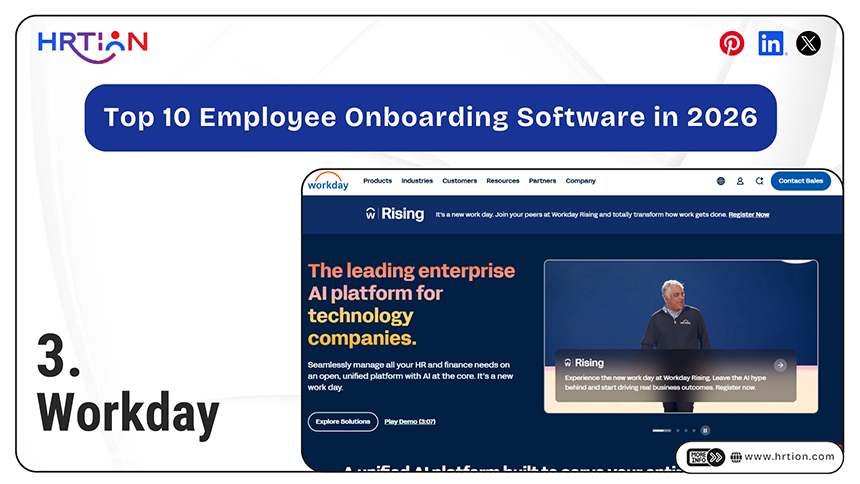
Workday is a robust enterprise-level HR software designed to cater to large organizations with complex HR needs. It offers advanced onboarding features along with finance and workforce planning features.
This HR solution provides customizable onboarding experiences with support for hybrid, remote, and global teams, along with strong compliance management and analytics features.
Key features:
- AI-driven onboarding process
- Global compliance management
- Real-time workforce analytics
- HR and finance integration
- Employee lifecycle management
- Cloud-based scalability
4. SAP SuccessFactors
SAP SuccessFactors is a powerful and complete HR suite offering high-class scalability and compliance. It enables organizations to provide their employees with a structured and user-focused onboarding process.
It supports global compliance and thus works best for large businesses with complex HR needs.
Key features:
- Guided onboarding process
- Compliance tracking and audit trails
- Integration with the SAP ecosystem
- Learning and development support
- Workforce analytics and insights
5. Zoho People
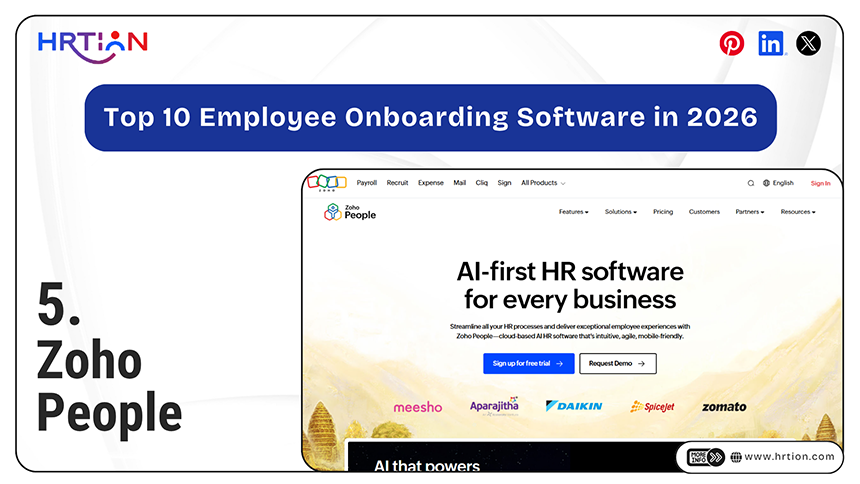
Zoho People is an affordable and flexible HR solution designed mainly for startups and SMEs. It streamlines the onboarding process through automation and provides a centralized platform to manage employee data securely. It is highly scalable, thus suiting the growing businesses best.
Key features:
- Automated onboarding process
- Employee self-service portal
- Attendance and leave management portal
- Document management system
- Mobile-friendly interface.
6. Gusto
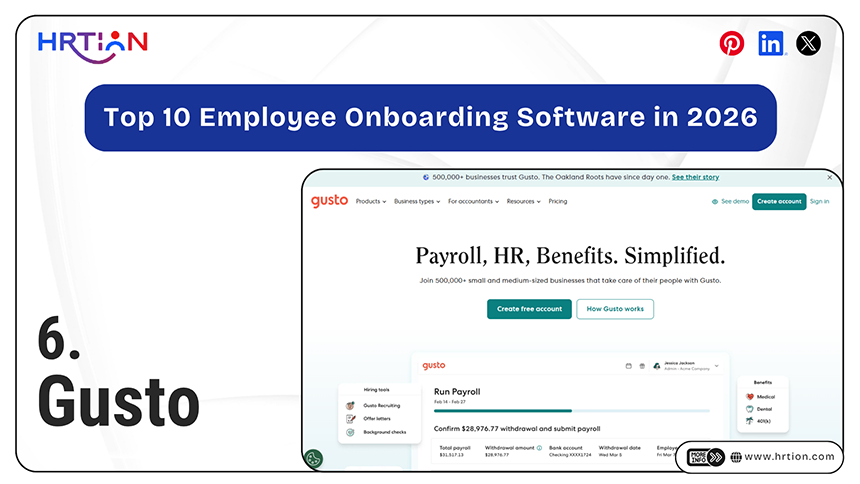
Gusto is a renowned HR platform that combines onboarding and payroll solutions to manage salary and benefits. It is an ideal choice for small businesses and serves as an all-in-one solution for employee onboarding and compensation processes after joining.
Key features:
- Digital onboarding and document signing
- Payroll and tax management
- Benefits management
- Employee profiles and records
- Compliance support
- Automated workflow
7. Rippling
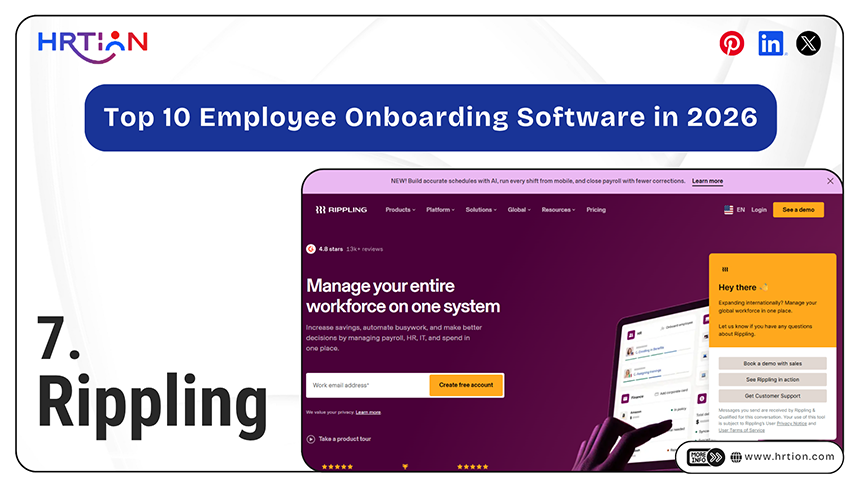
Rippling is one unique solution that provides an integrated HR and operations platform. It automates the onboarding process; from setting employee accounts to devices and software access, it offers everything a tech-driven company needs.
Key features:
- Automated onboarding and offboarding
- Device and app provisioning
- Workflow automation
- Payroll and benefit integration
- Compliance and security tool
- Centralized database management
8. ADP Workforce Now
ADP Workforce Now is a comprehensive HR software meant for mid- to large-sized companies. It offers strong onboarding capabilities along with payroll, benefits, and compliance management, helping businesses in multiple ways.
Key features:
- End-to-end onboarding workflow
- Payroll and benefits management
- Compliance support
- Employee self-service portal
- HR reporting and analytics
- Talent management
9. ClearCompany
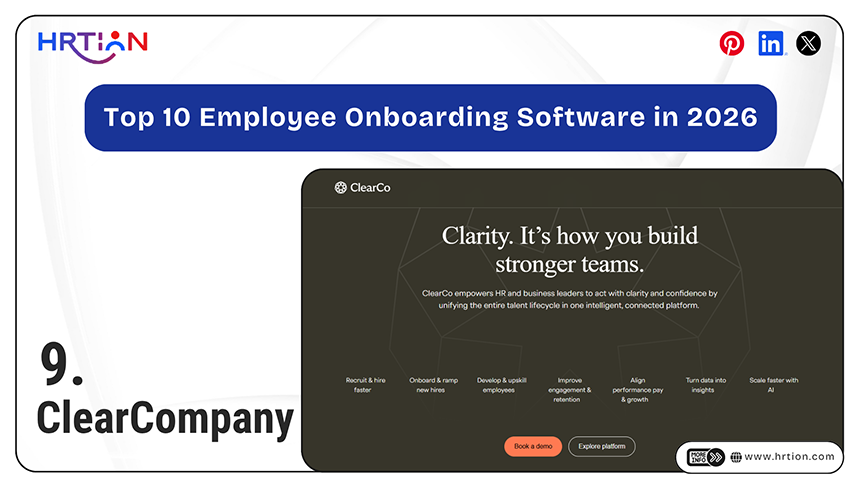
ClearCompany is a bridge between recruitment and onboarding, ensuring a smooth transition from a candidate to an employee. It helps companies improve the hiring process and maintain engagement and onboarding through automation.
Key features:
- Applicant tracking system (ATS)
- Onboarding automation
- Performance management tool
- Goal tracking and alignment
- Custom workflow
- HR analytics and reports
10. Freshteam
Freshteam is a comprehensive and feature-rich HR platform that is suitable for growing businesses. It is loaded with a clean and easy-to-use interface, thus helping candidates and HR teams to go smoothly through onboarding, hiring, and employee data management in one place.
Key features:
- Onboarding checklist and workflow
- Document management
- Employee self-service portal
- Applicant tracking system
- Time-off management
- Collaboration tools
When picking one from the heap, it is crucial that you clearly comprehend its features and choose one that is the best-suited tool matching your company’s needs and requirements.
Manage the payroll, attendance, shift roles, and more in an all-encompassing HR suite. Your ultimate HR toolkit is just a click away.
Key Features of an Employee Onboarding System
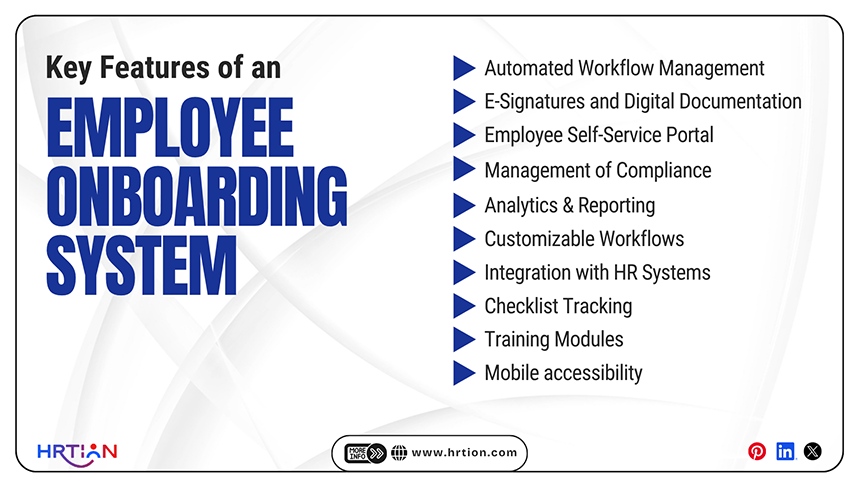
A structured and effective onboarding software has many important features that focus on creating an engaging and comprehensive experience for both HR teams and new hires.
It combines compliance, automation, and communication tools in one platform and reduces administrative overhead while also ensuring that every new employee understands their position, role, and authority in the organization.
Below are some key features of an effective onboarding software:
- Automated Workflow Management
This feature streamlines repetitive onboarding tasks by automating several processes such as document collection, approvals, and task assignments. Predefined workflows help ensure that nothing is missed and that every step is completed in the correct sequence, which saves time and manual effort.
- E-Signatures and Digital Documentation
Onboarding software enables employees to submit documents and sign forms digitally. It has a major advantage over physical paperwork, as it speeds up the process and also allows for easy storage and retrieval of important records.
- Employee Self-Service Portal
A dedicated portal empowers new hires to independently complete onboarding activities like filling out forms, uploading documents, and tracking their progress. This reduces dependency on HR teams and creates a more user-friendly experience.
- Management of Compliance
The system also helps organizations stay compliant with labor laws, tax regulations, and internal policies by standardizing documentation and maintaining precise records. Automated alerts and validations heavily reduce the risk of non-compliance.
- Analytics & Reporting
Advanced reporting features help in providing valuable insights into onboarding effectiveness, which include completion rates, time-to-productivity, and employee engagement levels. These insights enable organizations to continuously improve their onboarding processes.
- Customizable Workflows
Organizations are able to tailor onboarding workflows based on job roles, departments, or locations. The flexibility in this system ensures that every employee receives a personalized and relevant onboarding experience.
- Integration with HR Systems
Modern onboarding platforms are able to easily and seamlessly integrate with existing HR tools like payroll, HRMS, and performance management systems. This ensures smooth data flow across various departments and removes the obstacle of duplicate data entry.
- Checklist Tracking
Onboarding software assigns tasks to HR professionals, managers, and employees, with real-time tracking of progress. This leads to transparency, which further helps in accountability and ensuring teams stay on schedule.
- Training Modules
Many software programs include built-in training tools that are able to deliver onboarding content like videos, documents, and courses. This lets new hires quickly figure out their roles, company culture, and expectations.
- Mobile accessibility
Mobile-friendly platforms enable new hires to complete their onboarding tasks anytime and from any location. This is a very valuable feature for remote or distributed teams, which ensures that new employees, regardless of location, are able to understand and integrate seamlessly into the organization.
Benefits of Employee Onboarding Software
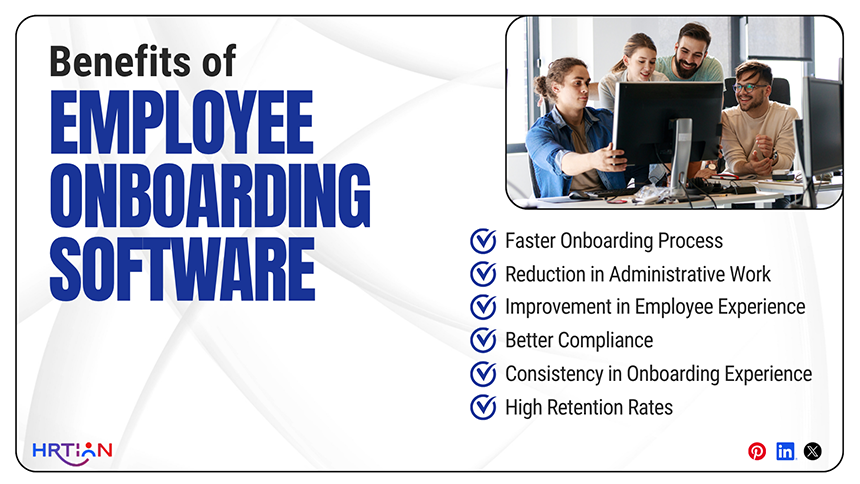
Employee onboarding software provides a lot of value by improving efficiency, enhancing employee satisfaction, and reducing the risk of errors for the organization. Some key benefits of onboarding software are provided below:
- Faster Onboarding Process
Onboarding software significantly reduces the time required to complete administrative and operational tasks. Since it automates workflows, has pre-built templates, and allows for digital documentation, it lets new hires complete formalities even before their first day. This accelerates their transition into productive roles and helps teams avoid delays, which can be caused by manual coordination.
- Reduction in Administrative Work
HR teams often have to dedicate significant time to repetitive tasks involving the collection of documents, sending reminders, and tracking progress. As these tasks get automated via onboarding software, it reduces paperwork and allows HR professionals to focus more on strategic initiatives such as employee engagement and talent development.
- Improvement in Employee Experience
A well-organized onboarding process creates a positive first impression. New employees tend to feel more confident and engaged when they have clear guidance, easily accessible resources, and a structured plan. Interactive portals, training modules, and timely communication all help make the experience a lot smoother and more welcoming from day one.
- Better Compliance
Managing compliance manually can risk errors. Onboarding software ensures that all required documents, policies, and legal forms are completed precisely and stored securely. Automated checks and reminders help organizations stay compliant with labor laws and regulations and lead to a significant reduction in the risk of penalties.
- Consistency in Onboarding Experience
Any organization that operates across multiple locations or departments will find consistency to be a challenging factor to maintain. Onboarding software standardizes processes and ensures that every employee receives the same quality experience regardless of where they are based. This allows a business to reinforce its company culture and expectations across the organization.
- High Retention Rates
A strong, engaging, and organized onboarding process plays a crucial role in employee retention. When employees feel supported and prepared from the start, they are more likely to stay with the organization long-term. A structured onboarding process builds confidence, clarity, and connection, and allows employees to build trust with the organization.
How to Select the Best Employee Onboarding Software
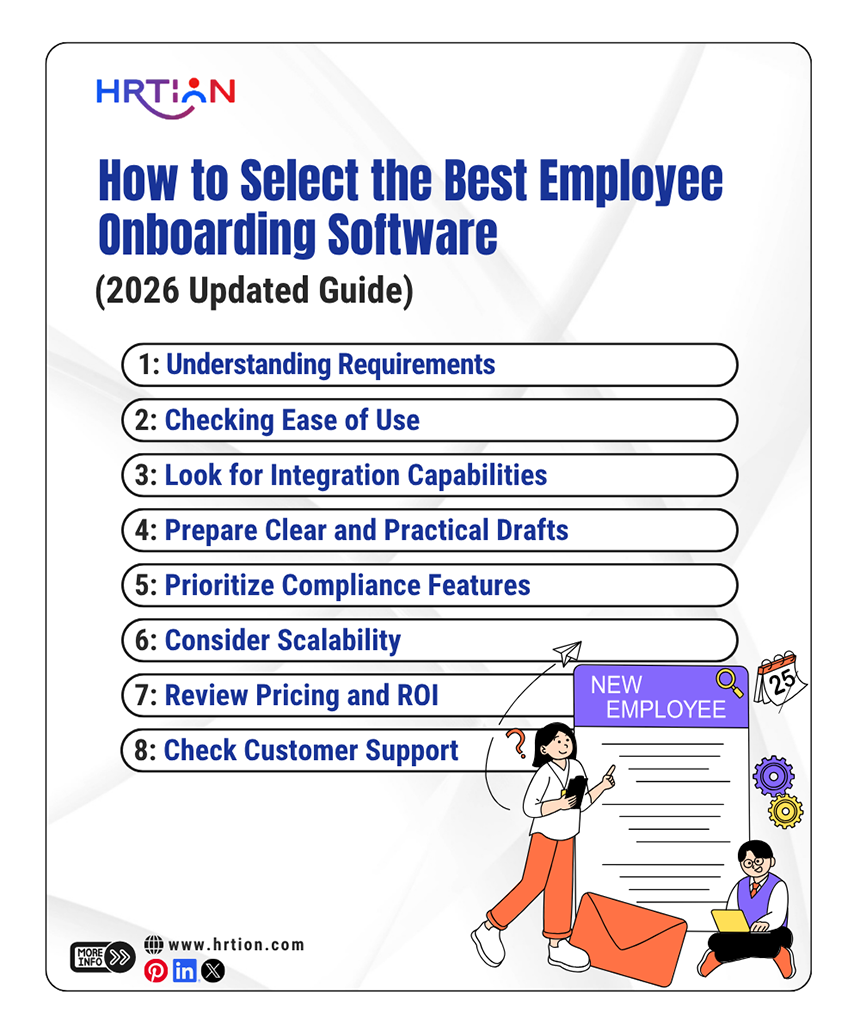
Choosing the right employee onboarding software depends heavily on understanding your organization’s goals, processes, and plans for development. The right employee onboarding software would be able to complement your organization’s long-term plans and values. Provided below are some important factors to consider when choosing an employee onboarding software:
- Understanding Requirements
Identify your organization’s specific needs. Taking a look at factors like company size, hiring frequency, industry requirements, and whether you onboard remote, in-office, or hybrid employees allows you to narrow down the right options.
- Checking Ease of Use
The software should be user-friendly and intuitive for both HR teams and new hires. Complexity in the software can make adoption slower and cause frustration. Try to locate clean interfaces, simple navigation tools, and minimal training requirements that would be easier to understand for all users.
- Look for Integration Capabilities
The onboarding software should be capable of integrating seamlessly and without complex changes with existing HR ecosystems, including payroll systems, HRMS, and performance management tools. This avoids data silos, reduces duplicate entries, and ensures consistency in information flow across platforms.
- Evaluate Customization Options
Each organization has its own unique workflows and policies. It is, therefore, necessary that the onboarding software allows for customization of onboarding processes, forms, and task sequences based on roles, departments, or locations.
- Prioritize Compliance Features
If your industry involves strict legal or regulatory requirements, compliance with the laws must remain your top priority. Looking for features like automated document tracking, audit trails, and policy acknowledgements ensures that the legal obligations are met accurately and consistently.
- Consider Scalability
As the organization grows, the onboarding needs will evolve as well. Choosing a platform that can handle increasing employee numbers, multiple locations, and more complex workflows without compromising performance is a powerful way to find the best types of onboarding software.
- Review Pricing and ROI
While reviewing the costs, it is also important to take a deeper look and consider how much value the software provides. Some factors, like the amount of time and effort the software saves, its improvement regarding employee retention, and how much it reduces compliance risks, are critical in determining the overall value of the software.
- Check Customer Support
Reliable customer support is essential, especially during implementation and early usage. Providers that offer onboarding assistance, training resources, and responsive support channels are able to ensure that any issues are resolved quickly and efficiently.
Challenges with Employee Onboarding Software
Although employee onboarding software does bring efficiency and structure, it still has its own challenges. Some of the common ones are given below:
- Complexity in Implementation
Setting up onboarding software can be a very detailed and time-intensive process, involving configuring workflows, customizing templates, and migrating existing employee data from the old legacy systems. Without proper planning and technical support, implementation can lead to heavy delays and disruptions in HR operations.
- Employee Resistance
Introducing new technology can sometimes be met with resistance from both HR teams and new hires. Employees who are more used to traditional methods may find it difficult to adapt to a more digital system. Lack of training or unclear communication can cause adoption to slow down further and reduce the effectiveness of the software.
- Integration Issues
Not all onboarding platforms are able to integrate seamlessly with existing HR systems such as payroll, HRMS, or performance management tools. Issues with compatibility may lead to data silos, duplicate entries, or manual workarounds, which lead to a reduction in the overall efficiency that the software is meant to provide.
- Concerns regarding Costs
Advanced onboarding solutions often come with subscription fees, implementation costs, and potential customization expenses. For smaller businesses, this can be a significant investment, especially if the return on investment is not immediately visible.
- Data Security Risks
Onboarding software manages sensitive employee data such as personal records, details, financial data, and legal documents. Without strong security measures in place, like encryption, access controls, and compliance with data protection regulations, there is a significant risk of data breaches or unauthorized access.
- Over-Automation
Relying too heavily on automation can often make the onboarding process feel impersonal. New hires will still require human interaction, guidance, and cultural connection. Finding the right balance between automation and personal engagement is essential to make the onboarding experience meaningful.
Conclusion
Employee onboarding software is a useful tool that supports smoother hiring and retention. With the right onboarding software, companies can foster an environment of ease, engagement, and compliance. Therefore, it is high time to switch from manual onboarding to an automated process if your goal is to sustain efficiency, productivity, and talent without investing in the expansion of the HR team.
FAQs
What is the main purpose of employee onboarding software?
The primary purpose of onboarding software is to automate, organize, and streamline the onboarding process. It reduces manual intervention and allows repetitive tasks to be managed efficiently.
Is onboarding software suitable for small businesses?
Yes, onboarding software is able to provide significant value to small and growing businesses. The software offers cost-effective solutions and uses features like document management, task tracking, and employee self-service portals to save time and scale the onboarding processes without requiring large HR departments.
How long does onboarding typically take?
The duration of the onboarding process can vary depending on the organization, role complexity, and industry. Basic tasks like documentation and orientation may only take a few days, but full integration, including training and performance alignment, can take up to several weeks or even months.
Can onboarding software improve employee retention?
Yes, a well-structured onboarding process has a direct impact on employee retention. When new hires are able to understand the process, stay engaged, and feel supported through both automated and user-friendly systems and proper human guidance, they are more likely to stay with the organization.
Is employee onboarding software secure?
Most modern onboarding platforms prioritize data security by implementing advanced measures, which include encryption, role-based access control, and compliance with data protection regulations. Because of the sensitive nature of the information handled by the software, it is important that reliable and reputable providers are chosen who can ensure that data is securely stored and protected against unauthorized access or breaches.
What industries benefit most from onboarding software?
While onboarding software is useful across all sectors, its value is much more visible in industries with high hiring volumes or complex compliance requirements. Sectors like IT, healthcare, retail, and finance benefit largely because they frequently onboard employees and require standardized processes.

Sunita Kumari is a Freelance Contributor Writer at HRTion, writing accurate, reliable, and informative content. She completed her Bachelor's from Rajdhani College of the University of Delhi. She has been a Human Resources Recruiter for almost 2 years, including over 1 year with Battersea Web Expert. Drawing on her recruitment and HR processes experience, she writes clear and practical payroll-related guides that help employees and job candidates better understand HR procedures and workplace practices.