
Why are employees leaving? Is it salary, work culture, or growth? Or, is it something beyond the obvious? A study by Forbes (2017) suggests that employees are more likely to leave the company when they feel undervalued or unappreciated.
Thus, businesses that focus on building a culture of engagement, growth, and learning can successfully retain talent over the long term.
Here, we will explore some of the best employee retention strategies that can help businesses build a loyal and productive workforce.
What are Employee Retention Strategies?
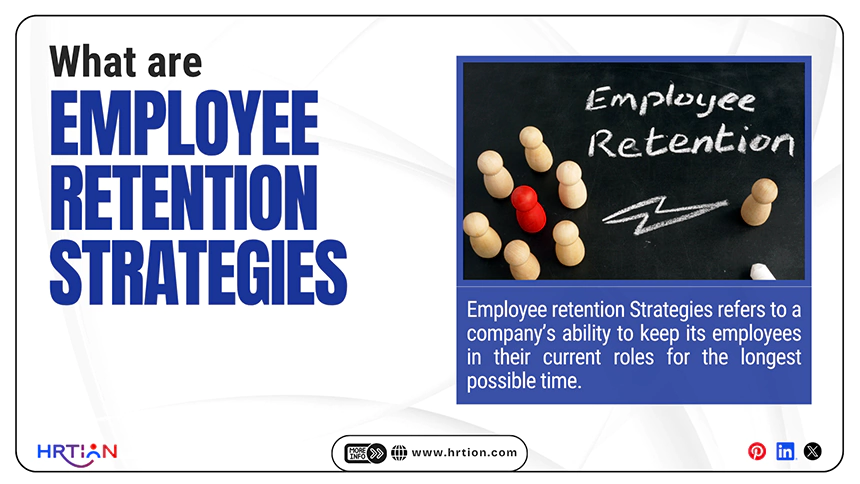
Employee retention Strategies refers to a company’s ability to keep its employees in their current roles for the longest possible time. It is about minimizing the turnover rate to stabilize the company’s workforce at present.
The new HR metrics state that replacing an employee can cost around 50% to 200% of their annual salary, according to the Society for Human Resource Management, varying depending on the role and skills required.
Nearly 1 in 3 employees consider leaving their current job role for something better, especially when they feel undervalued or presented with no growth or learning opportunities. Therefore, planning strong employee retention strategies is highly important to improve profitability through performance and engagement.
Successful real-world employee retention examples would be CarMax, which invested in training during the recession; Zappos, which fosters a top-tier work culture; and Apple, which offers extended paid time off.
Manage the payroll, attendance, shift roles, and more in an all-encompassing HR suite. Your ultimate HR toolkit is just a click away.
Top 20 Employee Retention Strategies
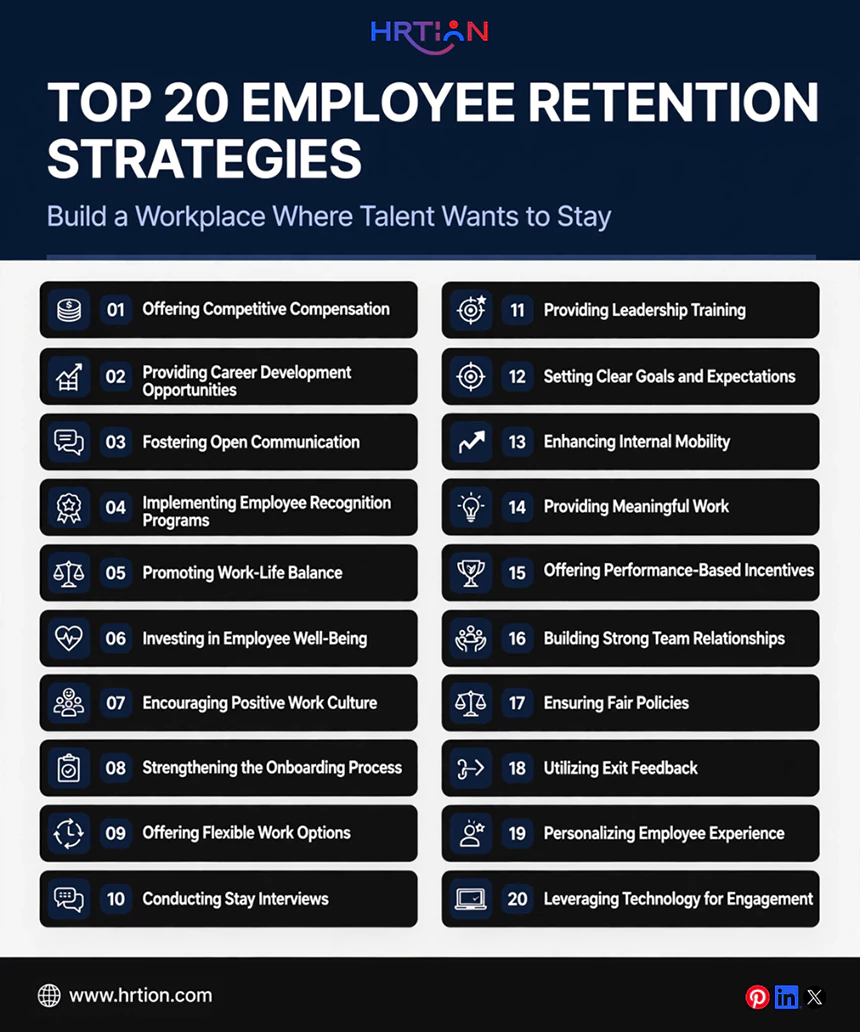
Employee retention has become one of the biggest priorities for organizations looking to maintain productivity, reduce hiring costs, and build a stable workforce. As competition for skilled talent continues to increase, businesses must adopt effective employee retention strategies that improve engagement, job satisfaction, and long-term commitment.
In this guide, we’ll explore 20 proven employee retention strategies that can help organizations attract, engage, and retain top talent in 2026 and beyond.
1. Offering Competitive Compensation
Payment is one of the top drivers of employee retention. Many workforce studies have shown that nearly 50-60% of employees who quit cite pay as a major factor.
To improve employee retention, the organization must regularly benchmark salaries against industry standards and provide bonuses, stock options, and benefits along with the base salary. Maintaining competitiveness in compensation allows the company to avoid attrition due to underpayment.
2. Providing Career Development Opportunities
Employees tend to stay in an organization that is able to provide upskilling programs, mentorships, and clear career progression paths. It has been found that companies with strong learning cultures experience 30-50% higher retention rates.
An organization can further organize budgets for training and access to certifications, which leads to more growth opportunities and increases employee retention.
3. Fostering Open Communication
The easiest way to build trust and reduce misunderstandings is to allow open communication in the organization. Actively seeking employee feedback through surveys, town halls, and one-on-one meetings helps in employee engagement and reduces employee turnover.
Employees who feel heard are shown to be 4.6 times more likely to perform at their best. Regular feedback loops also help in identifying issues before they escalate into resignations.
4. Implementing Employee Recognition Programs
Employees are more likely to respect and engage in an organization where they feel recognized. Employee recognition programs usually range from formal awards to simple peer-to-peer appreciation systems.
Timely and frequent acknowledgement of achievements tends to boost morale and helps employees feel valued. Recognition also need not be necessarily monetary and can also be public appreciation, career opportunities, or symbolic rewards.
5. Promoting Work-Life Balance
Burnout is a common reason for attrition. Employees who find it difficult to separate the high-stress work environments from the stress-free vacations and leaves often quit, leading to higher employee turnover rates.
An organization can help resolve this issue by encouraging employees to disconnect after work hours and take vacations, and providing reasonable workloads and generous leave policies also allows employees to focus on their mental and physical health.
Companies prioritizing work-life balance are able to outperform peers in both retention and employee satisfaction metrics.
6. Investing in Employee Well-Being
Stress and mental health challenges are one of the biggest causes for employee turnover. Employee well-being programs are responsible for prioritizing and supporting mental health, wellness initiatives, and healthcare benefits.
Organizations that pay attention to and engage in initiatives for providing supportive environments report 25% lower absenteeism rates and turnover. Offering counseling services, fitness programs, and wellness stipends can make a significant difference in the well-being of employees.
7. Encouraging Positive Work Culture
Work culture is a significant factor when it comes to employee retention. Culture includes values, behaviors, and everyday interactions within the organization. Companies with strong cultures, which are inclusive, respectful, and collaborative, often experience higher engagement, while toxic cultures typically remain unsustainable.
Employees who can describe their workplace culture as positive are far less likely to seek new opportunities and are able to stick with the business for far longer.
8. Strengthening the Onboarding Process
An effective onboarding process is one of the best first impressions that an employee undergoes in an organization. It sets the tone for long-term retention, with studies supporting it stating that employees with structured onboarding experiences are 69% more likely to stay for at least three years.
A strong onboarding process must include clear role expectations, mentorship, and cultural integration. Early feedback and support help new hires feel more confident and connected to the organization.
9. Offering Flexible Work Options
Flexibility in work arrangements allows employees to manage personal responsibilities more effectively, reducing stress. In recent times, flexibility has become a top priority for employees seeking employment.
Businesses that fail to provide flexibility risk losing talent to competitors. Even partial flexibility, like adjustable work hours, makes a large difference in employee retention rates. Employees are increasingly starting to view flexibility as a standard benefit rather than a perk, and if a business lacks flexibility, it becomes much harder to maintain high retention rates.
10. Conducting Stay Interviews
Stay interviews are tools that help an organization to understand why employees remain with the business. Such interviews help identify weaknesses and issues with the company before it’s too late and enable the organization to address the problems so they don’t escalate.
These interviews and conversations also strengthen the relationships between employees and managers, which builds trust and transparency within the organization.
11. Providing Leadership Training
Managers play a crucial role in retention. Research indicates that most employees leave managers, not companies. Effective managers communicate clearly, provide support, build trust, and foster growth.
Companies offering leadership training, including leadership programs focused on emotional intelligence, conflict resolution, and coaching skills, see an improvement in team performance and lower attrition rates.
12. Setting Clear Goals and Expectations
Clarity in what the role asks from an employee and expectations within the organization heavily reduces confusion and stress. Employees who are able to understand their responsibilities take more accountability and are more productive and engaged.
Clear communication plays a key role in ensuring that employees know what success looks like and how their individual contributions affect the company. Confusion in expectations is a major reason for dissatisfaction and turnover.
13. Enhancing Internal Mobility
Internal mobility allows employees to seek and explore new roles without leaving the organization. Internal mobility programs help retain institutional knowledge and improve employee engagement.
Businesses that focus on promoting internal hiring, lateral moves, and cross-functional experiences are able to retain employees for longer periods of time and reduce recruitment costs. This can enhance skills and career satisfaction for employees.
14. Providing Meaningful Work
Employees who find meaning in their tasks and work are more engaged and committed. Organizations with clear communication about how individual roles contribute to and affect the organization’s broader goals can align work with values and foster a sense of fulfillment in employees by providing them with meaningful work.
Purpose-oriented employees are much more likely to stay and perform better, leading to better job satisfaction.
15. Offering Performance-Based Incentives
Performance-based incentives act as motivation for employees and reward high performance. These incentives can include bonuses, promotions, and recognition.
A detailed set of criteria for these rewards can help ensure fairness and transparency and improve productivity and retention. Incentive programs should, however, be aligned with organizational goals to drive desired outcomes.
16. Building Strong Team Relationships
Strong interpersonal relationships boost engagement and retention. Employees who are more connected with their colleagues feel a desire to stay. These relationships can be supported and built through team-building activities, collaborative projects, and social interactions.
Studies have shown that workplace friendships can significantly improve job satisfaction. Not only does a supportive team environment provide a sense of belonging, but it also relieves stress and encourages collaboration within the organization.
17. Ensuring Fair Policies
Transparency and fairness are essential for building trust. Employees who perceive any unfairness in policies are more likely to disengage and leave the organization.
Clear, detailed, and consistent policies build credibility and ensure that employees experience fairness in the workplace. Regular policy reviews also prove to be useful for guaranteeing that policies are aligned with employee expectations and industry standards.
18. Utilizing Exit Feedback
Exit feedback, in contrast to stay interviews, provides insights as to why employees leave an organization. Valuing the insights and analyzing the issues provided can address the problems faced by employees before further attrition can take place.
Ignoring the feedback can often lead to repeated mistakes and lower retention, while structured analysis of exit data allows for continuous improvement and better decision-making.
19. Personalizing Employee Experience
Employees have diverse needs and preferences, and a one-size-fits-all approach rarely works and is much less effective. Tailoring benefits, career paths, and work arrangements improves job satisfaction, and personalizing the employee experience can guarantee higher engagement and loyalty.
To create meaningful experiences, companies must be willing to understand individual motivations and goals, which can lead to long-term commitment.
20. Leveraging Technology for Engagement
HR technology has a major role to fulfill in monitoring and improving employee engagement. Organizations that rely on engagement platforms often report higher productivity and lower turnover. Tools for surveys, performance management, and communication provide real-time insights into employee sentiment.
This approach allows the company to make data-driven approaches and decisions, which makes it easier to identify issues early and carry out targeted solutions.
Importance of Employee Retention
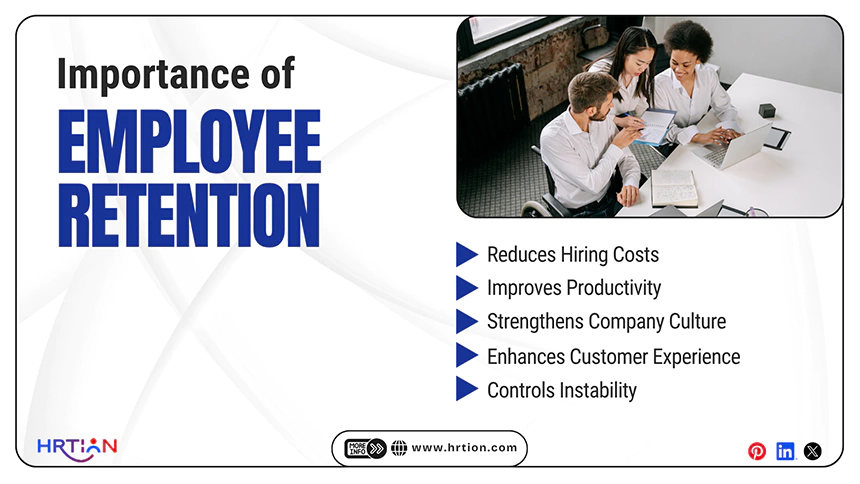
High retention not only saves hiring and training costs, but it also improves productivity, morale, and operational knowledge.
Some key reasons reflecting the importance of employee retention are the following:
- Reduces Hiring Costs
Replacing an employee requires investing a big chunk of their annual salary. These costs consist of recruitment, onboarding, training, and the time taken for the new hire to fill the position. A high retention rate helps organizations avoid these recurring expenses and allocate resources.
- Improves Productivity
Long-term employees have a deeper understanding of the processes, policies, and company goals. This leads to faster results, fewer mistakes, and better familiarity and bonds, ultimately resulting in improved overall efficiency and output rate.
- Strengthens Company Culture
Employees working together for longer periods usually have stronger relationships. This creates a positive work environment where employees feel noticed, valued, and motivated.
- Enhances Customer Experience
Experienced employees can serve clients better by understanding their needs and delivering high-quality service. This can increase customer satisfaction, prove loyalty, and foster a positive brand reputation.
- Controls Instability
Poor retention can cause a sense of instability in the workforce as well as the company’s operations. This can motivate other employees to search for new jobs, too, due to damaged morale. Likewise, a stronger retention rate creates a perception that the company is great to stay with for longer periods.
Why Do Employees Leave?
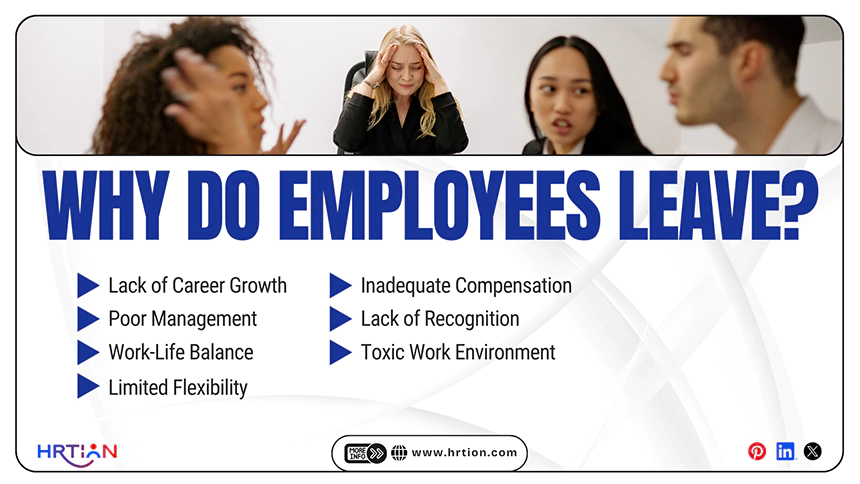
According to Forbes, 47% of turnover is due to unhealthy company culture. Apart from this, there have been multiple reasons for employees to leave; some of the most common ones are stated below:
- Lack of Career Growth
Stating the obvious, employees are tempted towards growth in terms of money and skills. Companies that offer extensive career development opportunities tend to have a higher retention rate. And a lack of growth can lead to major voluntary turnover.
- Poor Management
Leadership quality has a direct impact on the employee retention rate. SecondTalent studies indicate that 71% of voluntary turnover is linked to poor management. There is a common saying that goes around the corporate world: “Employees often leave managers, not companies.”
- Inadequate Compensation
Compensation or salary has been the most crucial driving factor for employees towards their jobs. Money makes people stay or leave at their current position; in other words, employees usually switch jobs for better pay.
- Work-Life Balance
Work-life balance has become a global concern. According to Gallup, well-being (both mental and physical) and work-life balance account for 31% of reasons employees leave.
- Lack of Recognition
The feeling of being undervalued is more likely to lead to leaving or resigning. Poor feedback systems and a lack of appreciation are key reasons for the turnover rate, causing reduced productivity and increased absenteeism.
- Toxic Work Environment
Workplace culture plays a crucial role in employee retention. Studies show that 47% turnover is caused by an unhealthy workplace culture. This includes poor communication, lack of inclusivity, and weak leadership practices.
- Limited Flexibility
Employee expectations have been transitioning quite rapidly. Flexible or remote work is helping in retaining the right talent, with up to a 94% success rate.
How to Calculate Employee Retention Rate
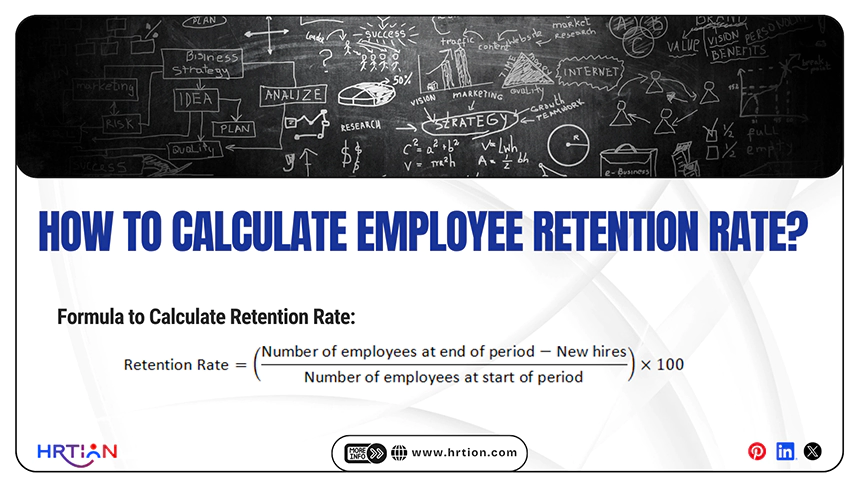

Employee retention is a crucial HR metric that helps measure the number of employees who stay with the organization for a specific period.
Formula to Calculate Retention Rate:
Retention Rate = (number of employees during the period − new hires/number of employees at the start of the time period) × 100
Example:
- Employees at start: 100
- Employees at the end: 120
- New hires: 30
Retention Rate = ((120 – 30) ÷ 100) × 100 = 90%
Important Note: A retention rate above 85–90% is generally considered good and healthy for business. This varies based on the industry and nature of the business.
HRTion: HR Automation to Improve Employee Retention
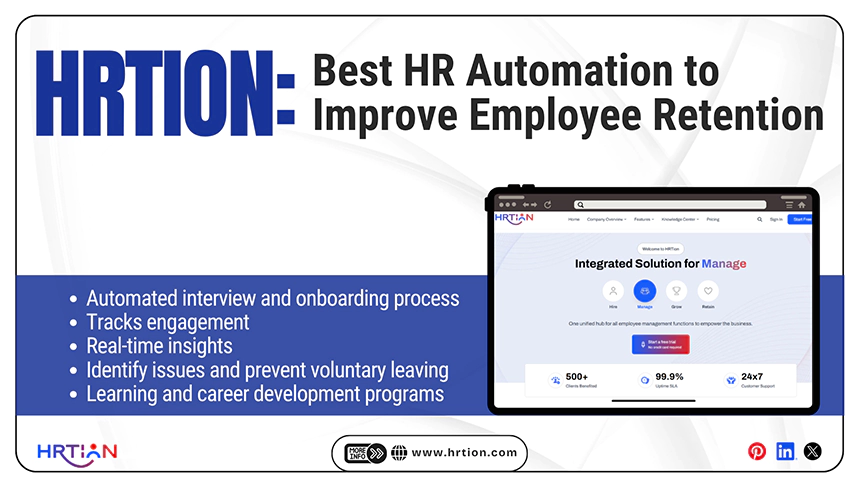
HRtion is a digital platform that provides data-driven insights to enhance the employee experience through engagement, analytics, and collaboration tools.
By automating HR processes and enabling real-time performance tracking, HRtion helps businesses identify issues within the company and take necessary actions to improve employee retention rates. This ensures that employees feel included, valued, and motivated.
Key features of HRtion:
- Automated interview and onboarding process for a smoother start.
- Tracks engagement through feedback tools.
- Offer real-time insights for continuous performance tracking.
- Uses analytics to identify issues and prevent voluntary leaving.
- Offer learning and career development programs.
Conclusion
Employee retention strategies are not about preventing employees from leaving; it is about creating an environment that fosters engagement, growth, and open communication.
Automation plays an important role in making a workplace better by improving employee engagement and reducing turnover. But the HR team and managers must efficiently leverage feedback and analytics to identify issues and trends to control attrition.
FAQs
What is a good employee retention rate?
A retention rate of 85% or higher is typically considered good, although the percentage may vary with different industries.
What is the difference between retention and turnover?
Retention refers to the amount or percentage of employees who stay in an organization, while turnover measures employees who quit and leave an organization.
How can small businesses boost employee retention?
Many methods, like focusing on culture, recognition, and clear communication, are able to improve employee retention for smaller businesses with limited resources.
What role does leadership play in retention?
Leadership refers to the influence of managers on employee satisfaction. Poor leadership is a major cause of attrition.
Can automation really improve retention?
Yes, automation can help track engagement, improve experiences, and predict turnover efficiently, which reduces retention.

Bhavesh is a Guest Writer at HRTion with an academic background in HR. He did an HR management course in 2025. Before transitioning to HR content writer, he worked as an Academic Content Writer at Trident Management for over 6 years. His expertise in recruitment processes & strategies helps him write detailed and clear content that is not only informative but also accessible for everyone.