
- Why Businesses Need an HR Digital Transformation Roadmap
- Benefits of HR Digital Transformation Roadmap
- Key Components of HR Digital Transformation Roadmap
- Stages of HR Digital Transformation
- Steps to Build an HR Digital Transformation Roadmap
- Best Strategies for HR Digital Transformation
- Tips for Efficient HR Digital Transformation
- HR Digital Transformation Examples
- Challenges with HR Digital Transformation
- HRtion: The Tool for Seamless HR Digital Transformation
- FAQs
Human resources is one field that has evolved significantly over the years. There was a time when HR processes were handled manually, but today, businesses are actively moving towards digital HR transformation from manual to automated. This is when the HR digital transformation roadmap comes into the picture.
An HR digital roadmap helps the organization understand the present needs, past mistakes, and future goals and outlines the right tools aligning with all these aspects.
In the current times, where businesses are rapidly going digital, having a clear roadmap is essential to stay organized during the transformation.
Here is a complete roadmap presenting an insightful overview of HR digital transformation, helping businesses build a future-ready HR team.
Why Businesses Need an HR Digital Transformation Roadmap
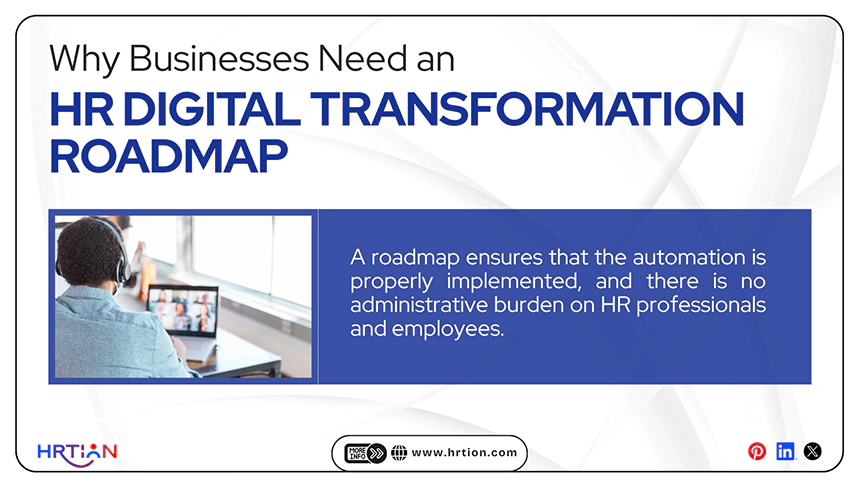
The HR digital transformation roadmap is a step-by-step plan that helps businesses upgrade their HR processes using automation. In other words, companies include digital tools and technology in their processes to pave a structural path for their employees to follow.
With changing workforce expectations, it has become essential for companies to introduce digital solutions. A roadmap ensures that the automation is properly implemented, and there is no administrative burden on HR professionals and employees. Roadmap allows better understanding of the process, predicts challenges, and improves workforce planning.
Benefits of HR Digital Transformation Roadmap
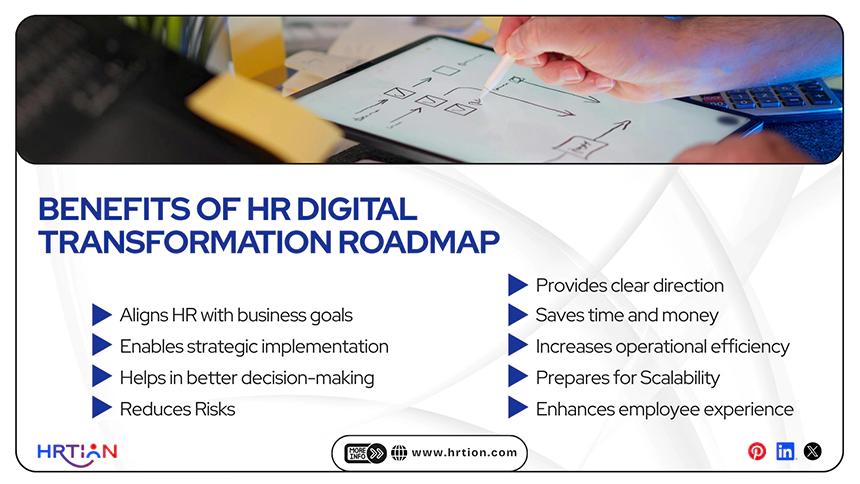
Implementing HR digital transformation through a roadmap offers a wide array of benefits to both employees and organizations.
– Provides clear direction: Instead of wasting time and effort, having a roadmap is smarter. It acts as a guide that tells the organizations what to do first, the next step, and the final goal. This brings everyone on the same page, eliminating confusion of all sorts.
– Aligns HR with business goals: HR is the backbone of all businesses. It handles crucial tasks like hiring, training, and retaining employees. A roadmap ensures that HR efforts are aligned with the business goals in respect to growth, expansion, and productivity.
– Saves time and money: Companies may invest vaguely without a roadmap, making it important to choose the right technology and maintain the overall budget.
– Enables strategic implementation: Digital transformation is a significant task and can be quite overwhelming if not headed in the right direction. A roadmap breaks the entire process into smaller steps, making it more manageable.
– Increases operational efficiency: A clear plan helps automate routine HR tasks like payroll, attendance, and onboarding. This saves time and allows the HR team to focus on strategy-making.
– Helps in better decision-making: The HR digital roadmap ensures that HR makes informed decisions based on data and analytics. This directly improves decisions related to hiring, performance, and employee retention.
– Prepares for Scalability: Growing businesses need a roadmap to deal with complexity. It ensures that the system can handle scalability, growth, and future expansion.
– Reduces Risks: Planning keeps the business prepared for possible challenges, such as failed systems, compliance issues, or legal risks. A roadmap reduces the chances of mistakes and disruptions.
– Enhances employee experience: Digital transformation through a roadmap ensures that employees accept the new system adeptly. It provides a way to gradually introduce it with proper training and support.
Manage the payroll, attendance, shift roles, and more in an all-encompassing HR suite. Your ultimate HR toolkit is just a click away.
Key Components of HR Digital Transformation Roadmap
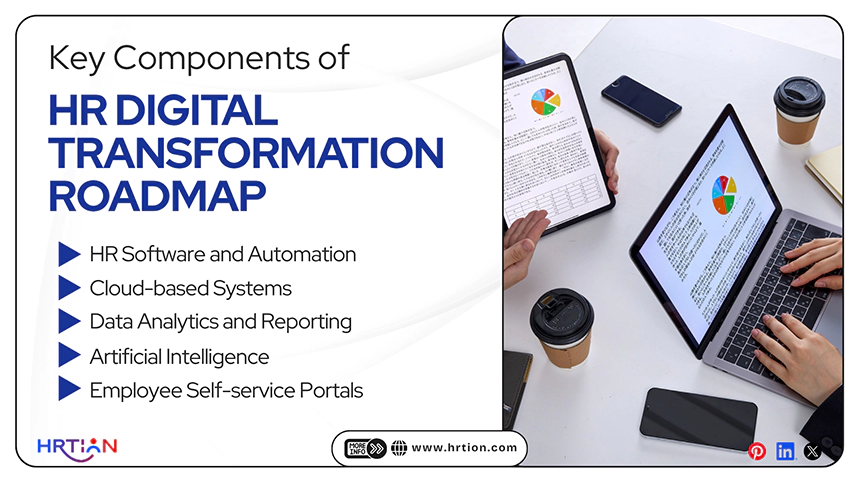
The HR digital transformation roadmap includes the following core components that work together to produce streamlined processes and improved efficiency.
- HR Software and Automation
The major element of digital transformation is automation through HR software management systems. The tools digitize payroll, attendance, recruitment, and performance management. These systems reduce manual efforts and enhance accuracy.
- Cloud-based Systems
Cloud technology makes data accessible for employees and administration alike. It ensures data security and employee satisfaction, which are the two major focuses for a successful roadmap.
- Data Analytics and Reporting
Analytics tools help administration and HR professionals to track the key metrics related to attendance, performance, turnover, and engagement.
- Artificial Intelligence
AI is quite helpful while implementing a transformation roadmap for HR processes. It enables automated resume screening, tools for improved employee engagement, and an in-depth analysis for talent management.
- Employee Self-service Portals
Self-service portals empower employees to handle routine tasks, reducing HR workload and promoting better strategy making.
Stages of HR Digital Transformation
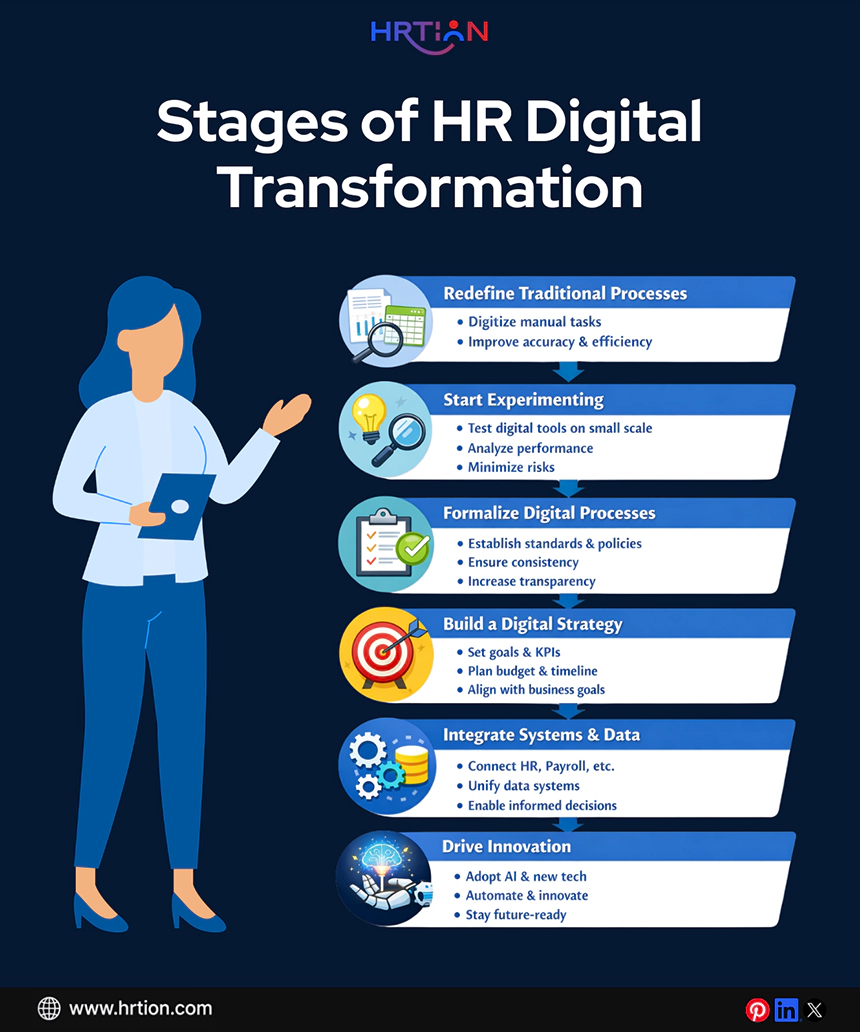
Stage 1: Redefine the Traditional Process
Businesses traditionally use manual processes like spreadsheets, paperwork, and disconnected systems. These procedures are time-consuming, expensive, and prone to errors.
Therefore, the businesses should start the transformation by first digitizing the regular processes, such as data entry and recordkeeping. This will improve the outcomes of basic functions first.
Stage 2: Start Experimenting
After improving the basic functions, the next stage focuses on experimenting with digital solutions, but at a smaller scale. Instead of implementing significant changes, start analyzing how the tools work.
This stage is crucial to reducing future risks and building confidence among employees and HR professionals. It helps the team understand how certain tools scale businesses in real-world scenarios.
Stage 3: Formalizing Digital Processes
Once the experimental state is over, the company must formalize and standardize the digital practices. In this stage, new guidelines, policies, and a workflow should be established that operate according to the new tools.
The aim of this stage is to create more structured and consistent HR processes. It improves accountability and transparency by ensuring that everyone follows the same process.
Stage 4: Building a Strong Digital Strategy
Once a standard process is established, the organizations should develop a long-term digital strategy. This stage focuses on forming an HR transformation roadmap.
Companies then define attainable objectives such as improving employee experience, reducing hiring time, and increasing productivity. They set KPIs to measure success, plan budgets, set timelines, and allocate resources for a successful digital transformation.
Stage 5: Integrating Systems and Data
After adapting the multiple digital tools, it is required to integrate them carefully into the system. Different systems, namely HR, payroll, recruitment, and performance management, need to work in integrated fashion.
Businesses connect these tools to form a unified ecosystem. All the data are combined into a single source, making it easier to access and analyze.
Stage 6: Driving Innovation
The final stage of HR digital transformation focuses on innovation and ongoing improvement. After building a strong foundation, they must introduce different innovative platforms into the system. Adopting new technologies will keep the business future-ready.
For example, AI can be incorporated in the process, like screening resumes, handling employee queries, and generating predictive analysis.
Steps to Build an HR Digital Transformation Roadmap
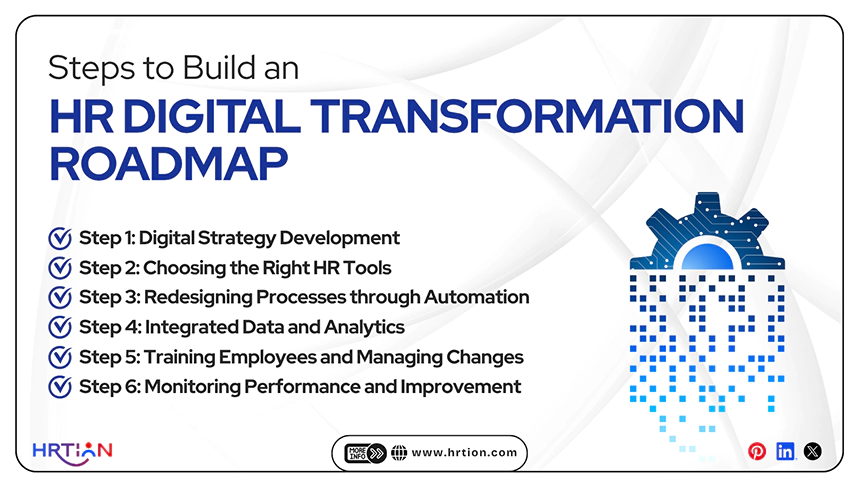
Building an HR digital roadmap is essential to keep the transformation on track. Here are the steps to build a successful and advantageous roadmap.
Step 1: Digital Strategy Development
The process starts with developing a strategy that fits in with your business needs. First, analyze the current HR trends, define the bottlenecks, and set clear business goals. This will lead the digital transformation in the right direction.
Step 2: Choosing the Right HR Tools
Once the strategy is in place, the next step is to select the right tools and platforms. This includes HR management systems, payroll software, recruitment tools, and analytics platforms. It focuses on scalable, user-friendly, and integrated solutions.
Step 3: Redesigning Processes through Automation
After selecting the automation, it is time to design the entire workflow. The manual processes are now to be digitized. It includes data migration to a centralized platform and handling regular tasks like payroll, attendance tracking, leave management, and onboarding through dedicated platforms.
Step 4: Integrated Data and Analytics
Now, the entire data should be connected and stored in one place for easier access and management. With the help of data and analytics, businesses can track employee performance, track trends, and make informed decisions. The rightly processed data can help identify why employees are leaving and which teams are performing the best.
Step 5: Training Employees and Managing Changes
New systems can be difficult to adapt to, and thus employees need to be properly trained. The company must support teams during the transitional phase and explain the benefits of the changes. Streamlined change management can help reduce resistance and ensure comfortable adoption.
Step 6: Monitoring Performance and Improvement
Once the digital roadmap is successfully implemented, businesses should track the performance. The company must evaluate how the changes are affecting goal management. The best method for this is to take feedback and implement the suggestions.
Best Strategies for HR Digital Transformation
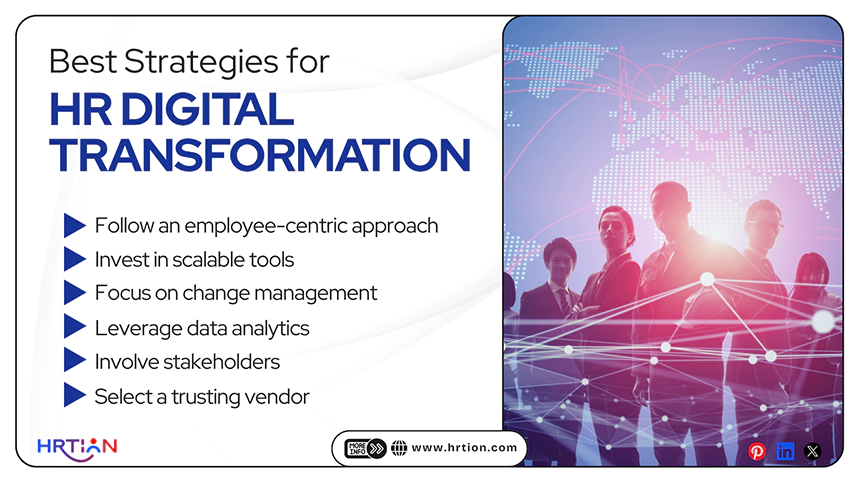
Transformation needs concentration, dedication, and patience, as it doesn’t happen overnight. Here are some effective strategies to make it happen more smoothly.
- Follow an employee-centric approach: Focus on enhancing the overall employee performance by implementing user-friendly digital tools, following the suggestions, and taking regular feedback.
- Invest in scalable tools: Choose the digital systems that can scale as your business grows. It will help in adapting to changes happening after certain intervals.
- Focus on change management: Strategizing change management is equally important, as it allows employees to adapt to transformation. Keep employees involved in the process to reduce change resistance.
- Leverage data analytics: Data plays a crucial role in identifying trends, measuring employee performance, and making informed decisions.
- Involve stakeholders: Make sure key stakeholders, including staff, management, HR professionals, and others, gain complete insights.
- Select a trusting vendor: Select the right vendors that provide regular customer support, align with the company’s needs, and offer scalability.
Tips for Efficient HR Digital Transformation
These tips will help you overcome the bottlenecks and roll out digital strategy across the organization while keeping everyone on the same page.
- Start with small steps and scale gradually, as rushing into the process can cause disruption.
- Make sure the leadership is involved in the process so that they can prepare their team accordingly.
- Focus on employee engagement. So that they feel noticed and heard.
- Ensure data security in every stage of HR digital transformation.
- Creating a well-designed training plan is important to support employees.
- Make sure the digital transformation aligns with the overall business goals.
HR Digital Transformation Examples
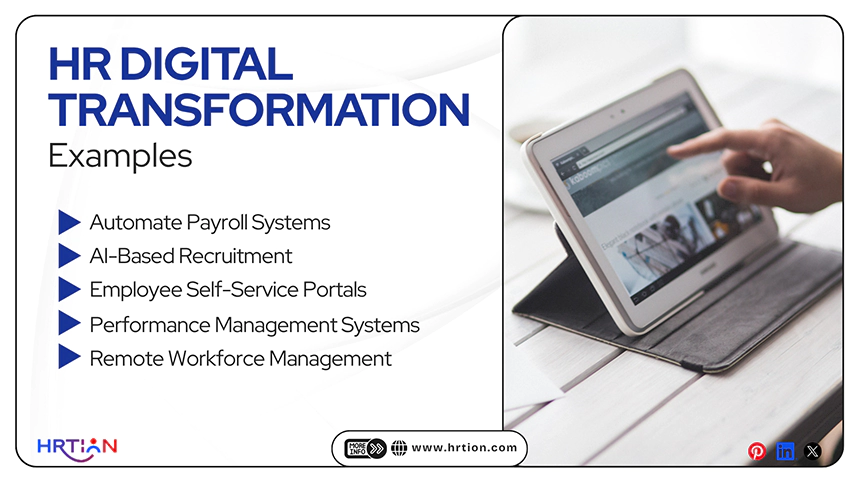
These are HR transformation examples that help with the day-to-day operations. Including them in the process can simplify functions and reduce overload, promoting a balanced environment.
– Automate Payroll Systems
Companies are now implementing automated payroll software to process salaries, taxes, and compliance digitally. This reduces errors and saves time.
– AI-Based Recruitment
AI recruitment tools are used to screen resumes, shortlist candidates, and conduct interviews. These digital tools reduce time and improve efficiency.
– Employee Self-Service Portals
Businesses integrate portals that allow employees to manage their personal and professional details, apply for leave, and access company policies on their own.
– Performance Management Systems
Digital platforms allow teams to access feedback, goal tracking, and performance evaluation reports, helping in employee development.
– Remote Workforce Management
Companies with hybrid work models use digital tools to keep distant employees in the loop. It helps remote employees to track productivity, manage attendance, and ensure seamless communication.
Challenges with HR Digital Transformation
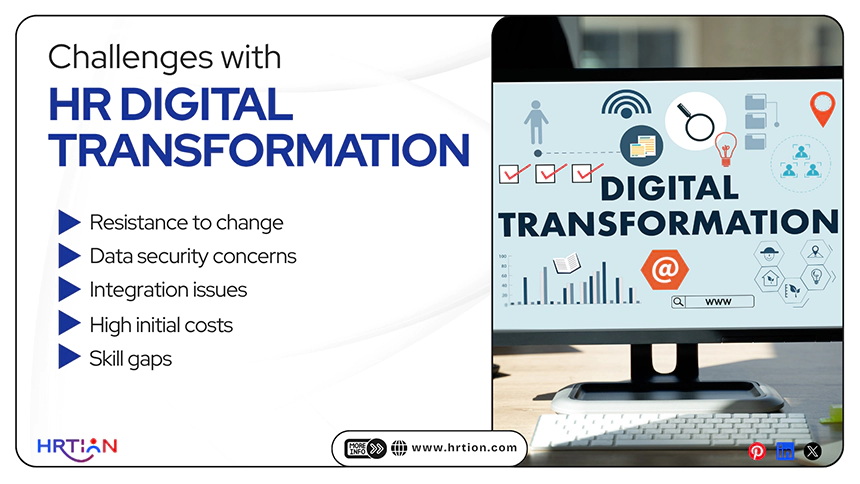
Though HR digital transformation is highly effective, it may present some challenges that can affect the speed and efficiency of the process.
– Resistance to change: Employees and HR teams may resist adopting new technology due to a lack of technical skills or a poor understanding.
– Data security concerns: A sudden transformation into a new digital process can cause a data breach. The company must follow optimal security standards to ensure the sensitive data remains protected.
– Integration issues: Integrating new systems with the existing tools can cause problems due to complexity and poor time management.
– High initial costs: The upfront investments in digital tools and training can be quite significant.
– Skill gaps: HR teams sometimes lack technical expertise, and this may cause problems while implementing and managing digital solutions.
HRtion: The Tool for Seamless HR Digital Transformation
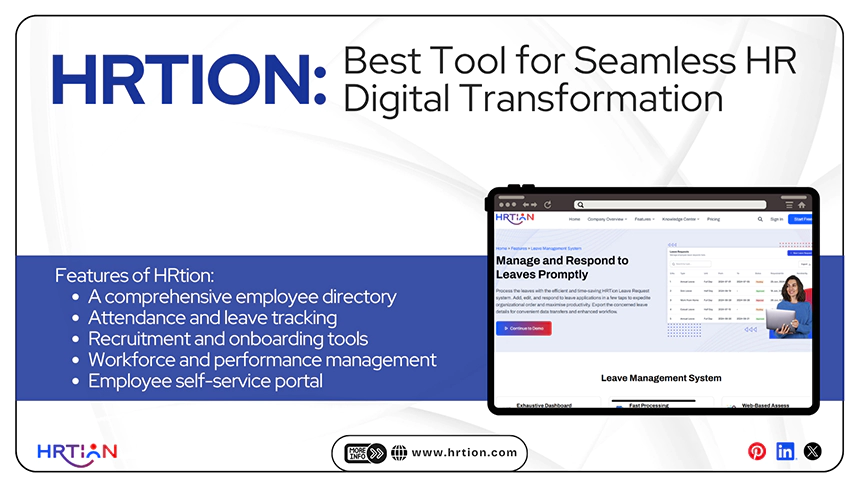
HRtion is an advanced HR management platform that helps companies in complete digital transformation. This comprehensive suite of tools can be a true companion for companies needing automation for streamlined HR processes and improved efficiency.
Features of HRtion:
- A comprehensive employee directory
- Attendance and leave tracking
- Recruitment and onboarding tools
- Workforce and performance management
- Employee self-service portal
- Remote access
- Compliance management
- Payroll processing
FAQs
What is HR digital transformation?
HR digital transformation is the process of integrating digital tools into HR operations such as payroll, attendance, leave management, and compliance management.
What are the HR digital transformation examples?
Technologies like automated payroll systems, AI-based recruitment, and employee self-service portals are the primary examples of HR transformation.
What are Benefits of HR digital transformation roadmap
The major benefits of an HR digital transformation roadmap are reduced workload, improved accuracy, and enhanced employee experience.
What is Best tool for HR digital transformation
The best tools for digital transformation can be HRMS, payroll systems, recruitment platforms, and analytics tools. Overall, HRtion is considered to be a secure, scalable, and affordable solution to automate HR operations.
How long does HR digital transformation take?
The time depends on the size of the business and the complexity of the processes. It can take several months to a few years.
Sources:

Bhavesh is a Guest Writer at HRTion with an academic background in HR. He did an HR management course in 2025. Before transitioning to HR content writer, he worked as an Academic Content Writer at Trident Management for over 6 years. His expertise in recruitment processes & strategies helps him write detailed and clear content that is not only informative but also accessible for everyone.