
- Objectives of a Digital HR Transformation Strategy
- Key Components of Digital HR Transformation Strategy
- Building a Digital HR Transformation Strategy
- Stages of Digital HR Transformation Strategy
- Benefits of Digital HR Transformation
- Best Tips For Successful Implementation of Digital HR Transformation Strategy
- Real-World Examples of Digital HR Transformation Strategy
- Digital HR Transformation With HRtion
- Conclusion
- FAQs
Business dynamics are no longer the same as they were a decade ago. Outdated and manual HR processes can no longer handle the complex compliance and workforce requirements. Therefore, HR digital transformation strategy is no longer optional.
The companies are rapidly moving towards automation to achieve efficiency, accuracy, and economic advantage. But digitizing HR processes requires a robust strategy to manage risks and bottlenecks as businesses step into the digital world.
Here is the guide exploring every detail about building and implementing an HR digital transformation strategy for a smoother shift.
Objectives of a Digital HR Transformation Strategy
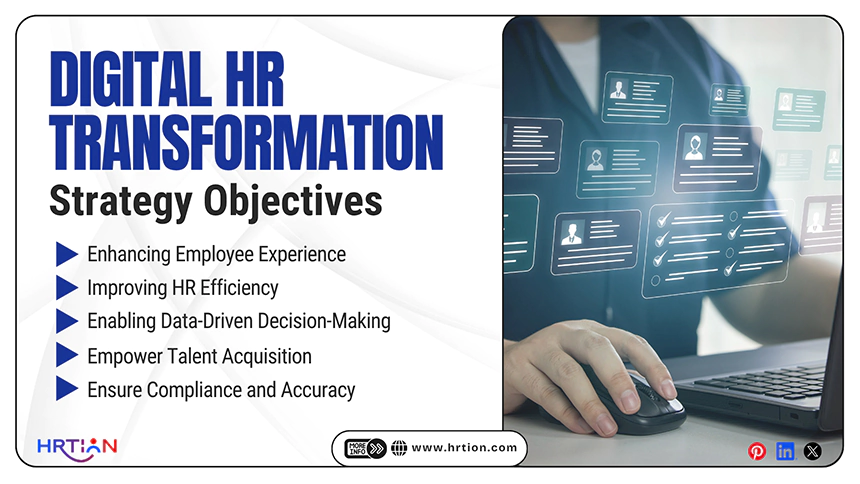
The primary goals or objectives of a digital transformation strategy are to align HR functions with business growth and employee satisfaction.
Some other major objectives are the following:
- Enhancing Employee Experience
Employees nowadays expect immediate and digital interactions. A well-designed strategy ensures that employees are enabled to access their professional information, performance reviews, and onboarding details.
- Improving HR Efficiency
Digital strategy aims to simplify HR operations. It reduces manual workloads so that HR professionals can focus on strategic development like talent management.
- Enabling Data-Driven Decision-Making
HR analytics is a key element in making informed decisions regarding workforce management. It helps track employee performance, predict turnover, and improve hiring.
- Empower Talent Acquisition
Digital tools help in improving candidate quality, speeding up the process, and retaining employees. A transformative strategy ensures that every practice falls in place.
- Ensure Compliance and Accuracy
Automated systems are built to update the company about labor laws to maintain compliance requirements. This helps businesses steer clear of legal risks.
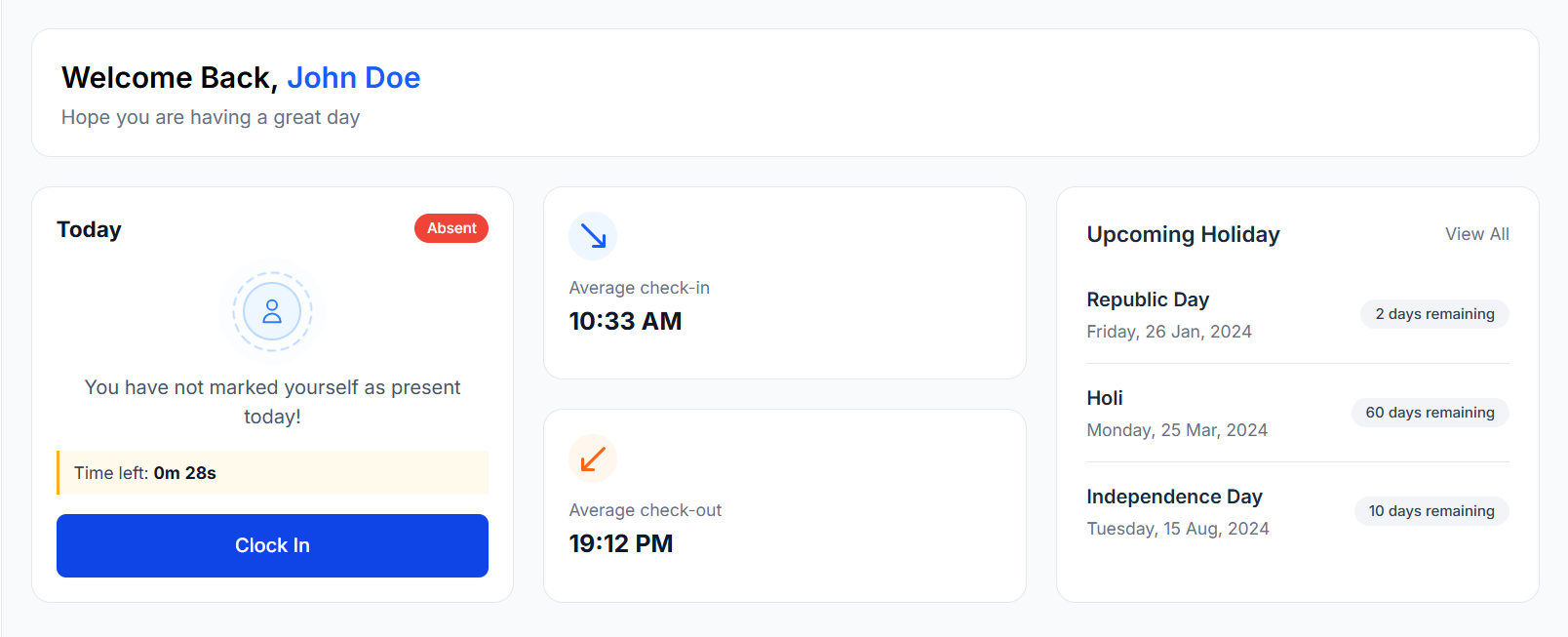
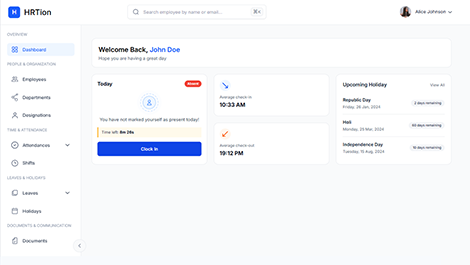
Manage the payroll, attendance, shift roles, and more in an all-encompassing HR suite. Your ultimate HR toolkit is just a click away.
Key Components of Digital HR Transformation Strategy
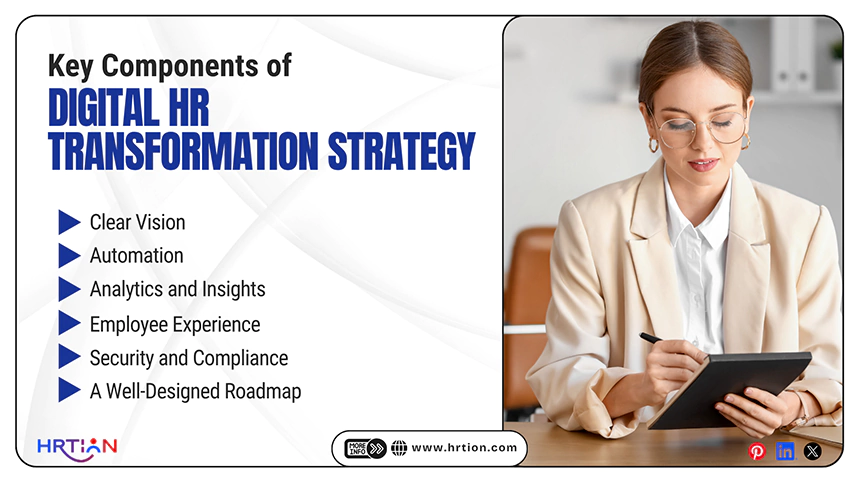
The digital transformation consists of several crucial aspects, from foresight to advanced tools. Here are the components that together make the transformation journey impactful.
- Clear Vision
Every successful business must have a defined vision. This vision must align with the company’s objectives for long-term growth. It also helps in improving efficiency, productivity, and employee value. A well-articulated vision helps teams make guided decisions, involves stakeholders, and provides a better sense of direction.
- Automation
Automation is the most crucial component of a transformation strategy. It is meant to reduce manual efforts, minimize errors, and speed up the administrative process. It automates repetitive tasks so that HR teams can focus on strategic initiatives. Also, automation ensures consistency across the HR functions by eliminating delays and improving employee experience.
- Analytics and Insights
Making data-driven HR decisions is important for a powerful digital transformation. Analytics and insights are important to move from intuition-based decisions to evidence-based strategies. This is also helpful in workforce planning, ensuring that the company is hiring the right talent.
- Employee Experience
Employee experience is the core of digital HR strategy. Technology should empower employees by making interactions smoother and providing a self-service portal to apply for leave, access payslips, and manage information.
- Security and Compliance
The transformative strategy should handle sensitive employees, maintaining security and compliance. Companies need secure systems to be integrated while building a strategy for digitizing HR operations. These tools help build credibility and reliability.
- A Well-Designed Roadmap
Another crucial factor of digital HR strategy is a roadmap that can aid in planning and execution. It ensures that all initiatives are aligned with the company’s goals. Without an HR digital transformation roadmap, organizations may face confusion, delays, and wasted resources.
Building a Digital HR Transformation Strategy
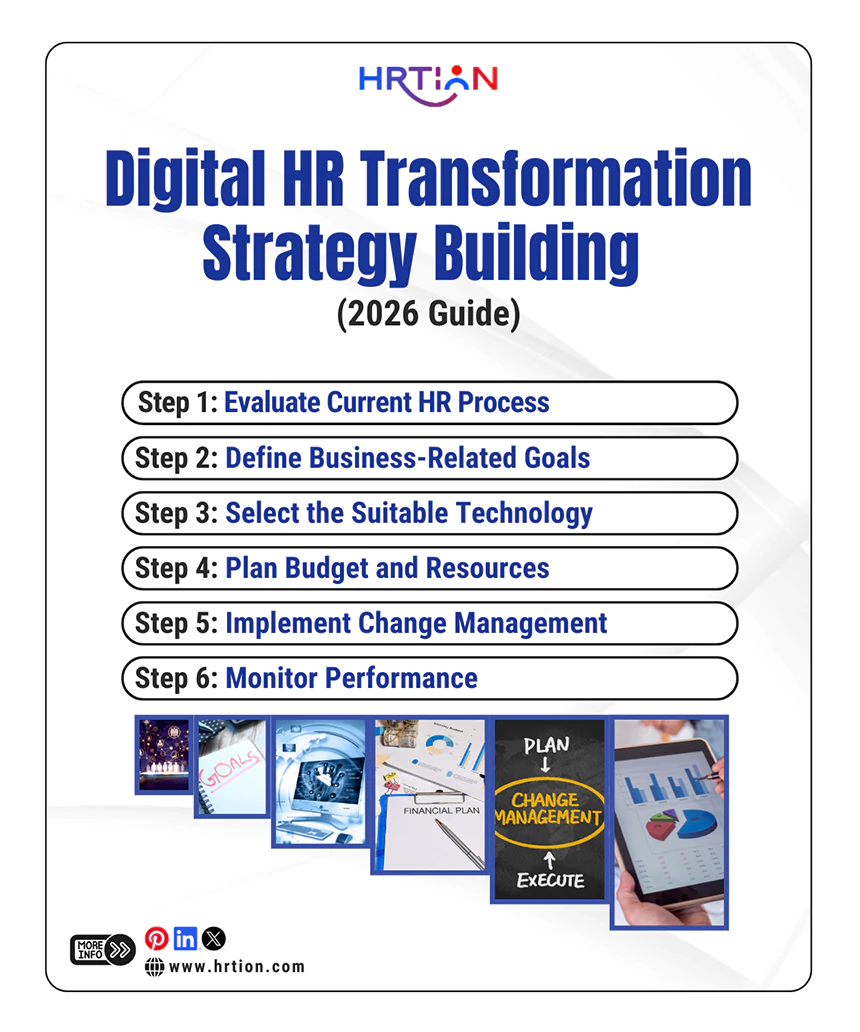
Creative and effective digital HR transformation strategies require a roadmap aligning with business objectives. Here are the steps to build an HR strategy that ensures smooth employee adoption and expected outcomes.
Step 1: Evaluate Current HR Process
Before implementing a new digital strategy, look out for the gaps the current HR process has. Assess the already existing inefficiencies, bottlenecks, and areas that require improvement.
How to do it:
- Identify the manual or repetitive tasks.
- Check the current HR workflows.
- Collect employee feedback.
- Consult with the HR team.
Step 2: Define Business-Related Goals
For a successful digital transformation, create a strategy that fulfills the organizational goals by fixing the challenges. Set up goals that are measurable, clear to understand, and can provide the right direction to the leaders and employees.
How to do it:
- Reduce hiring time.
- Work on employee engagement.
- Digitize HR operations.
Step 3: Select the Suitable Technology
Selecting the right technology is quite crucial for HR digital transformation. The technology must be employee-centric, scalable, and align with the company’s needs.
How to do it:
- Thoroughly assess the software options.
- Check the company’s integration capabilities.
- Avoid using complex systems.
Step 4: Plan Budget and Resources
Digital HR transformation starts with proper financial planning and resource allocation. The investment should be properly planned so that the organization can put money into the right tools and people.
How to do it:
- Plan software investment beforehand
- Conduct employee training programs
- Predict implementation and support costs.
Step 5: Implement Change Management
Change can be challenging; thus a great change management is non-negotiable. Plan the change to smoother adoption of the transformative initiatives.
How to do it:
- Communicate the benefits and challenges with the team.
- Conduct extensive training sessions.
- Make the employee participate.
Step 6: Monitor Performance
Continuous monitoring of performance and effectiveness of digital HR transformation. Keep track of KPIs to ensure that all the goals are met and that improvement is beneficial.
How to do it:
- Employee satisfaction rate.
- Time to hire.
- HR cost efficiency.
Stages of Digital HR Transformation Strategy
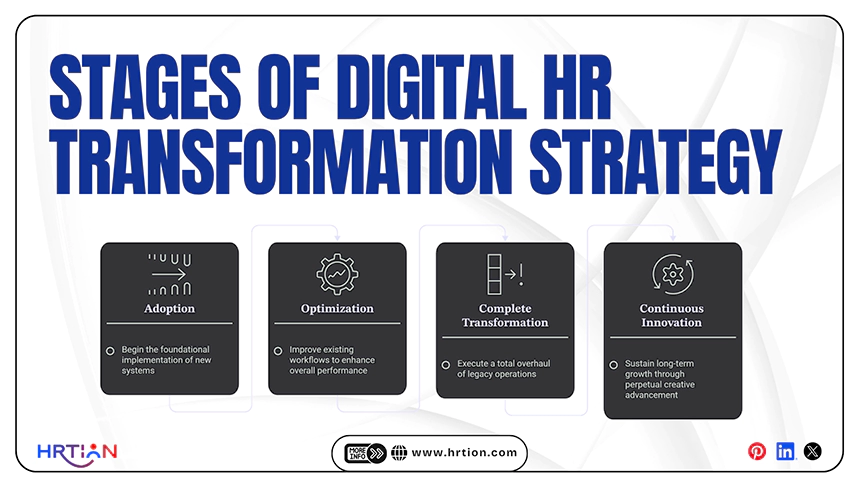
Digital HR transformation works in multiple stages. Each stage matures the HR strategy even more. From basic digital adoption to advanced data-driven HR practices, everything takes place through different stages.
Stage 1: Adoption
The first stage is about converting the traditional manual HR processes to digital practices. The organization needs to replace the paper-based records with digital files through HR software. The major goal of this stage is to reduce manual workload, improve data accessibility, and begin with basic digitization.
Stage 2: Optimization
Optimizing the process refers to streamlining the HR process for improving overall operational efficiency. The automation system is introduced gradually to the ongoing operations to eliminate repetitive tasks. The goal of this stage is to reduce redundancy, improve accuracy, and ensure smoother HR processes.
Stage 3: Complete Transformation
The next stage deals with HR transitioning into a fully automated system. HR systems start using a data-driven approach to form strategic decision-making related to talent management, workforce planning, and business development.
Stage 4: Continuous Innovation
The last stage is to track ongoing development and innovation. Organizations then adopt more advanced technologies, such as artificial intelligence and predictive analytics, to become future-ready. HR teams use these technologies to create strategies to foster better employee experience, prepare for future needs, and refine company processes.
Benefits of Digital HR Transformation
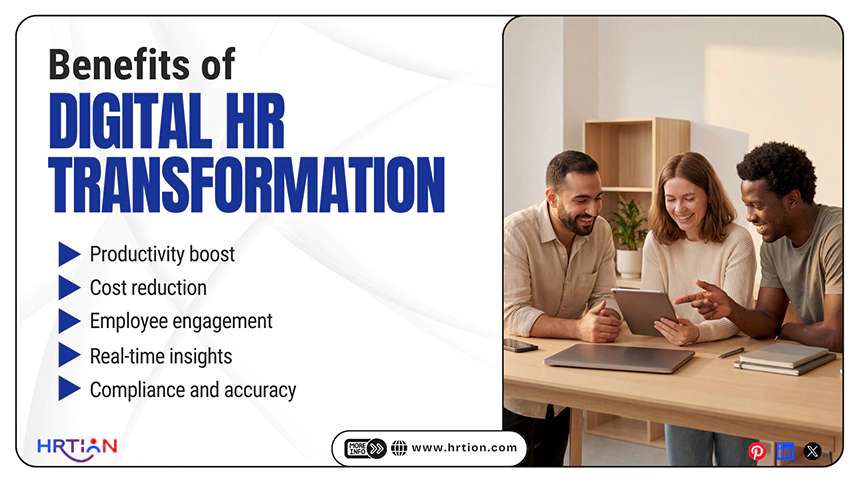
There are a large number of reasons that reflect why implementing a digital transformation strategy is essential for businesses that are targeting speedy growth and improved management.
- Productivity boost: Automation streamlines the HR tasks, allowing HRs to focus on other important tasks and business aspects.
- Cost reduction: Implementing automated systems can reduce operational costs by reducing paperwork, manual errors, and administrative expenses.
- Employee engagement: Digital HR tools promote transparent communication, faster response time, and personalized interactions.
- Real-time insights: Automation provides real-time data and analytics to empower managers and HR to make faster and more informed decisions.
- Compliance and accuracy: Automated systems improve reliability by updating administration about regulatory requirements, timely payroll processes, and secure data management.
Best Tips For Successful Implementation of Digital HR Transformation Strategy
Implementing digital HR transformation requires the right approach and suitable technology. Other than this, here are a few tips that can help accelerate the entire process.
- Start with small segments and then scale slowly. Avoid implementing everything at once.
- The main focus of digitization should be employee experience. The technology should be simple and easy to adopt.
- Keep the leadership updated about the process. Take budget approvals and implementation suggestions.
- Provide continuous training and take regular feedback for smoother adoption of new technology.
- Track progress at regular intervals with respect to the metrics, such as the adoption rate, ROI, and employee feedback.
Real-World Examples of Digital HR Transformation Strategy
Let’s walk through the real-world examples of companies that adapted digital transformation at an earlier stage and reaped impressive outcomes. These case studies show the importance of digital metamorphosis in the concurrent business world.
Example 1: IBM
IBM has incorporated artificial intelligence (AI) in its HR processes. It uses AI to help in hiring, training newcomers, and understanding employee needs. It also uses automation to predict reasons for employees to leave and take steps in the right direction.
Example 2: Unilever
Unilever has made hiring quicker and easier by using online tests, AI tools, and video interviews. This approach helps in selecting the right candidates and improving overall hiring quality.
Example 3: Microsoft
Microsoft focuses mainly on employees’ experience using digital tools. It uses cloud-based systems and feedback tools to enhance employee experience and keep them satisfied.
Example 4: Google
Google uses data to make HR decisions instead of relying on guesswork. This method is known as “people analytics,” meant to improve hiring, team performance, and employee satisfaction rate.
Example 5: Amazon
Amazon uses automation and different online tools to manage the large number of employees working with the brand. It uses technology to hire, schedule, and manage the workforce. This helps the company to run smoothly and successfully.
Digital HR Transformation With HRtion
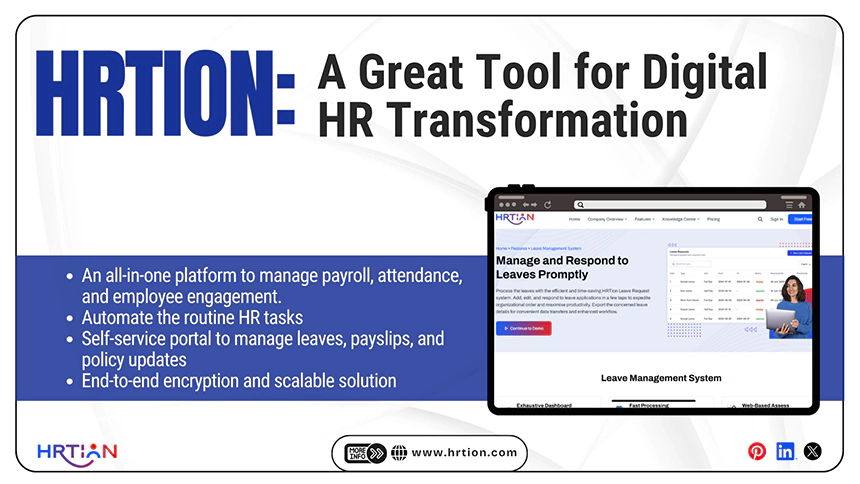
HRtion is a great tool for digital HR transformation by helping businesses automate and streamline basic HR processes. It replaces manual tasks through a centralized system loaded with advanced technologies.
Key highlights of HRtion:
- It is an all-in-one platform to manage payroll, attendance, and employee engagement.
- Automate the routine HR tasks to handle manual tasks.
- Includes a self-service portal to manage leaves, payslips, and policy updates.
- End-to-end encryption for protecting sensitive employee information.
- A scalable solution that fits well with growing businesses.
Conclusion
A well-defined digital HR transformation strategy helps organizations redefine workforce management for sustainable growth. It enhances efficiency and productivity across the company.
As businesses evolve, digital HR transformation plays a crucial role in driving flexibility, consistency, and innovation. Thus, every organization must invest in the right tools and advanced technologies to stay ahead of the competition.
FAQs
Why is HR digital transformation important?
The digital transformation of HR processes is highly important for organizations looking for growth, as it brings efficiency, reduces costs, and enables better decision-making.
What is the HR digital transformation model?
The strategy or framework for digital transformation is to integrate technologies into the HR processes. It replaces manual tasks with automation and digital tools.
What are the 7 pillars of HR digital transformation?
The 7 pillars of digital HR transformation are the following:
- strategy
- Roadmap
- Employee experience
- Technology adoption
- Data and analytics
- Change management
- leadership
What are some digital HR transformation strategy examples?
The common examples of HR transformation are recruitment, payroll, and employee management software. They are used to make HR processes quicker and simpler.
Sources:

Bhavesh is a Guest Writer at HRTion with an academic background in HR. He did an HR management course in 2025. Before transitioning to HR content writer, he worked as an Academic Content Writer at Trident Management for over 6 years. His expertise in recruitment processes & strategies helps him write detailed and clear content that is not only informative but also accessible for everyone.