
- What are Corporate Cliques?
- Common Types of Corporate Cliques
- Why Do Corporate Cliques Form?
- 8 Warning Signs of Corporate Cliques in the Workplace
- How Corporate Cliques Affect Employees and Employers
- How to Deal with a Corporate Clique as Manager and HR
- How to Deal with a Corporate Clique as an Employee
- Corporate Cliques: Real-Time Examples
- Conclusion
- FAQs
There is always a workplace group of people who seem really close and always have access to insider information, get invited to every important discussion, or receive the most profound opportunities. This close-knit group is called a corporate clique.
Workplace friendships are normal and form naturally, but things get worse when it starts turning into “us vs. everyone.” This can make other employees feel neglected, isolated, or deprived of growth.
The recent CareerBuilder survey states that 43% of workers say their office is populated by cliques.
So, when workplace friendship turns into a corporate clique, what are the warning signs, effects, and ways to deal with them?
Let’s break it down together!
What are Corporate Cliques?
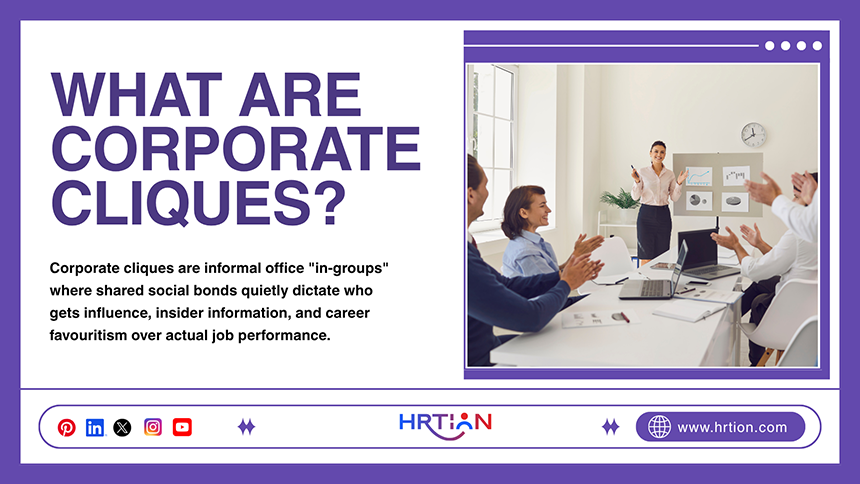
Corporate cliques are small, closely connect group of employees who mainly interact and connect with one another intentionally or unintentionally, excluding others from important workplace communications, social activities, information, and opportunities
For a person new to corporate culture, a clique is a workplace “inner circle.”
Making friends is part and parcel of a professional life. In fact, positive relationships can result in better engagement and improved employee satisfaction. But the problem starts the moment those relationships create an atmosphere of exclusion, favoritism, information silos, or unfair advantages.
Let’s understand with an example: imagine there is a team of 10 employees. Five of them have regular private conversations about upcoming projects, discuss decisions before meetings, and socialize with their manager. The remaining 5 often find out the information once the decision is made.
So, this situation explains that the people are not just friends; they are corporate cliques.
The few key characteristics of corporate cliques are
- Often exclude people outside the group
- Can influence workplace decisions
- May blur personal and professional boundaries
- May keep information within the group
- Can create divisions
- May benefit from preferential treatment
Manage the payroll, attendance, shift roles, and more in an all-encompassing HR suite. Your ultimate HR toolkit is just a click away.
Common Types of Corporate Cliques

Not every workplace clique is identical in nature. Some are based on friendships, while others occur due to authority, influence, departments, or shared interests.
- The Popular or Influential Clique
This group mainly consists of employees who are highly connected in the organizational network. They have a strong relationship with seniors, managers, and decision-makers.
- The Manager’s Inner Circle
This is the most problematic group. A manager tends to form specially closer relations with certain employees.
When these relationships influence important decisions like promotions, assignments, recognition, flexibility, or access to information, it is perceived as favoritism.
- The Gossip Clique
Such groups bond primarily through workplace gossip.
The members of these groups have regular discussions about colleagues, managers, salaries, relationships, mistakes, or internal conflicts.
Not only professional matters, but they can also sometimes discuss the personal lives of others. This gossip can damage trust and morale.
- The Departmental Clique
Employees from the same department can become socially and professionally isolated from the rest of the company.
For example, the sales team may rarely interact with the marketing or product teams, resulting in communication gaps and an “our team” vs. their team” mentality.
- The Exclusionary Clique
This is the clearest form of workplace cliques.
These groups may deliberately leave certain employees out of the following:
- Meetings
- Group chats
- Lunches
- Informal discussions
- Networking opportunities
- Project conversations
- Social events
- The Power Clique
A power clique consists of employees who have strong influence within the company.
They are not necessarily seniors in position, but their relationship and knowledge allow them to influence decisions, opinions, and culture.
Why Do Corporate Cliques Form?
There is no one reason responsible for workplace cliques to form. They develop through a combination of social, organizational, and cultural factors.
Similar Personalities and Interests
As with any friendship, a clique can form around similar interests, backgrounds, communication styles, or personalities.
Everything is normal until the group stops interacting with people outside the circle.
Workplace Competition
Employees may form an alliance when they consistently fight and compete for the following:
- Promotions
- Leadership positions
- Bonuses
- Recognition
- High-profile projects
- Salary increases
Unhealthy competition is always the cause of workplace politics that turn professional relationships into a toxic clique culture.
Organizational Hierarchy
Employees who work in direct collaboration with senior managers usually get to be closer to leadership.
This access to leadership can sometimes remain concentrated around a small group; other employees may feel excluded.
Favouritism
Favoritism is another major cause of workplace cliques.
If the same employees are receiving benefits like preferred assignments, recognition, flexible arrangements, or growth opportunities, the rest of the workforce may start forming their own groups in response.
Lack of Communication
Poor communication or lack of engagement can create informational gaps.
When employees have no idea of what’s happening around, they may rely on informal networks to obtain the information. These informal networks can turn into powerful cliques.
Remote and Hybrid Work
Remote or hybrid work culture can become a major cause for the development of informal groups.
Employees who are allowed to or have to contact frequently through unsupervised channels or private messaging may develop stronger relationships than colleagues with whom they have fewer informal interactions.
This creates digital workplace cliquing because important conversations happen outside the official communication channels.
8 Warning Signs of Corporate Cliques in the Workplace
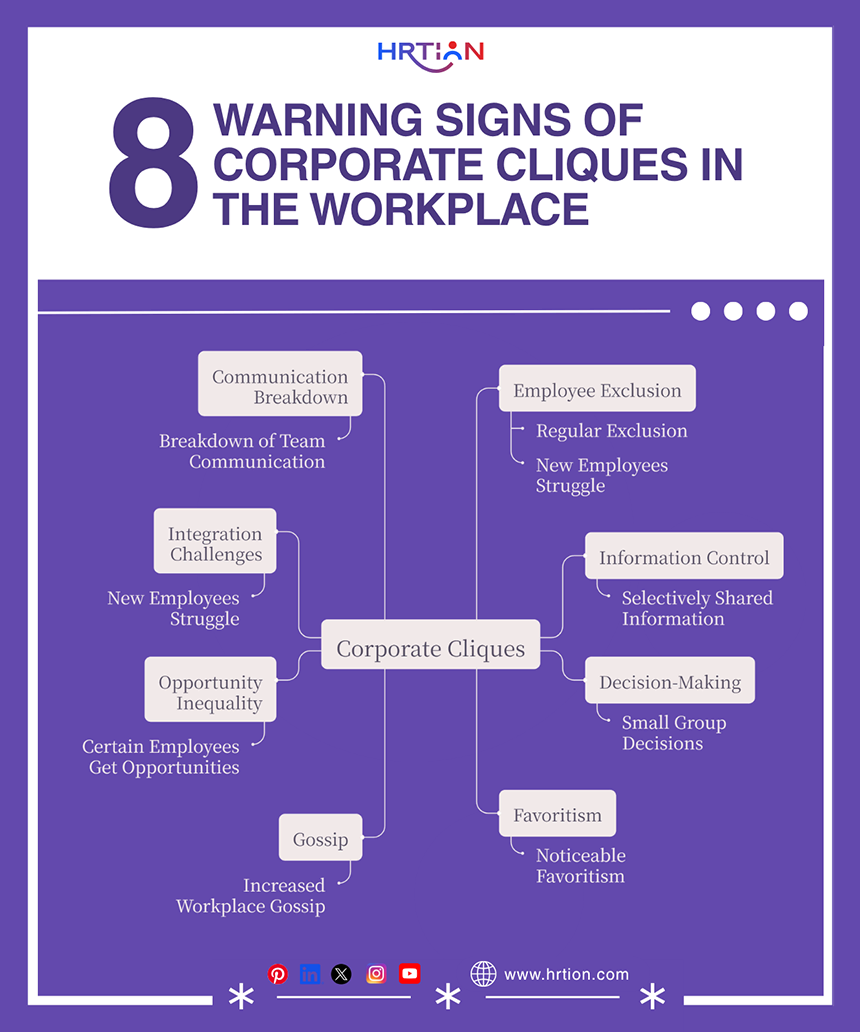
Some telltale signs of your organization suffering from a clique problem are listed below:
- Regular Exclusion of Employees
Checking if certain employees are regularly absent from meetings, conversations, social events, or projects is a good way to tell about cliques.
- Selectively Shared Information
If some employees seem to always know about project changes or other important information before any official announcements, there’s a chance that informal information networks might be affecting workplace communication.
- Decisions Are Made Within a Small Group
Sometimes, an employee or a group of employees might already know the decision that officially hasn’t yet been announced or the meeting hasn’t even taken place. This is a strong indicator that discussions are taking place within an inner circle.
- Noticeable Favoritism
Repeated unequal treatment among certain employees, such as better projects, promotions, recognition, training opportunities, flexible schedules, and direct access to management, can show the problem of cliques very clearly.
- Increased Workplace Gossip
Trust issues can quickly grow in a workplace where employees constantly discuss information about their co-workers behind their backs.
- Certain Employees Always Get Opportunities
If development opportunities are consistently and repeatedly only reaching a select small group of employees without any transparent criteria, it may lead others to believe that personal relationships matter more than performance.
- New Employees Struggle with Integration
A healthy workplace tends to make efforts to help the new employees feel more welcome in the organization. However, if newcomers are consistently being quietly labeled as outsiders, there might just be an established clique controlling the social environment.
- Breakdown of Team Communication
One of the most socially damaging traits of a clique is the problem of communication, where employees only communicate with their preferred groups. This creates communication silos and is an intensely acute problem when collaboration is needed, especially during shared projects.
How Corporate Cliques Affect Employees and Employers
Corporate cliques are not a social issue, it is a structural problem for an organization, where these groups can affect employee engagement, productivity, retention, collaboration, and organizational culture.
Effects on Employees
Increased Stress and Isolation
Being excluded from the workplace group can make the rest of the employees feel isolated.
Employees who are not part of their friendship circle feel not included and unable to participate professionally.
Lower Morale
When employees believe that workplace relationships matter more than performance, motivation can decline.
Reduced Productivity
Employees who have to face workplace politics regularly may have less energy to focus on their actual job.
Fewer Career Opportunities
A clique with a strong informal hold on control and access to information, networking, projects, or decision-makers.
Workplace Conflicts
Exclusion, gossip, and favoritism can create resentment between employees and departments.
Effects on Employers
Lower Employee Engagement
Gallup’s State of the Global Workplace reports that only 23% of employees worldwide were engaged in 2023, showing that engagement is a tough deal for companies, and a clique can make it even worse.
High Employee Turnover
Employees who feel ignored, unfairly treated, or isolated will leave the organization sooner than planned and look for opportunities elsewhere.
Poor Collaboration
Cliques encourage employees to work in close circles, rather than across teams.
This can cause extreme damage to the projects where collaboration is highly required.
Toxic Workplace Culture
Gossip, favoritism, exclusion, and office politics become normal in companies with cliques and gradually become a part of the organization’s culture.
Reduced Productivity
Time that is spent managing interpersonal conflicts, gossip, misunderstandings, and workplace politics can take the attention away from growth and objectives.
How to Deal with a Corporate Clique as Manager and HR

Preventing workplace cliques doesn’t mean stopping people from becoming friends.
Instead, HR and managers must ensure that personal relationships don’t interfere with fairness, communication, or professional opportunities.
Here are some practical strategies:
Promote Inclusive Communication
Important information must be shared with everyone who needs it.
Create a Transparent Promotional Process
Employees should understand the OKRs or KPIs, PPIs, results, and behaviors or other factors that the company follows to decide promotions.
Avoid Favouritism
Managers should evaluate weekly whether they are offering equal opportunities to all employees or the same people over and over again.
Encourage Cross-Team Collaboration
Projects involving employees from multiple teams can reduce departmental silos and build professional relationships with all departments.This can also strengthen employee engagement by helping people feel more connected at work.
Conduct Employee Surveys
Engagement surveys and pulse surveys can help HR identify issues and nip them in the bud before they turn into major cultural problems.
Train Managers
Managers should understand how unconscious favoritism, poor communication, and informal decision-making can create workplace cliques.
How to Deal with a Corporate Clique as an Employee

If you are dealing with a corporate clique, instead of confronting them directly, a more strategic approach will help.
Here are a few useful tips.
- Stay Professional
Don’t respond to politics with more workplace politics.
Continue communicating respectfully and focus on your responsibilities.
- Avoid Participating in Gossip
If someone starts gossiping about other colleagues, it is better to avoid participating than to participate.
You can simply redirect the conversation towards work. This will protect your reputation and prevent you from getting into any trouble.
- Build Relationships Across the Organization
Don’t limit your professional network to one group; instead,, develop professional relationships with people from:
- Other departments
- Different experience levels
- Different project teams
- Leadership
- New employees
- Communicate Direct
If you feel you are being left out repeatedly, address the issue directly yet professionally.
For example, you can put your concern like this:
“I noticed I wasn’t included in the discussion about the project update. Please include me in future communications related to my responsibilities.”
- Focus on Your Performance
Don’t allow workplace politics to distract you. Keep a record of your accomplishments, projects, performance metrics, feedback, contributions, and new skills.
This helps you create a clear record of your professional value.
- Set Healthy Boundaries
You need to become a part of the clique to become successful at work. It is good to be friendly, approachable, and collaborative without involving yourself in workplace gossip or politics.
- Document Serious Incidents
If the situation is affecting you mentally, physically, or professionally, you need to document the incidents.
If you or the clique resorts to harassment, discrimination, bullying, retaliation, or a serious workplace issue, keep appropriate records with dates, conversations, emails, and specific events.
- Talk to Your Manager or HR
If you are constantly feeling that the clique is negatively affecting your work, raise the concern with your manager or HR.
Focus on specific behaviors and their impact, instead of calling anyone or a situation “toxic.”
You must articulate your thoughts and present them carefully. A more effective message will sound like the following:
“I have been excluded from three project discussions directly related to my responsibilities, and I’ve missed important information as a result.”
Corporate Cliques: Real-Time Examples
Let’s look at a few common examples of what a corporate clique will look like:
Example 1: The Manager’s Favorite Employees
A manager regularly gives a few employees early information and high-visibility projects.
Problem: Unequal access to opportunities.
Solution: Use transparent project-allocation processes.
Example 2: The New Employee Clique
Long-term employees have an inner circle, private jokes, and social routines that can leave new employees left out.
Problem: Social isolation.
Solution: Encourage team activities and inclusive collaboration.
Example 3: The Private Chat Clique
Important project meetings are discussed in private messaging groups.
Problem: Some employees miss critical information.
Solution: Use official communication channels.
Example 4: The Gossip Clique
Employees who regularly gossip about a colleague’s personal life and workplace mistakes.
Problem: Damages trust and reputation.
Solution: Promote respectful workplace communication.
Example 5: The Promotional Clique
Some employees feel that promotions are based on personal relationships rather than performance.
Problem: Creates distrust and a sense of unfairness.
Solution: Set clear, transparent promotion criteria.
Conclusion
Corporate cliques are not mainly bad or automatically affect the environment. Workplace friendships and strong professional relationships can contribute to employee engagement and form a positive work environment.
The problems start with close-knit groups becoming exclusionary and start affecting communication, opportunities, decision-making, collaboration, and fairness.
For employers, the best approach is to maintain professionalism, avoid gossiping, document serious incidents, and communicate concerns with your HR or manager.
FAQs
What is a corporate clique?
A corporate clique is defined as a small group of employees who have close relationships and often exclude others from the workplace, conversations, information, social activities, or certain opportunities.
Are workplace cliques normal?
Small friendship groups are common and even advantageous in most workplace settings. However, these become problematic if they create unfair exclusions, show favoritism, gossip, provide unjust advantages, or lead to information silos.
Why do corporate cliques form?
Corporate cliques often tend to form due to shared interests, workplace friendships, competitions, favoritism, poor communication, informal workplace politics, or organizational hierarchies.
Are corporate cliques toxic?
Not every workplace friendship has to be toxic, although a clique generally becomes harmful if there is constant exclusion of others, problematic gossip, influence over important decisions, or a hostile work environment is fostered.
How do you deal with a clique at work?
Staying professional and avoiding gossip are good ways to prevent yourself from engaging with cliques. Reporting harmful groups, serious incidents, or harassment due to a clique to HR or managers, as well as forming relationships across teams and clear communication, are powerful ways to deal with cliques.
Should I report a workplace clique to HR?
It’s not necessary to report every single group formed due to colleagues sharing interests, but reporting groups to HR should be considered if the groups are causing harassment, bullying, discrimination, unfair treatment, or significant workplace disruptions.
How can managers prevent workplace cliques?
Transparent communication, avoiding favoritism, creating equal opportunities for everyone, and encouraging cross-team collaboration are amongst the strongest choices for reducing clique-related problems.
Oftentimes, addressing the exclusionary behavior of cliques early on is also a great approach for preventing harmful social groups from forming.

Bhavesh is a Guest Writer at HRTion with an academic background in HR. He did an HR management course in 2025. Before transitioning to HR content writer, he worked as an Academic Content Writer at Trident Management for over 6 years. His expertise in recruitment processes & strategies helps him write detailed and clear content that is not only informative but also accessible for everyone.