
- What are Payroll Reporting and Analytics?
- Important Metrics of Payroll Reports and Analytics
- Why Use Payroll Reporting and Analytics Together?
- Types of Payroll Reports and Analytics
- Key Features of Payroll Report and Analytics
- Benefits of Payroll Reporting and Analytics
- Examples of Payroll Reports and Analytics
- How to Create a Payroll and Analytics Report
- Common Mistakes to Avoid with Payroll Reporting
- HRtion: Offering Integrated Analytics Dashboard
- Conclusion
- FAQs
Payroll reporting and analytics are the two swords in one sheath, empowering companies with informative and visionary decision-making abilities. Payroll reports capture expenses related to wages, bonuses, taxes, and deductions, thus accounting for the 60% to 70% of operating costs.
Successful organizations rely heavily on payroll data to plan financial and workforce-related strategies that can shape the growth and ROI.
To maintain accurate payroll practices and compliance, it is crucial to understand the importance, uses, benefits, and applications of payroll reporting and analytics. Hence, this guide covers everything required for making the best of payroll data.
What are Payroll Reporting and Analytics?
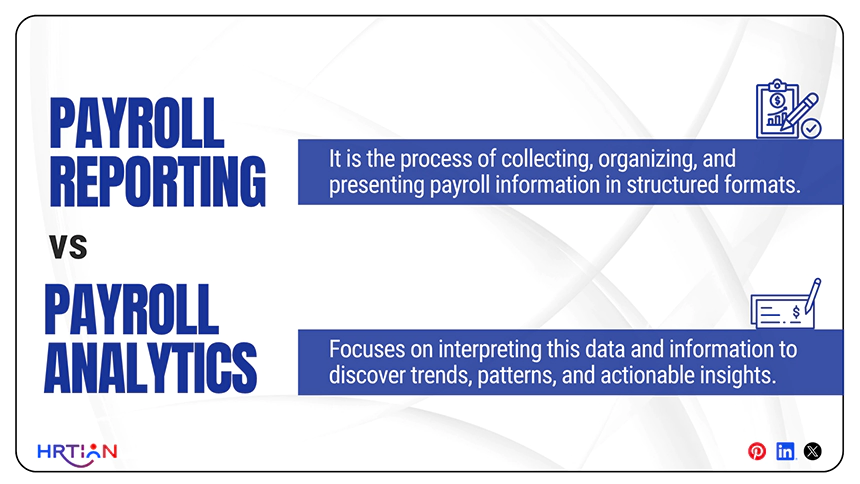
Payroll reporting is the process of collecting, organizing, and presenting payroll information in structured formats. These reports provide a distinct and clear overview of employee compensation, tax transparency, and ensuring compliance with legal requirements.
Payroll analytics, on the other hand, focuses on interpreting this data and information to discover trends, patterns, and actionable insights. This turns raw payroll data into meaningful information that can guide decisions.
Although these two concepts are very closely related, they serve different purposes within an organization. For example, a payroll report might show that overtime costs increased by 20% last quarter, while payroll analytics would explain why that occurred and suggest ways to optimize workforce scheduling.
In simpler terms:
- Reporting shows what happened
- Analytics provides the reason for what happened.
Important Metrics of Payroll Reports and Analytics
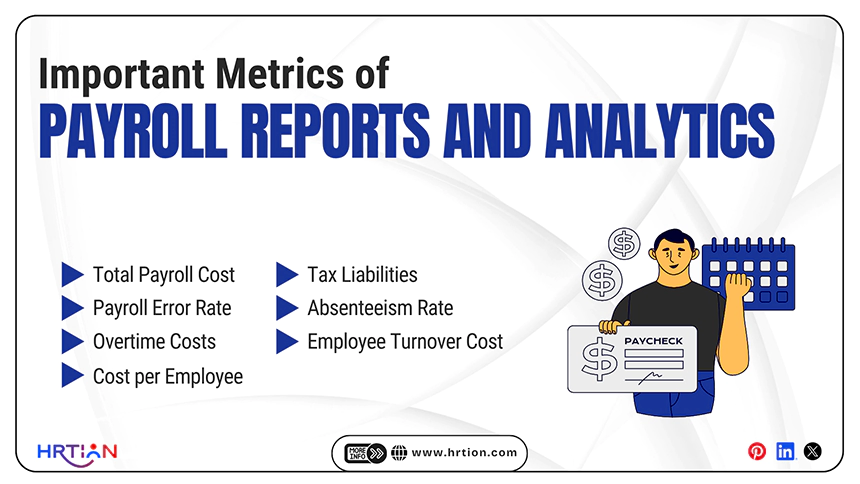
In order to truly benefit from payroll reporting and analytics, an organization has to keep an eye on the right metrics. Some of these key performance indicators (KPIs) are provided below:
- Total Payroll Cost
This includes benefits, salaries, bonuses, and employer contributions. It makes it easier for organizations to understand their overall labor expenses.
- Payroll Error Rate
This metric measures the frequency of payroll mistakes. A high error rate can cause compliance issues and employee dissatisfaction.
- Overtime Costs
Tracking the overtime costs allows organizations to locate inefficiencies in workforce planning and pinpoint the areas where workload distribution can be improved.
- Cost per Employee
This provides insights into how much each employee costs the company, including salary and benefits.
- Tax Liabilities
Tracking tax liabilities helps in compliance with government regulations and leads to a decrease in penalties.
- Absenteeism Rate
This metric allows the organization to identify patterns and issues regarding absences in the organization. Frequent absences can lead to an increase in payroll costs and reduce productivity.
- Employee Turnover Cost
This measures the financial cost of replacing employees and includes recruitment and training costs.
Manage the payroll, attendance, shift roles, and more in an all-encompassing HR suite. Your ultimate HR toolkit is just a click away.
Why Use Payroll Reporting and Analytics Together?
By relying solely on payroll reporting, the organization will be able to retrieve data but will not be able to convert it into useful insights. Similarly, analytics without accurate reporting will lack a reliable foundation.
When used together, payroll reporting and analytics provide a complete and actionable view of the workforce and financial health. Given below are some reasons why it is necessary to use both payroll reporting and analytics:
- Improved Decision-Making
Businesses can use reporting and analytics to make informed decisions based on real-time trends and data.
- Optimization of Costs
This method also allows organizations to identify unnecessary expenses and reduce payroll inefficiencies.
- Risk Reduction
Errors, anomalies, and fraud can all be detected before any escalation.
- Sounder Compliance
Compliance with tax laws, labor laws, and other government regulations is ensured.
- Better Workforce Planning
Forecast hiring needs and manage employee workloads effectively.
Types of Payroll Reports and Analytics
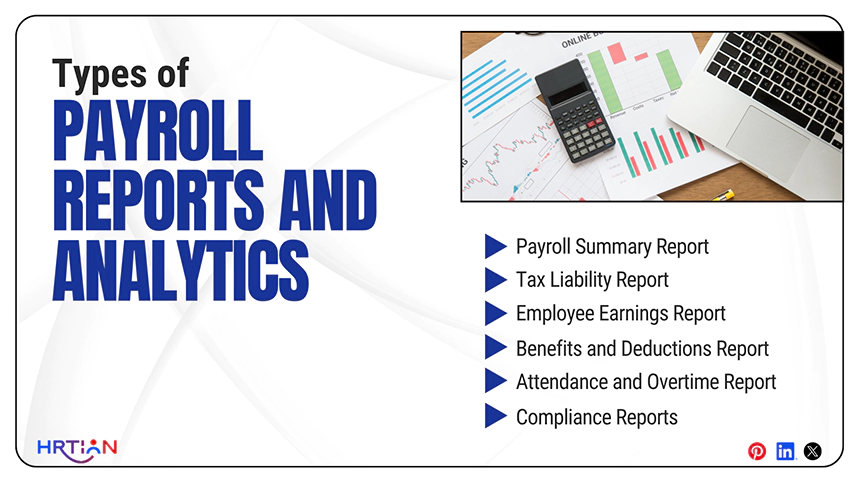
Payroll reports can have many forms, with each of them serving a different and specific purpose. Some types of payroll reports are provided below:
- Payroll Summary Report
This is a high-level overview of the payroll activity for a given period, which may be monthly, weekly, or any other time frame. The activities covered in this report include total deductions, net pay, and total gross wages paid to employees.
- Tax Liability Report
This report tracks all statutory payroll-related taxes an organization is responsible for, such as income tax, Provident Fund (PF), and Employee State Insurance (ESI).
- Employee Earnings Report
This report details information regarding what and how much each employee earns. This includes basic salary, allowances, bonuses and incentives, and overtime payments.
- Benefits and Deductions Report
Non-salary components deducted from or added to employee pay, like health insurance premiums, retirement contributions, and loan repayments or advances, are covered in this report.
- Attendance and Overtime Report
This report provides data about employee work patterns, which include total hours worked, absences and leave, and overtime hours.
- Compliance Reports
These reports are created to meet and ensure compliance with legal and regulatory requirements. Statutory filings, audit-ready payroll records, employee wage registers, and reports required under labor laws fall in this report category.
Key Features of Payroll Report and Analytics
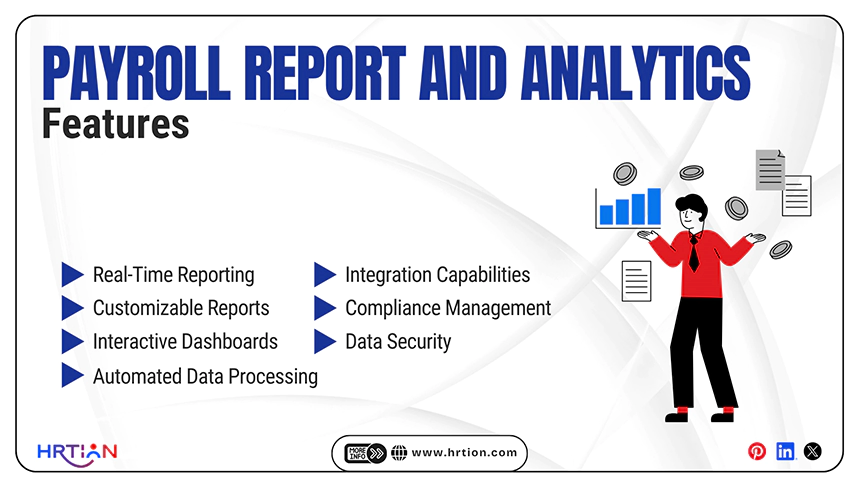
Modern payroll systems include advanced features that simplify reporting and enhance analytical capabilities. Some important features of these systems include the following:
- Automated Data Processing
The payroll systems are able to automatically collect, calculate, and process payroll data like salaries, deductions, taxes, and benefits.
- Real-Time Reporting
This feature provides instant access to payroll data as it is processed and gives live updates on payroll costs and liabilities.
- Customizable Reports
Payroll systems enable users to tailor reports based on the organization’s specific business requirements.
- Interactive Dashboards
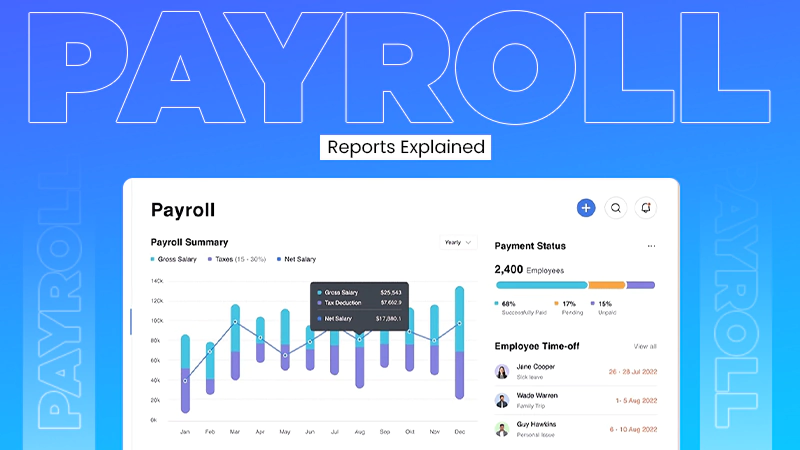
Dashboards allow representation of payroll data visually using graphs, charts, and key metrics. This makes the data easier to understand and the patterns and trends easier to identify.
- Integration Capabilities
Modern payroll systems typically allow easy integration with other business systems, which ensures smooth data flow.
- Compliance Management
Payroll systems are designed to stay updated with shifting labor and tax laws. This heavily reduces the risk of penalties and compliance issues.
- Data Security
Due to the highly sensitive information handled by the payroll systems, they often involve data encryption, role-based access control, and regular backups.
Benefits of Payroll Reporting and Analytics
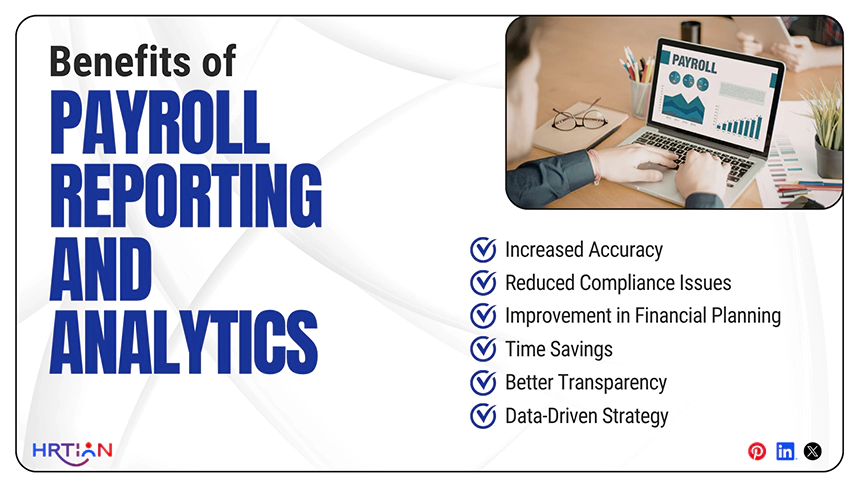
Combining and implementing payroll reporting and analytics provides many advantages to businesses of all sizes. Some of these advantages are given below:
- Increased Accuracy
Through the usage of payroll analytics and reporting software, human errors in calculations and reporting can be drastically reduced.
- Reduced Compliance Issues
Payroll software is able to quickly adapt and adjust to changing labor and tax laws. This reduces risks relating to compliance and legal issues.
- Improvement in Financial Planning
Payroll makes up one of the largest expenses for any organization. The reporting and analytics software provides insights into these expenses and shows how they are distributed between roles and departments.
- Time Savings
Manual processing of the payroll data can lead to severe delays and risks to accuracy. Payroll software reduces the time spent on manual processing and reporting tasks, making the data precise and efficient.
- Better Transparency
Transparency in payroll is necessary for building trust among employees and ensuring accountability. Payroll software improves transparency by keeping detailed and consistent documentation of payroll processes and traceable audit trails for every transaction.
- Data-Driven Strategy
Insights about workforce behavior, productivity, and cost efficiency are able to be derived from payroll data. Analytics identifies trends in payroll data and allows for better decision-making, which is backed up by real data rather than assumptions.
Examples of Payroll Reports and Analytics
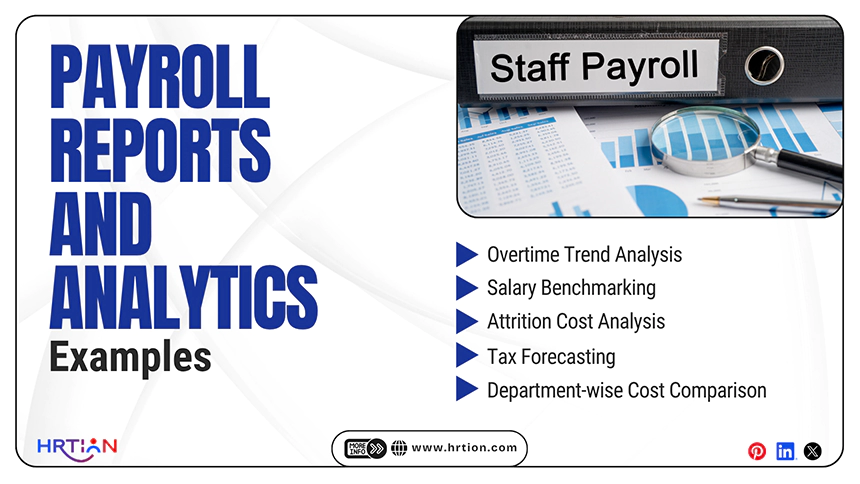
Payroll reporting and analytics are not just about generating payslips or tracking salaries. In the real-world, payroll data, reporting, and analytics are tied to key areas such as employee performance, budgeting, compliance, and long-term planning. Provided below are some practical examples of how organizations use payroll reporting and analytics in meaningful ways:
- Overtime Trend Analysis
Overtime costs can quickly lead to an increase in payroll expenses if an organization lacks staff, has inefficient workflows, or has poor shift planning in its departments. Since payroll software tracks trends and is able to identify higher overtime costs, it can help the organization to take corrective measures, such as hiring additional staff or optimizing schedules.
- Salary Benchmarking
HR teams often use benchmarking data to compare internal salary data with industry benchmarks. This allows them to adjust salaries to remain competitive, design fair and consistent pay structures, and reduce turnover.
- Attrition Cost Analysis
Employee turnover leaves both direct and indirect financial impacts on an organization. Analytics often helps in identifying high attrition in specific departments and roles. This allows organizations to investigate the causes, which can lead to a reduction in turnover costs.
- Tax Forecasting
Payroll taxes occupy a significant role in the financial obligations of an organization. Finance teams frequently use reporting and analytics software to estimate future tax liabilities based on payroll trends, avoid cash flow issues, and ensure compliance with regulations.
- Department-wise Cost Comparison
The key to financial efficiency lies in understanding how payroll expenses vary across departments in an organization. An analysis of departments with unusually high or low costs and a comparison of costs against outputs or performance metrics allows leadership to distribute resources efficiently.
How to Create a Payroll and Analytics Report
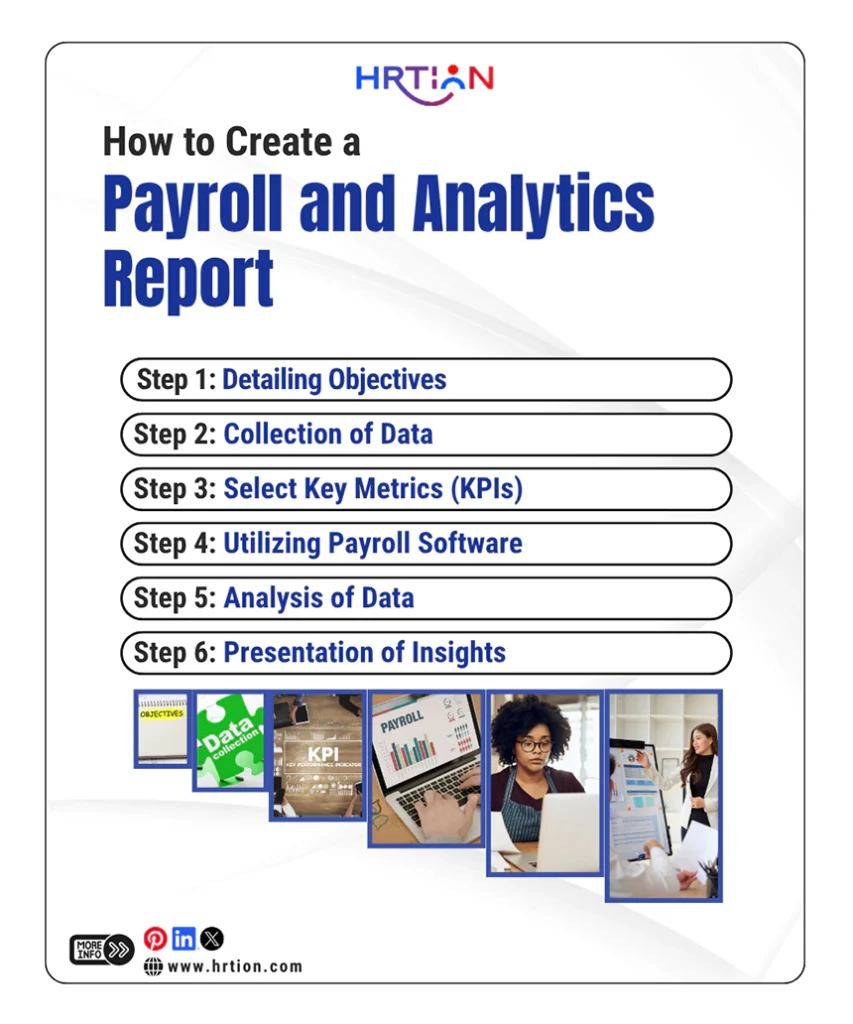
Creating effective payroll reports requires a very well-structured approach. Certain important steps for creating payroll and analytics reports are given below:
Step 1: Detailing Objectives
Clarifying the purpose of the report, which can include controlling payroll costs, ensuring legal compliance, or improving workforce efficiency, is the first step to creating an effective payroll report.
Step 2: Collection of Data
Gather reliable data from payroll systems, attendance records, and HR platforms. Accuracy should be maintained in this data, as any flaws, inaccuracies, or incomplete data can cause problems in analysis and lead to poor decision-making outcomes.
Step 3: Select Key Metrics (KPIs)
It’s important to identify relevant key performance indicators (KPIs) like payroll costs, overtime expenses, employee turnover rate, and payroll error frequency. Isolating the right metrics will ensure that the report is focused on meaningful insights and aligned with organizational objectives.
Step 4: Utilizing Payroll Software
Payroll software helps in automating calculations, integrating multiple data sources, and generating reports efficiently. This reduces errors and improves speed, which helps ensure the reporting processes are standardized across the organization.
Step 5: Analysis of Data
Converting raw data provided by payroll systems into meaningful information by identifying patterns, trends, and irregularities highlights risks and inefficiencies and also reveals opportunities for improving workforce management and payroll.
Step 6: Presentation of Insights
It is difficult to understand data in detail through just reading and comparing. Visuals like graphs, charts, and dashboards make it much easier to process complex data, which helps stakeholders quickly grasp the insights and make informed decisions based on the data.
Selecting software for payroll reporting and analytics
Common Mistakes to Avoid with Payroll Reporting

Even while using advanced automation in payroll processing, companies make mistakes that can hugely impact the speed, accuracy, and compliance of the payroll process. These are the most commonly occurring mistakes that businesses need to avoid making:
- Relying on manual processes can increase the risk of errors. Thus, it is crucial to digitize all payroll-related aspects and processes.
- Ignoring the compliance-related updates on the federal or state level can lead to penalties and legal issues. Also, non-compliance can adversely affect the reputation of the company
- Incomplete or inaccurate reports can distort the cost analysis and lead to erroneous budgeting and forecasting. Thus, it is important to cross-check the details, such as benefits, attendance, and employee information.
- Overlooking the analytical insights can cause organizations to miss valuable opportunities for cost optimization and workforce planning.
- Not training managers and employees in using payroll systems can lead to errors, inefficiencies, and incorrect utilization of tools and resources.
By addressing and correcting these mistakes, businesses can ensure smoother, accurate, and effective payroll operations.
HRtion: Offering Integrated Analytics Dashboard
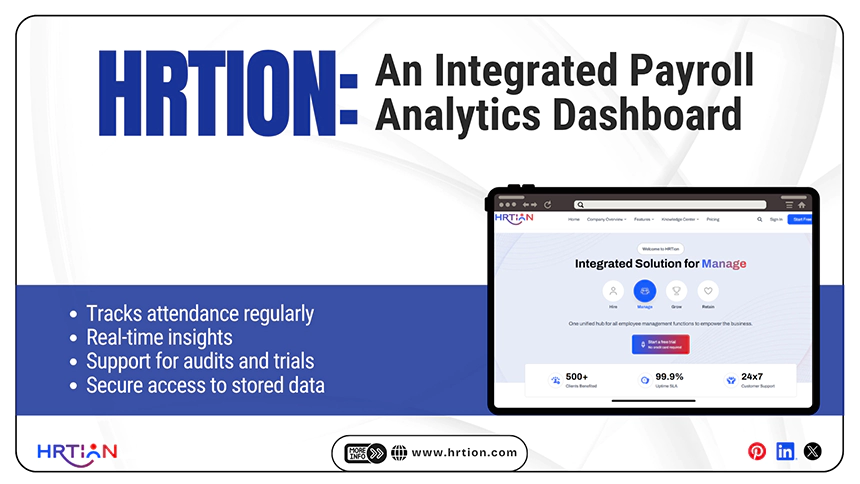
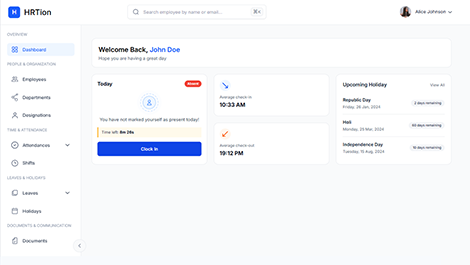
HRtion offers an all-inclusive interface and payroll dashboard that centralizes payroll information and employee data into one single interface. This user-friendly tool helps monitor costs and trends and make informed decisions.
- Tracks attendance regularly for overtime, leaves, and deductions.
- Provide real-time insights in a very understandable manner.
- Helps in the company compliance by offering support for audits and trials.
- Offers secure access to stored data for privacy and safety.
- All the reports and details are exportable for offline usage.
The major highlight of HRtion is its free trial version that allows navigating through the features and benefits of this HR software, making it perfect for SMEs and large enterprises.
Conclusion
Payroll reporting and analytics are quite essential for businesses that require growth and better financial planning. By combining structured reports and valuable analytics, it becomes easier to design improved workforce strategies.
The right use of key metrics, digital tools, and a refined approach ensures that businesses become more competitive and profitable.
FAQs
What is payroll reporting?
Payroll reporting is the process that involves generating structured reports that provide detailed information about employee compensation, deductions, and taxes.
What is payroll analytics?
Payroll analytics involves examining payroll data to identify patterns, trends, and insights.
Why are payroll metrics important?
Payroll metrics detail the measurable indicators such as total payroll cost, overtime expenses, and error rates. This allows a business to measure performance, control costs, and improve payroll efficiency.
Can small businesses benefit from payroll analytics?
Yes, small businesses can benefit from payroll analytics, as the automation helps to reduce errors, and analytics make it easier to track expenses and stay compliant with regulations.
What features should payroll software have?
Effective payroll software should include automation for calculations, real-time reporting for up-to-date insights, integration with HR and accounting systems, and strong security measures.

Sunita Kumari is a Freelance Contributor Writer at HRTion, writing accurate, reliable, and informative content. She completed her Bachelor's from Rajdhani College of the University of Delhi. She has been a Human Resources Recruiter for almost 2 years, including over 1 year with Battersea Web Expert. Drawing on her recruitment and HR processes experience, she writes clear and practical payroll-related guides that help employees and job candidates better understand HR procedures and workplace practices.