- What is Human Capital Management (HCM) Software
- Best 15 Cloud-Based HCM Software Tools
- Best HCM Platforms by Business Size and Use Case
- Key Features of HCM Software
- Benefits of HCM Platforms
- Cloud-Based HCM Platform Comparison
- How to Choose HCM for Your Business
- Cloud-Based HCM Platform Checklist
- Conclusion
- FAQs
Managing employees is not only about maintaining a few personal and professional records; it is about handling the entire employee lifecycle.
Thus, the need for better technology is also growing. According to SHRM’s 2025 Talent Trends research, 43% of organizations now use AI for HR-related tasks, up from 26% in 2024.
That is where human capital management (HCM) comes in. It offers a centralized system and a single source to manage workforce data while reducing repetitive administrative tasks.
Here, we will explain what HCM software is, the best cloud-based platforms, features, benefits, and how to choose the right HCM for your business.
What is Human Capital Management (HCM) Software
Human Capital Management software is a digital tool designed to help organizations manage their workforce through their employee life cycle. It offers all essential features ranging from recruitment and onboarding to payroll, benefits, performance, learning, workforce planning, compliance, and employee engagement within a centralized platform.
Instead of relying on spreadsheets and disconnected platforms, companies can integrate HCM tools into their operations to automate processes, maintain records of employee data, and give better access to workforce analytics.
With this software hosted in the cloud, organizations can access employee and HR information from anywhere using an internet connection.
The basic HCM capabilities include:
- Core HR and employee records
- Recruitment and applicant tracking
- Employee onboarding tool
- Payroll and benefits
- Time and attendance
- Performance management
- Learning and development
- Compensation management
- Succession planning
- Workforce planning
- HR analytics and reporting
- Employee self-service
- Mobile access
- AI-powered HR automation and insights
Best 15 Cloud-Based HCM Software Tools
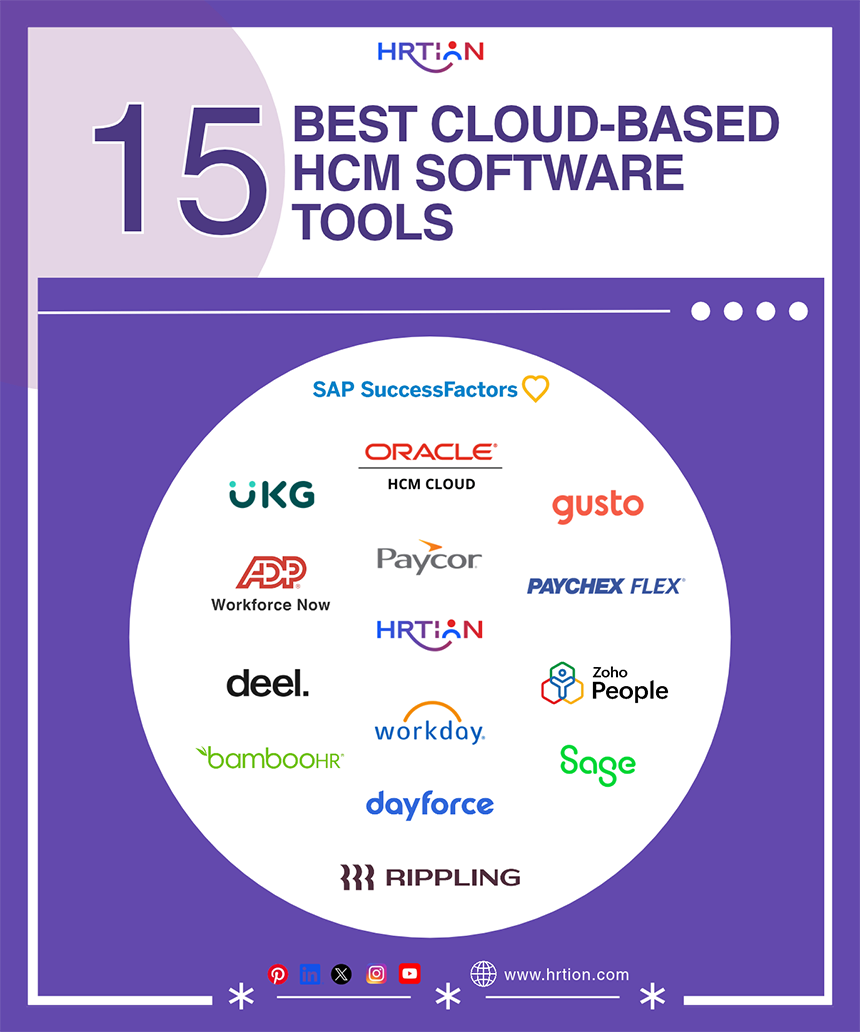
There isn’t a single HCM platform that is ideal for all organizations. Some are suited for small companies, whereas others are ideal for larger enterprises.
Here are the top 15 cloud-based HCM platforms that are worth considering.
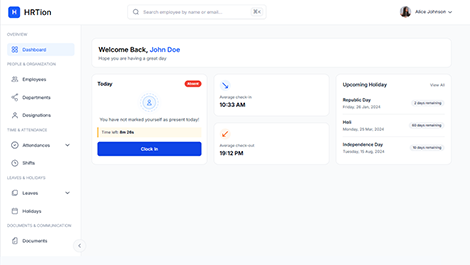
1. HRtion
HRtion is a cloud-based HR management platform that helps companies centralize employee information and simplify everyday HR operations. It combines core HR functions along with complex features like attendance, leave, payroll, and workforce management.
Key features:
- Attendance and leave tracking
- Payroll management
- Employee self-service
- HR reporting and analytics
2. SAP SuccessFactors
SAP SuccessFactors is a comprehensive cloud HCM platform built for managing employees throughout the entire workforce lifecycle. It is ideal for both medium- and large-sized companies that require advanced features.
Key features:
- Core HR and employee data management
- Talent acquisition and onboarding
- Performance and goal management
- Learning and development
- Workforce analytics
3. Oracle Fusion Cloud HCM
Oracle Fusion Cloud HCM provides an integrated suite of different applications such as HR, payroll, talent, workforce management, and employee experience.
The automation and analytics capabilities of this tool are top-notch and well-suited to larger organizations.
Key features:
- Core HR and workforce management
- Global payroll
- Recruiting and onboarding
- Talent and performance management
- AI-powered HR analytics
4. Paycor
Paycor is another popular cloud HR platform that is best for small- to mid-sized businesses. It helps companies manage payroll, HR, recruitment, employee benefits, time tracking, and workforce management through a centralized platform.
Key features:
- Payroll management and automation
- Human resources and employee records
- Time and attendance tracking
- Recruitment and application management
- Benefits administration
- Performance management
- Workforce analytics and reporting
- Employee self-service
5. ADP WorkforceNow
ADP WorkforceNow is a comprehensive tool to support businesses, as it can manage their entire workforce. From payroll, HR, benefits, talent management, time tracking, and workforce analytics in one platform.
ADP is known for providing scalability at its best for growing organizations that need to automate HR processes while maintaining employee and payroll data for easier access.
Key features:
- Payroll processing and tax administration
- Core HR management
- Benefits administration
- Time and attendance
- Recruiting and onboarding
- Talent and performance management
- Compensation management
- Workforce analytics and reporting
- Employee self-service
- Compliance management
6. Workday
Workday is a leading HCM platform designed primarily for mid- and large-sized companies that require workforce management capabilities. It brings HR, payroll, recruiting, talent, compensation, workforce planning, and analytics together in a unified environment to save time and effort.
The cloud-based platform is highly useful for complex workforce structures and needs advanced reporting and strategic planning.
Key features:
- Core human capital management
- Payroll and benefits management
- Recruitment and onboarding
- Talent management
- Performance and compensation benefits
- Workforce planning
- Employee experience tools
- HR analytics and reporting
- Learning management
- Global workforce management
7. UKG Pro
UKG Pro is another option that offers multiple benefits, such as HR, payroll, talent, workforce management, and employee engagement. It is well-suited for businesses of all sizes, as it offers a connected view of workforce analytics and automates HR administrative processes.
The platform also supports workforce planning, employee development, and data-driven decision-making.
Key features
- Core HR management
- Payroll processing
- Time and attendance
- Workforce management
- Recruiting and onboarding
- Talent and performance management
- Compensation management
- Employee engagement
- Workforce analytics
- Employee self-service
8. Dayforce
Dayforce is a unified platform that combines HR, payroll, workforce management, talent, and employee experience under one roof.
The tool is ideal for companies that want to manage the entire lifecycle while maintaining a consistent workflow. It’s an integrated approach known for reducing disconnected HR processes and offering better visibility into workforce operations and their outcomes.
Key features:
- Core HR management
- Payroll processing
- Global payroll capabilities
- Workforce management
- Time and attendance
- Recruiting and onboarding
- Talent and performance management
- Benefits administration
- Workforce analytics
- Employee experience tools
9. Rippling
Rippling is a cloud-based workforce management and HCM tool that combines features like HR, payroll, benefits, IT, and employee management. One of the major advantages of Rippling is the automation of workflows across all employee-centric processes.
The tool allows the unification of workplace technology and HR activities in one system.
Key features:
- Payroll management
- Core HR and employee records
- Benefits administration
- Employee onboarding and offboarding
- Time and attendance
- Recruiting and applicant tracking
- IT and application management
- Workflow automation
- Employee self-service
- Workforce reporting
10. BambooHR
BambooHR is an HR and HCM platform designed specifically for small for midsized businesses. It mainly focuses on making everyday tasks easier by digitizing regular tasks and offering essential features such as employee records, recruiting, onboarding, performance, time tracking, payroll, and reporting.
It is known for its user-friendly interface, thus best suited for a straightforward HR management solution.
Key features:
- Employee information management
- Applicant tracking
- Recruiting and onboarding
- Payroll management
- Time tracking
- Benefits administration
- Performance management
- Employee satisfaction and engagement tools
- HR reporting and analytics
- Employee self-service.
11. Paychex Flex
Paychex Flex is a payroll and HCM platform that helps businesses manage payroll, HR, benefits, time, and employee administration. It helps reduce the administrative workload related to payroll and workforce management while providing employees with self-service access.
The tool is apt for businesses that need a combined solution for HR and payroll processes.
Key features:
- Payroll processing
- Payroll tax administration
- Core HR management
- Time and attendance
- Benefits administration
- Recruiting and onboarding
- Employee self-service
- HR reporting and analytics
- Compliance support
- Workforce management
12. Gusto
Gusto is a payroll and HR platform that is meant for small businesses and growing companies. It combines payroll, benefits, hiring, onboarding, time tracking, and employee management in one accessible platform.
Gusto is best for businesses that want to simplify payroll and HR administration without adding highly complex and expensive HCM systems.
Key features
- Full-service payroll
- Payroll tax filing
- Employee benefits management
- Hiring and onboarding
- Time tracking
- PTO management
- Employee self-service
- Performance management
- HR reporting
- Contractor payments
13. Deel
Deel is a global workforce management platform designed for companies that hire and manage employees globally. It offers international payroll, hiring, compliance, onboarding, benefits, and workforce administration.
These features make Deel the most relevant to remote, distributed, and multinational teams that need to manage global processes.
Key features:
- Global payroll
- Employee and contractor management
- International hiring
- Global compliance support
- Employee onboarding
- Benefits administration
- Time-off management
- Contractor payments
- Workforce reporting
- Global HR administration
14. Zoho People
Zoho People is a popular HCM solution that centralizes everyday HR processes and the employee database. It provides dedicated tools for onboarding, attendance, leave, performance, employee self-service, and HR workflows.
Potent integration capabilities for the broader Zoho ecosystem can help organizations connect HR processes with other business operations.
Key features:
- Employee database management
- Employee onboarding
- Attendance and time tracking
- Leave management
- Performance management
- Workflow automation
- Employee self-service
- HR analytics and reporting
- Document management
- Integration with Zoho applications
15. Sage People
Sage People is an HCM platform designed to help growing and multinational organizations manage their workforce through a centralized HR system.
The tool deals with core HR, employee data, talent management, performance, workforce planning, and reporting. It helps the HR team streamline the processes while offering greater visibility into employee information across various locations.
Key features:
- Core HR and employee data management
- Employee onboarding
- Talent management
- Performance management
- Workforce planning
- Compensation management
- HR analytics and reporting
- Employee self-service
- Global workforce management
- HR process automation
Manage the payroll, attendance, shift roles, and more in an all-encompassing HR suite. Your ultimate HR toolkit is just a click away.
Best HCM Platforms by Business Size and Use Case
The best platform for your business totally depends on the size of the company and the particular requirements to keep the business rolling and thriving.
| Platform | Business Size | Number of Employees (approx.) | Best Use Case |
| HRtion | Small/mid-size | 1-100 | Core HR and employee management |
| Gusto | Small/Startups | 1-50 | Payroll and basic HR |
| BambooHR | Small/mid-size | 1-100 | Core HR and employee experience |
| Paychex Flex | Small/mid-size | 1-200 | Payroll or HR outsourcing |
| Paycor | Small/mid-size | 1-200 | Payroll + workforce management |
| Eddy | Small business | 1-50 | HR+payroll+hiring |
| Rippling | Mid-size/growing | 200-1000 | HR + IT automation |
| ADP Workforce Now | Mid-sized | 200-500 | Payroll and HR compliance |
| UKG Pro | Mid-market or enterprise | 200-1000 | Workforce management |
| Dayforce | Mid-market or enterprise | 200-1000 | Complex payroll and workforce |
| Workday | Enterprise | 1000-5000 | Global HCM + Finance |
| SAP SuccessFactors | Large Enterprise | 5000 + | Global HR transformation |
| Oracle Fusion Cloud HCM | Large Enterprise | 5000+ | HCM+ ERP integration |
Key Features of HCM Software
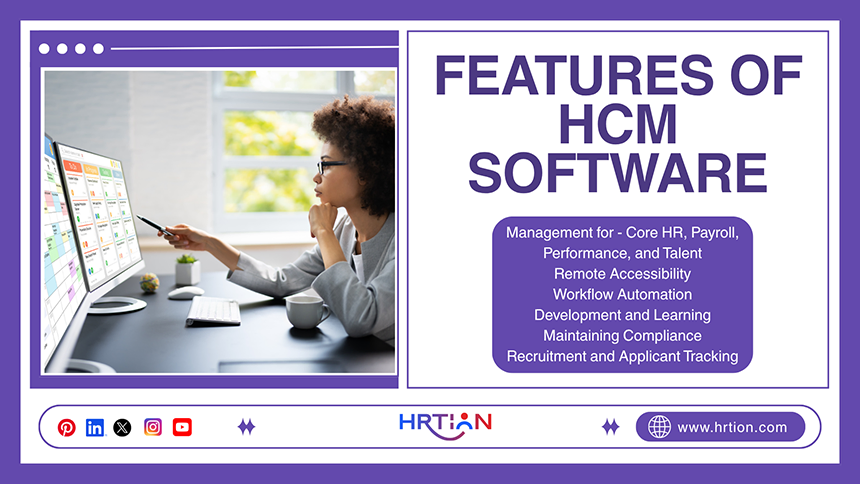
The main and most important benefit of HCM software is how it combines and groups different HR functions together, which not only reduces the manual work required for those functions but also improves the accuracy of the data.
This is especially valuable for centralizing and managing the employee lifecycle, from recruitment and onboarding to employee offboarding.
Some key and general features of HCM software are described below:
1. Core HR Management
All information and data, like employee profiles, documents, job information, organizational structures, and any other workforce data, are compiled neatly and securely into one system.
2. Payroll Management
Tasks that require pinpoint accuracy, like payroll calculations, deductions, tax-related processes, payments, and payroll reporting, are automated, reducing the workload as well as ensuring the data is accurate.
3. Recruitment and Applicant Tracking
HR teams can easily work on job postings, applications, interviews, hiring, recruitment workflows, and candidate screening all from just a single platform.
4. Employee Onboarding
The HCM software helps streamline the onboarding process through the use of automation of processes like document collection, training, task assignments, and paperwork for new employees.
5. Time and Attendance
Organizations can calculate payroll and manage workforce productivity more accurately by using software for tracking employee working hours, attendance, overtime, schedules, and time-off requests.
6. Employee Benefits
HR teams can also take a look at and manage employee benefits such as health insurance, paid time off, retirement plans, and other benefits, and provide employees with access to the relevant information.
7. Performance Management
HCM software has many tools for setting and planning goals, conducting performance reviews, tracking employee development over time, and providing feedback.
8. Talent Management
HCM software also supports and fosters the growth of employees, helping with employee development, career growth, learning, skills management, and succession planning. This is valuable for organizations, as it allows them to increase retention rates and further grow their workforce.
9. Employee Self-Service
Giving employees access to personal information, allowing them to update the data, view pay statements, request time off, manage their benefits, and complete HR-related tasks without relying on HR staff is a powerful way to grow independence in the workforce.
10. Reporting and Workforce Analytics
HCM software helps organizations make proper and detailed data-driven decisions by giving real-time insights into workforce trends, payroll costs, attendance, performance, employee turnover, and any other HR metrics.
11. Development and Learning
Organizations can make and deliver training programs, check certifications, track employee skills, and promote continuous professional development through the use of HCM software.
12. Maintaining Compliance
Businesses often use HCM software to maintain compliance with tax rules, payroll requirements, employment regulations, and internal HR policies across various locations with a large variety of laws.
13. Workflow Automation
Repetitive HR processes that take a lot of time, like approvals, employee notifications, onboarding tasks, and document workflows, are automated, giving HR teams more time to focus on more strategic activities.
14. Remote Accessibility
HR teams and employees who work in remote and distributed workforces are still able to access important HCM features, information, and workflows through mobile devices.
15. Integration
HCM software can easily connect and integrate payroll systems, accounting platforms, benefits providers, communication tools, and other business applications.
Benefits of HCM Platforms
There are numerous reasons why companies are constantly moving towards the HCM platform and ditching spreadsheets as well as disconnected platforms.
Some of the major practical benefits of incorporating a centralized HCM platform are listed here.
Improved HR Efficiency
Automation reduces the manual data entry and repetitive administrative work that HR people perform on a regular basis.
Better Employee Experience
Employees can access HR information and complete routine tasks without contacting HR time and again. This makes managing personal and professional information easier for them.
Centralized Employee Data
A single system helps HR teams maintain more consistent employee records and reduces the need to update the same information across multiple platforms.
Fewer Manual Errors
Automating calculations, workflows, and data transfers can help reduce errors related to manual processes.
Better Workforce Visibility
Dashboards and reports give HR people and managers a clear view of workforce trends.
Easier Compliance Management
HCM systems can help companies maintain records, automate workflows, and manage HR processes. But make sure that the HCM platforms support employment laws and regulations applicable to them.
Scalability
Cloud-based systems can help businesses scale operations and add employees, locations, departments, and HR processes.
Cost and Time Savings
Automation is known for reducing manual workload and freeing up HR professionals so that they can focus more on strategic activities.
Cloud-Based HCM Platform Comparison
Here is the comparison of the top 15 cloud-based HCM platforms based on their core strengths, business size, and indicative cost.
| HCM Software | Best For | Core Strengths | Business Size | Indicative Cost |
| HRtion | Everyday HR management | HR, attendance, leave, payroll, workforce management | Small to mid-sized | Custom pricing |
| SAP SuccessFactors | Enterprise HCM | Core HR, talent, analytics, workforce management | Mid-sized to enterprise | From ~£4.72/user/month for Employee Central Core HR |
| Oracle Fusion Cloud HCM | Complex HR environments | Global HR, payroll, talent, analytics | Enterprise | Custom quote |
| Paycor | HR + payroll | Payroll, HR, benefits, workforce management | Small to mid-sized | Custom pricing; typically quote-based |
| ADP Workforce Now | Payroll and HR | Payroll, benefits, HR, workforce management | Small to enterprise | Custom quote; benchmark $22–$38/employee/month |
| Workday | Enterprise workforce management | HCM, talent, analytics, workforce planning | Mid-sized to enterprise | Custom quote; benchmark $68–$86/employee/month for core HCM |
| UKG Pro | Workforce management | HR, payroll, scheduling, time and attendance | Mid-sized to enterprise | Custom quote; benchmark $34–$50/employee/month |
| Dayforce | Unified HCM | Payroll, HR, workforce management, analytics | Mid-sized to enterprise | Custom quote |
| Rippling | HR + IT management | HR, payroll, IT, automation | Small to mid-sized | From $8/employee/month; modules may cost extra |
| BambooHR | Core HR | Employee records, hiring, onboarding, performance | Small to mid-sized | From $10/employee/month |
| Paychex Flex | Payroll + HR | Payroll, HR, benefits, time tracking | Small to mid-sized | From $39/month; additional employee fees may apply |
| Gusto | Small business HR and payroll | Payroll, benefits, onboarding | Small businesses | From $40–$49/month + $6/employee/month |
| Deel | Global workforce management | Global payroll, contractors, international hiring | Global businesses | HR from $5/employee/month; other services priced separately |
| Zoho People | Affordable HR management | Core HR, attendance, leave, performance | Small to mid-sized | From $0.84–$1/user/month depending on plan |
| Sage People | Growing businesses | Core HR, talent, workforce management | Mid-sized | Custom quote |
How to Choose HCM for Your Business
Choosing HCM software is not only about looking through the features but also about identifying the problems your chosen platform can fix.
1. Define your HR Requirements
Start by creating a list of your current HR processes. Check what you require, whether it’s payroll, attendance, recruitment, performance, employee self-service, or employee benefits.
Make sure you prioritize the features your organization needs the most.
2. Consider Workforce Size
A 30-person company and a 30,000-person organization both have different HCM requirements.
Small businesses prefer affordability and simplicity, while larger companies require advanced features, integrations, analytics, and global capabilities.
3. Check Scalability
Select software that can grow as your organization grows.
Make sure that the platform you are choosing supports adding:
- More employees
- Multiple locations
- New departments
- Additional HR modules
- International operations
4. Evaluate Integrations
Your HCM system is usually required to connect with accounting, payroll, recruitment, attendance, benefits, communication, and other applications. Thus, check that the tool is able to integrate with existing systems.
5. Compare Usability
A platform can have hundreds of features, but employees may still struggle to use it.
Therefore, request a demo and evaluate the experience for both the HR team and employees.
6. Review Security and Privacy
HCM systems contain sensitive employee data, and thus security should be one of the priorities.
Look for these security features:
- Data encryption
- Access controls
- Authentication
- Audit logs
- Data backups
- Security certifications
- Privacy practices
7. Compare Pricing
The overall cost is not determined by the subscription price only. It consists of the total money spent on setup, implementation, employee licenses, payroll, premium modules, integration, training, and support.
8. Check Technical Support
Good technical and customer support can make a huge difference in implementation and issue troubleshooting.
The software vendor must provide support through email, phone, chat, knowledge bases, dedicated account managers, or other possible options.
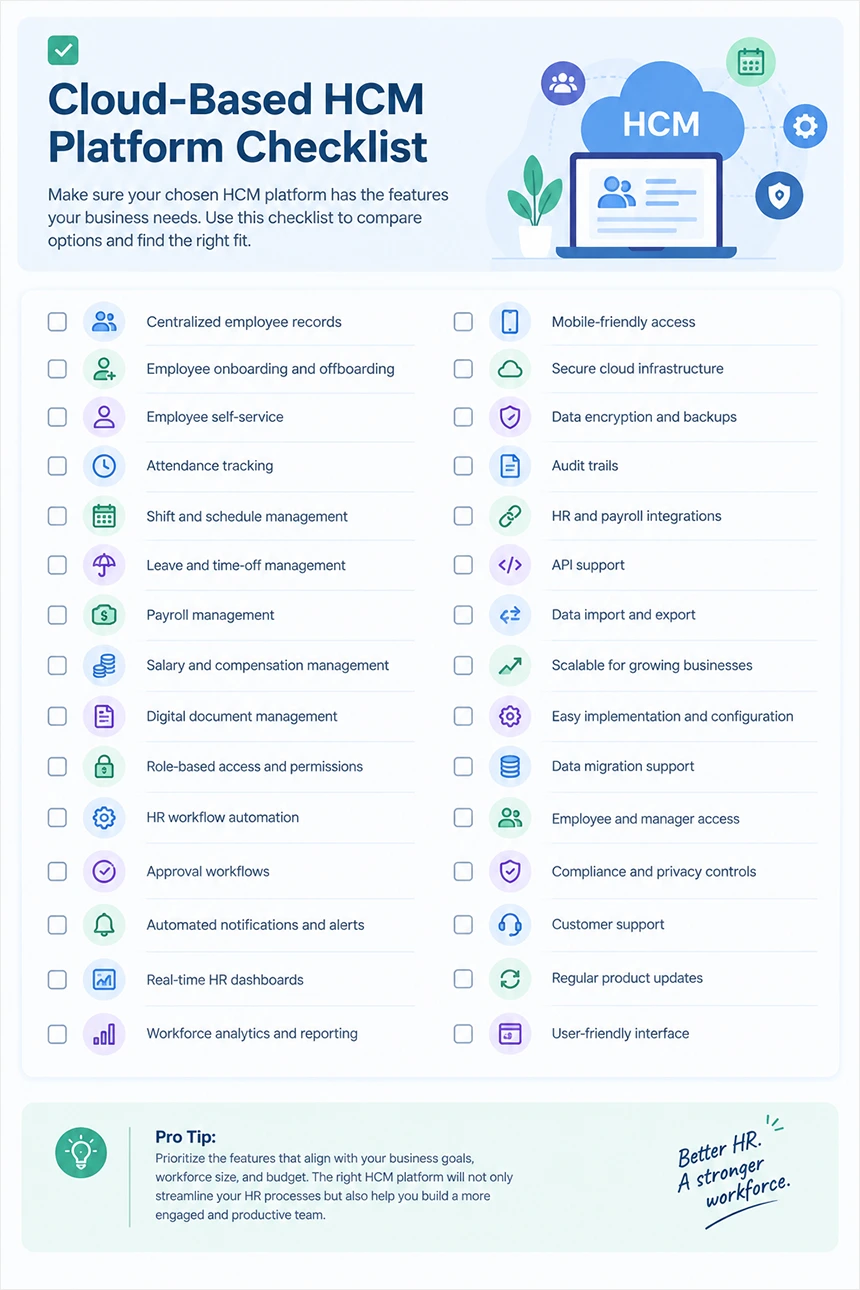
Cloud-Based HCM Platform Checklist
Here is the checklist to evaluate whether the HCM platform can successfully meet your organization’s needs. It must check all the boxes to provide value for money.
Conclusion
Cloud-based HCM software can simplify the way businesses handle their operations by bringing information and processes into one centralized environment.
It is not necessary for the software to come with the longest list of features, but it must fit your organization’s workforce, budget, HR processes, technology, and growth goals.
Thus, to make an informed decision, make sure you request a demo or trial version from the vendor. It will help understand how the platform would work in real-world scenarios.
FAQs
What is cloud-based HCM software?
Cloud-based HCM software refers to a workforce management platform that is hosted by a software provider and is used by organizations for managing HR functions like employee records, payroll, recruitment, attendance, performance, learning, and workforce analytics.
What is the difference between HRMS and HCM software?
The main difference between HRMS and HRIS and HCM software is that HRMS is traditionally designed to focus on core HR administration, such as employee records, payroll, and attendance.
Whereas HCM is much broader in function and can include talent management, learning, workforce planning, analytics, employee experience, and any other strategic HR functions.
What are the benefits of cloud-based HCM?
The major and most common benefits of cloud-based HCM software are centralized employee data, HR automation, remote accessibility, workforce analytics, scalability, and reduced reliance on manual processes.
Is HCM software suitable for small businesses?
Though HCM software is able to provide advantages to any business and organization regarding payroll, attendance, onboarding, employee records, and other administrative workloads, smaller businesses should still consider platforms with simpler interfaces and pricing models.
How much does HCM software cost?
HCM pricing can vary considerably depending on the provider, number of employees, modules selected, implementation requirements, and geographic location. This can usually also lead to variety in how payment is to be carried out, with some platforms charging per employee per month, while others may use customized pricing.
Does HCM software include payroll?
Many HCM platforms generally offer payroll, but payroll availability and functionality can differ by country and provider. It is highly recommended for businesses to verify whether an HCM platform supports their specific payroll, tax, and compliance requirements.
Is HCM software secure?
Cloud HCM providers commonly use many security measures, like authentication, access controls, encryption, monitoring, backups, and audit capabilities. However, it is advised to properly evaluate each provider’s security practices before storing sensitive employee information on the platform.

Bhavesh is a Guest Writer at HRTion with an academic background in HR. He did an HR management course in 2025. Before transitioning to HR content writer, he worked as an Academic Content Writer at Trident Management for over 6 years. His expertise in recruitment processes & strategies helps him write detailed and clear content that is not only informative but also accessible for everyone.