
HR software is your strategic partner to boost growth through automation, analytics, and employee-centric tools. It helps in reducing costs and supports long-term business goals.
Apart from the above-stated ones, there are a whole lot of other benefits of using HR software. Whether it’s a small business or a large enterprise, the benefits are equal for all. Thus, if you haven’t invested in HR software yet, here is your cue to do so.
What is HR Software?
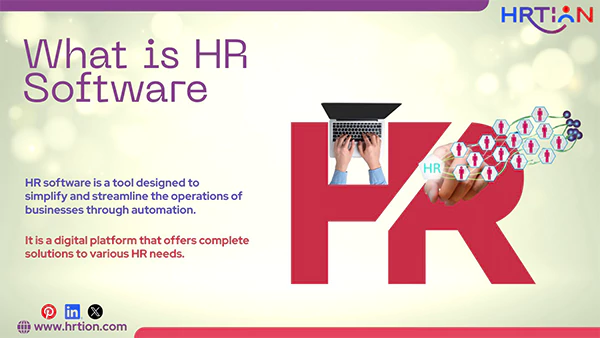
HR software is a tool designed to simplify and streamline the operations of businesses through automation. It is a digital platform that offers complete solutions to various HR needs.
Earlier HR processes were manual and thus were time-consuming and prone to errors and risks. However, with HR software, everything is stored digitally, and processes like attendance tracking, payroll management, onboarding, etc., are automated, resulting in smoother workflow and improved accuracy. Therefore, the benefits of using HR software for small businesses and large enterprises are many.
What Are the Main Benefits of Using HR Software?
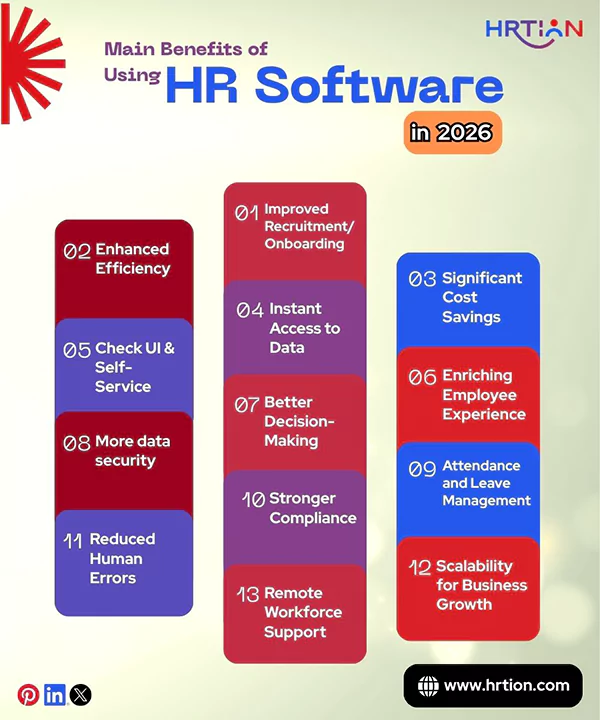
In 2026, HR software is much more than just a tool; it is a growth machine that can transform how your business functions.
Here are some of the main benefits of using HR software:
1. Improved Recruitment, Onboarding, and Talent Management
HR platforms are crucial for talent management in an organization, as they allow managers to track employee performance, skills, training needs, and career development. This is one underrated, highly beneficial aspect of HR management tools, as they help organizations and employees to thrive simultaneously.
SHRM’s Benchmarking report found that the average cost per hire for a corporate role is $4,129, with tech costing $8,900. So, businesses that use automation for hiring, onboarding, and talent management can save money, time, and effort by managing an already hired employee base.
2. Enhanced Efficiency
Studies show that HR spends 73% of their time on administrative tasks when processes are manual. But automation can save time by 50%, which allows HRs to spend time on strategizing growth and productivity through employee engagement and workforce planning.
HR software can perform tasks 4 to 5 times faster, requiring less effort and a smaller HR team. It eliminates repetitive tasks such as data entry, document management, and leave approvals.
3. Significant Cost Savings
Zipdo’s recent HR Automation Statistics shows that HR automation delivers an average ROI of 250% within 12 months (backed by 2023 Deloitte analysis). This clearly indicates that deploying HR software in a company can cause substantial monetary benefits.
It is also found that digital onboarding saves around $300 per employee yearly by eliminating the cost of expensive and daunting paper-based processes.
This way, HR technology is quite a cost-effective investment, especially for those businesses that are planning to scale without increasing HR headcount in the company.
4. Instant Access to Data
Gone are the days when HRs and administration had to churn through the heap of papers to find one particular employee file. Now with the adoption of HR software, companies can centralize employee information into a single digital platform. This offers instant access to crucial data like records, reports, and analytics.
The HR team can now track every employee and keep their real-time record at their disposal, ensuring consistency and transparency. Being a “single source of truth,” HR software can keep HRs and employees informed about the discrepancies and changes happening across the organization, promoting better problem-handling and decision-making.
5. Enriching Employee Experience
By offering self-service portals, mobile accessibility, and communication tools, HR software empowers the workforce in a company. According to the HR Trends Report by hr.mcleanco.com, 63% of employees prefer self-service HR tools over traditional HR interactions due to digital convenience.
These platforms also support feedback systems, recognition programs, and career development planning for better engagement and employee satisfaction. By making the employees content, HR programs positively affect the overall rate of retention, productivity, and company culture.
6. Better Decision-Making with Data & Analytics
HR software consists of advanced analytics and reporting tools that help companies make data-driven and informed decisions. HR and management can plan the workforce management, performance progress, and retention strategies. More than 55% of organizations that use HR automation rely on the forecast data to make decisions related to hiring and cost-cutting.
The real-time dashboard allows HR leaders to track key metrics such as rate of turnover, engagement, productivity, and hiring efficiencies. This way, instead of relying on guesswork, accurate data enables HR to attain better business outcomes.
7. Stronger Compliance and Reduced Errors
The trickiest part of HR duties is compliance management. Aligning business goals with ever-evolving labor and tax laws takes a large chunk of time, from a day, and still can be missed. But with HR automation, the processing errors can be reduced significantly, resulting in improved compliance.
Automated notifications and updates keep the administration alert about the deadlines and legal requirements to minimize legal risks and penalties. Moreover, with real-time and accurate data, HRs can confidently perform regular audits and deal with regulatory inspections, keeping the company’s reputation and finances intact.
8. More data security
Employee data consists of sensitive information such as personal records, salary slips, and bank details; security becomes the top priority. HR software provides advanced security features such as end-to-end encryption, role-based access control, and multi-factor authentication, like face recognition and more, to keep the information protected.
A paper by nttdata.com provides insights into the role of automation in cybersecurity. Through this, it is evident that a data breach in an organization can cause the loss of millions and a compromised reputation, emphasizing the need for digital HR platforms.
9. Attendance and Leave Management
Automated attendance and leave management systems reduce manual errors and administrative workload. An HR tool can save hundreds of hours annually by digitizing leave approvals, attendance tracking, and report generation.
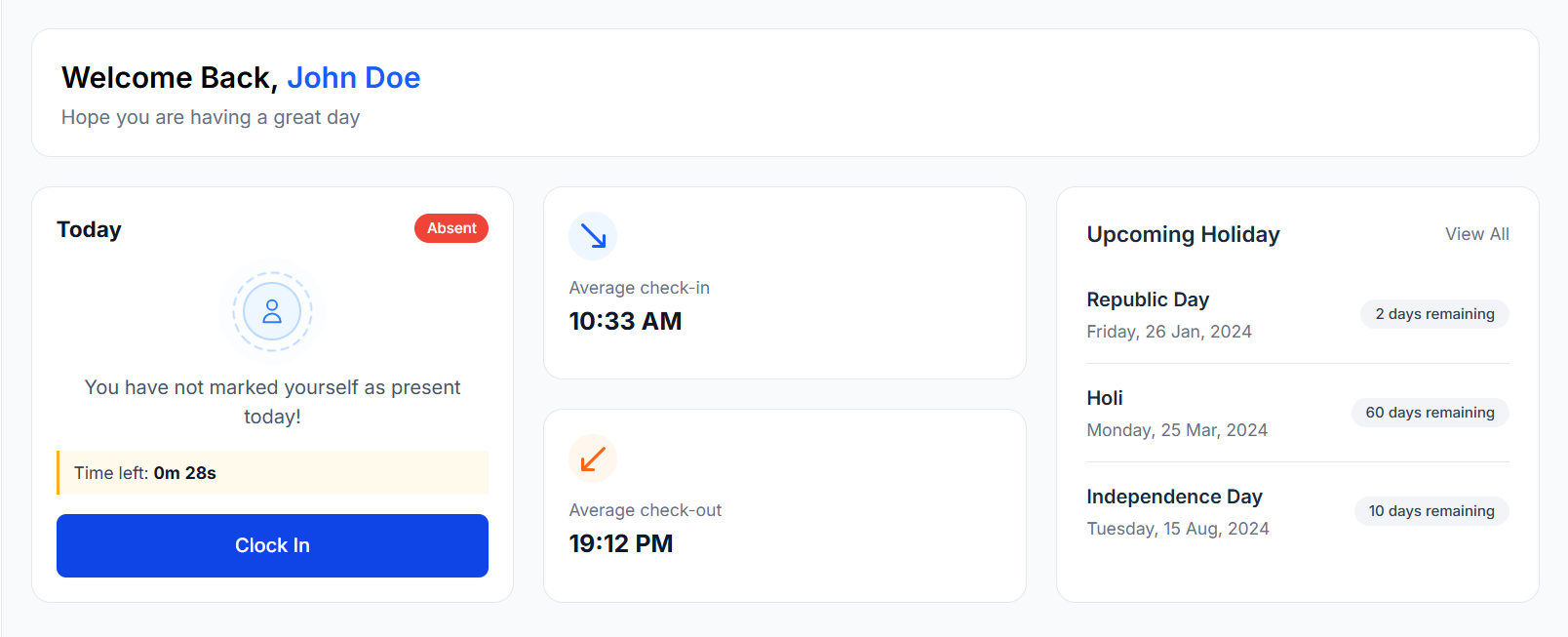
Employees can log in and log out from any location, and the data is synced promptly. Apart from this, HR tools promote a transparent approach across the organization by providing real-time data on leave balance, deductions, shift changes, late coming, early logouts, and holidays. This further leads to optimal resource planning for the future.
10. Better Payroll Management
Payroll management is one of the most complex and time-consuming administrative processes that needs utmost focus and concentration. And it is established that automated payroll systems can reduce the processing time by 80%.
Digitized calculations, tax compliance, and other deductions (such as PF and ESI) reduce disputes and discrepancies by releasing payments accurately on time. An HR tool with built-in payroll management can help organizations with well-maintained compliance and optimized financial arrangements.
11. Reduced Human Errors
Manual data management is highly prone to mistakes, and such errors can cost a large portion of the overall business revenue. Automated tools can cut down the calculation errors, ensure accurate data entry, and generate precise reports.
Organizations that rely on HR automation can significantly reduce the processing errors, resulting in improved compliance, employee trust, and overall efficiency. With no or minimal effort, HR software enables a business to achieve the 3 Ps, i.e., perfection, productivity, and progress.
12. Scalability for Business Growth
As business grows, dealing with regular HR processes becomes more complex, generating the need to deploy an efficient automated solution. With increasing workflow demands, HR tools enable organizations to add users, adapt new features, and integrate other business tools.
Most of the businesses believe that automation has helped them scale operations without increasing HR costs. A well-designed HR tool offers flexibility for multi-location teams, remote employees, and expanded horizons. Scalable HR technology supports organizational growth while maintaining consistency in executional processes across the company.
13. Mobile Accessibility and Remote Workforce Support
The cloud-based HR software enables employees to access and use the HR portal on any device of their choice. This plays a huge role in managing remote and hybrid workforces. With mobile accessibility, people can check their shifts, submit leave requests, mark attendance, and communicate with HR and team members.
Digital HR tools offer convenience to access information, ensure continuity, enhance communication, and support employee expectations in terms of flexibility and ease.
14. Strategic HR Transformation
HR software is designed to help HR people manage human resources efficiently. It reduces routine workload, allowing HR professionals to focus on development, planning, and culture.
According to a 2023 Gartner study, “HR professionals spend 50% less time on manual administrative tasks after implementing HR automation tools.” The saved time is used to concentrate more on strategic initiatives rather than administrative tasks. The strategic HR transformation directly contributes to the business growth by improving productivity, streamlining operations, and enhancing communication.
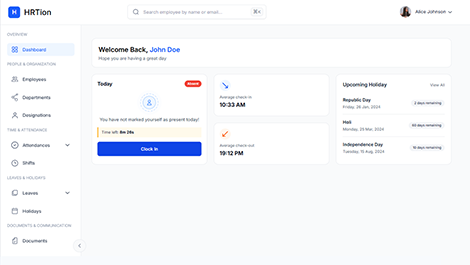
Manage the payroll, attendance, shift roles, and more in an all-encompassing HR suite. Your ultimate HR toolkit is just a click away.
Who Needs HR Software?
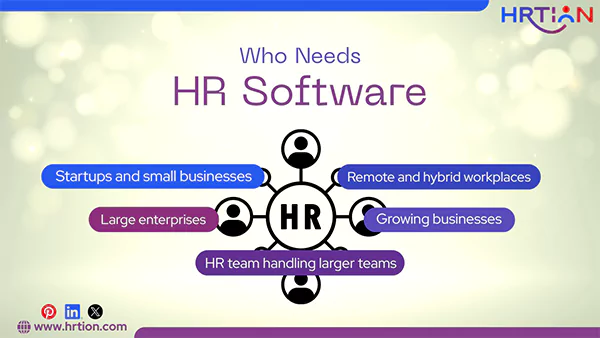
From small companies to larger organizations, all can benefit from a well-built HR software. If you are any of these, you need to deploy an automated HR system right now:
Startups and small businesses: Companies with limited HR staff and expanding administrative needs need automation.
Growing businesses: Businesses with scalable needs to manage hiring, payroll, and compliance.
Large enterprises: Businesses that require advanced features like analytics, integrations, and refined workforce management.
Remote and hybrid workplaces: Companies handling remote workforces can benefit from mobile access, digital storage, and real-time data updates.
HR team handling larger teams: Automated HR solutions can help manage high employee volumes with utmost accuracy and precision.
Challenges of Not Using HR Software
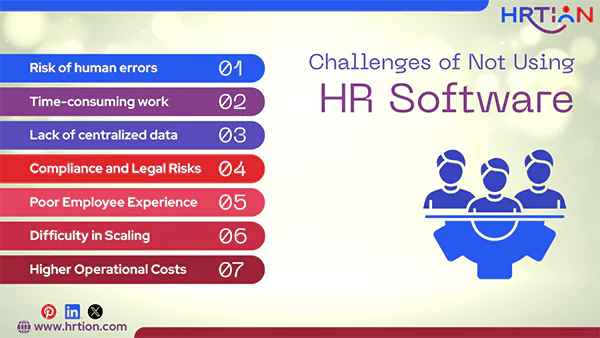
Relying on manual processes can lead to multiple operational errors and can affect the growth and cost management of the business. With the evolving workforce, traditional methods can bring risks. Thus, to deal with such challenges, an automated solution is required.
If you are overlooking the need to deploy an HR solution, these are the challenges you can expect in operations:
- Risk of human errors
Manual data management in payroll, attendance, and records can increase the chances of mistakes. Even small errors can lead to financial and reputation loss. Above all, some blunders can lead to employee dissatisfaction and legal complications.
- Time-consuming work
HR teams functioning without automation often spend a large portion of their time handling repetitive tasks, such as maintaining records, processing requests, and calculating payments. This prevents HR professionals from focusing on other important tasks, such as strategic initiatives and talent development.
- Lack of centralized data
When employee information is scattered everywhere, across spreadsheets, emails, and files, it becomes complex to get access to real-time and accurate data. This fragmentation of data can result in confusion, duplication, and delays.
- Compliance and Legal Risks
Labor laws, tax regulations, and audits require a dynamic structure backed by automation. Manual processes can lead to missed deadlines, inaccurate data records, legal inconsistencies, and reputational damage.
- Poor Employee Experience
Employees need instant response, transparency, and digital convenience, but without an HR tool, it seems a little tricky. Hence, companies working without automation incur disruptions in payroll, leave approvals, and a lack of management.
- Difficulty in Scaling
Managing larger teams manually can increase complexity across operations. Thus, to manage larger workforces working remotely, a robust automated system is required for efficiency and sustainability.
- Higher Operational Costs
Manual processes may appear cheaper but actually are not. But, in the long run, it costs more than an automated system. Hiring additional HR staff can increase expenses significantly; thus, automation is the only solution here.
HR Software vs Manual HR Management
Managing HR software can be done both ways: manually and through HR software. But both ways vary immensely in terms of ease, efficiency, and accuracy.
Here is how HR software and manual HR management differ:
| Factor | HR software | Manual HR Management |
| Efficiency | Automated workflows save time. The repetitive tasks like payroll, attendance, and onboarding are handled digitally. | Time-consuming repetitive tasks. Requires manual data entry, a lot of paperwork, making slow and labor-intensive |
| Accuracy | Reduces errors through automation. Calculations and validation checks are done automatically. | High risks of human errors in processes like payroll, records, and compliance. |
| Data Access | Centralized data and real-time access to employee information. | Scattered data in spreadsheets and papers, causing confusion and mistakes. |
| Compliance | Automated updates, alerts, and reports to meet legal and regulatory requirements. | Difficulty in audits and tracking laws and regulations. |
| Scalability | Easily adapts to business growth and remote locations. And larger teams. | Becomes inefficient and complex as the company grows. |
| Decision-making | Data-driven information. | Limited data visibility. |
| Security | Advanced security features, including encryption and role-based data access. | Hard copies and paperwork are vulnerable to data loss and security breaches. |
| Affordability | Reduces operational costs in the long term because of automation and efficiency. | Over time, it becomes more complicated and expensive due to additional staff requirements. |
How to Choose the Right HR Software for Your Business
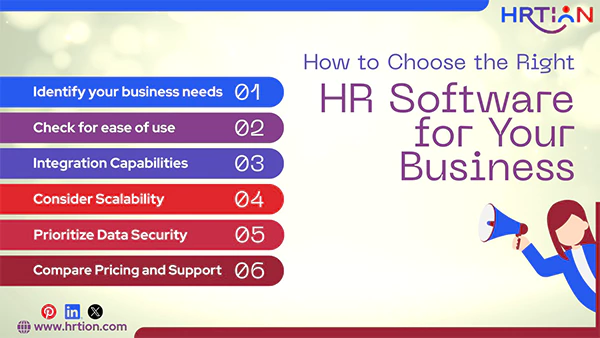
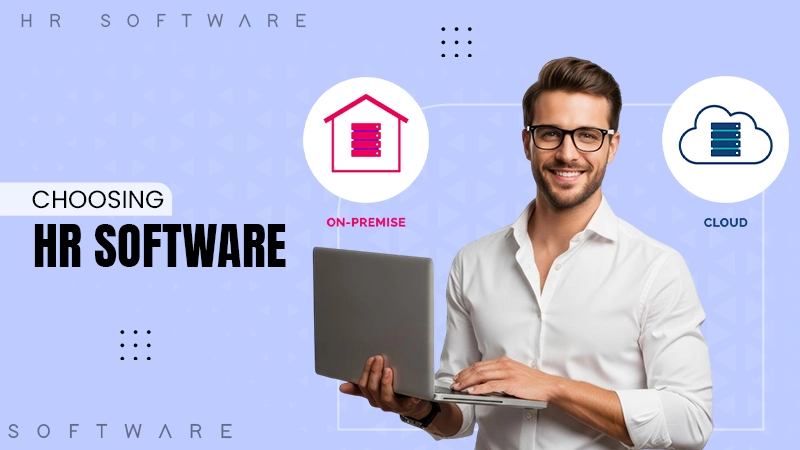
Choosing the right HR software is essential for improved efficiency and reduced workload. With a market full of options, businesses need to find the focus areas and requirements. Only a well-selected HR system can add value to the operational system.
- Identify your business needs
Start by understanding what your company’s challenges are. Then, set your priorities straight; make a list of features you require, such as payroll automation, attendance tracking, recruitment tools, or performance management.
- Check for ease of use
Look for user-friendly software that ensures quick adoption among HR teams and employees. Simple navigation, an intuitive interface, and mobile accessibility make software people-friendly.
- Integration Capabilities
The HR software you are choosing must be integratable with your existing software, such as accounting, payroll, or ERP systems.
- Consider Scalability
Choose a solution that can grow as your business grows. The HR software you are choosing must support the increasing operational demand and expanding workforces. It should also provide support for multiple locations and advanced HR requirements.
- Prioritize Data Security and Compliance
An HR system often consists of sensitive employee information. Thus, look for strong security features such as end-to-end encryption, role-based access, and compliance management.
- Compare Pricing and Customer Support
Evaluate pricing and plans, implementation costs, and customer support tendencies. The tool must offer demos and free trials to ensure that you make an informed decision.
How HRtion Helps Businesses Manage HR Efficiently?
HRtion is a modern HR solution designed to simplify HR operations. It is designed competitively to improve workforce productivity and enhance employee experience through smart automation technology.
By offering multiple HR functions in a single centralized system. It enhances efficiency across the company by eliminating manual processes.
But how does HRTion stand out?
HRTion offers support for the complete employee cycle, from hiring to retirement helping organizations to access everything under one roof. The exclusive features that make HRtion better than its contemporaries are:
- Recruitment and onboarding management.
- Payroll processing and compliance support.
- Attendance, leave requests, and tracking.
- Performance management of employees.
- Employee self-service portals.
- Real-time data access and employee-centric dashboard.
- Talent development and engagement tools.
- Advanced analytics with data-driven decision-making.
So, if you are looking for one affordable software that includes the benefits of all kinds, HRtion can be trusted blindly. With plans starting from $499, this robust tool is all that you need for a scalable and growth-focused business.
Frequently Asked Questions:
What are the advantages of an HR system?
The advantages of using an HR system are many, including attendance, payroll, compliance, and employee management in an automated manner. It is much more affordable and convenient than expanding an HR team or dealing with manual tasks.
What are the benefits of HR technology?
The benefits of HR technology are better scalability, enhanced data security, improved communication and collaboration, better productivity, and optimal company culture.
What is the purpose of HR software?
The main purpose of using HR software is to digitize the manual HR and administrative tasks, which require speed, accuracy, and precision. It is mainly used to handle repetitive and time-consuming company operations.
Why do we need HR software?
Companies need HR software to maintain and unlock efficiency, accuracy, and smarter workforce decisions, as it provides features like real-time access, end-to-end encryption, and real-time data analytics.

Bhavesh is a Guest Writer at HRTion with an academic background in HR. He did an HR management course in 2025. Before transitioning to HR content writer, he worked as an Academic Content Writer at Trident Management for over 6 years. His expertise in recruitment processes & strategies helps him write detailed and clear content that is not only informative but also accessible for everyone.