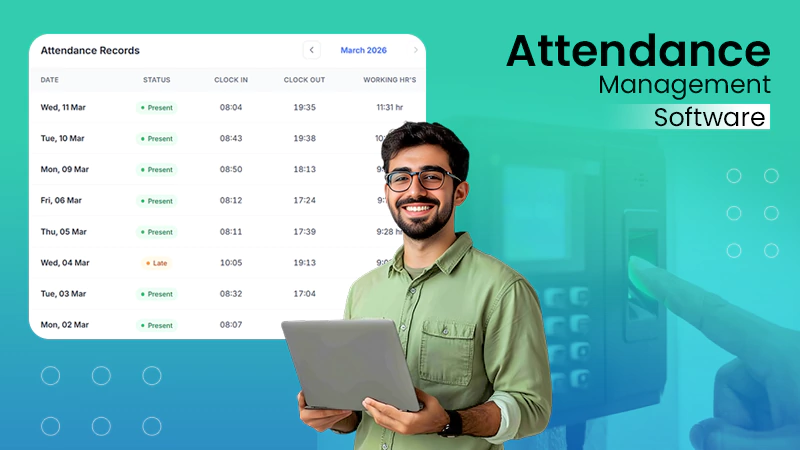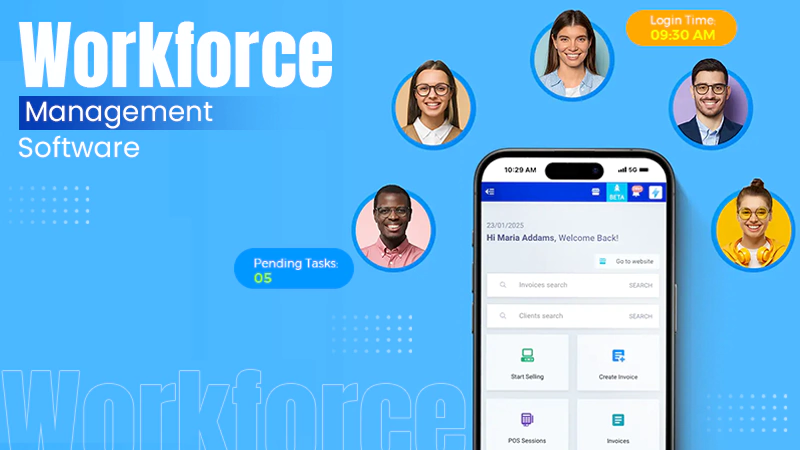

Most companies start small but grow exponentially over time. From sales, teams, and productivity to many other things, the organisations expand beyond the initial levels. However, one thing might remain the same old-school methods for example, using paper or spreadsheets to manage employee attendance and leave requests.
Even if you have switched to a software solution, the next problem comes in the form of using multiple applications to handle various aspects of HR responsibilities. Thus, to resolve all such problems, consider HRTion, the next-gen, revolutionary HR system that isn’t just the best leave management software, but a complete solution for all HR needs. Explore its various aspects in the article below.
What is HRTion?
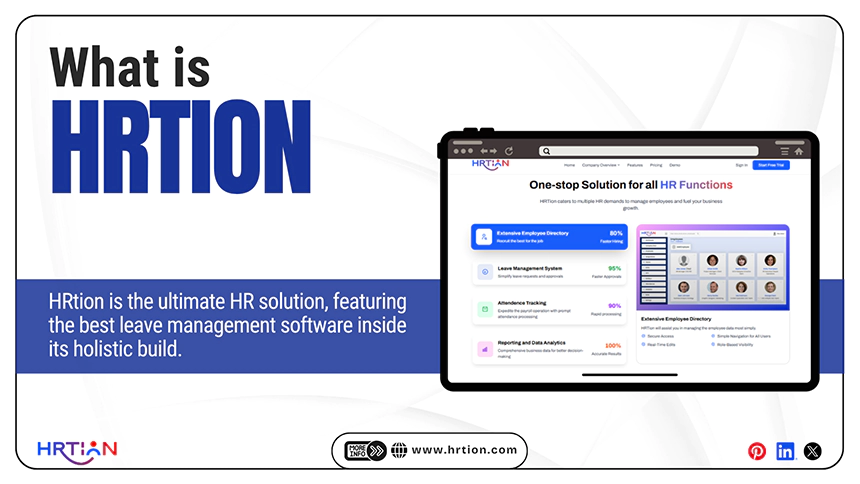
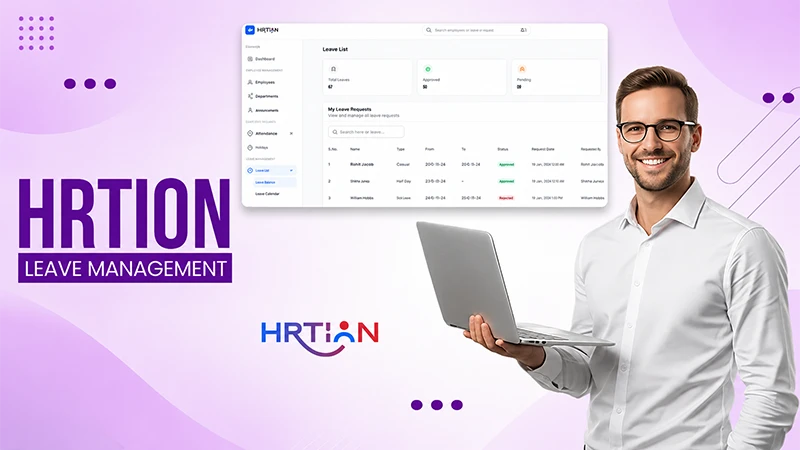
HRTion is the ultimate HR solution, featuring the best leave management software inside its holistic build. This user-friendly platform allows organizations, firms, or companies to manage employees’ attendance and payroll with ease.
And, not just that, HRTion, being a complete suite, also helps manage company documents, employee records in a well-sorted directory, teams, work shifts & scheduling, remote work, & holiday calendar, all in one place.
At the end of each month, when preparing payroll, HRTion, as developed with advanced automated technologies, sorts the records of all the employees according to accurate leave data, eliminating potential human errors from calculations.
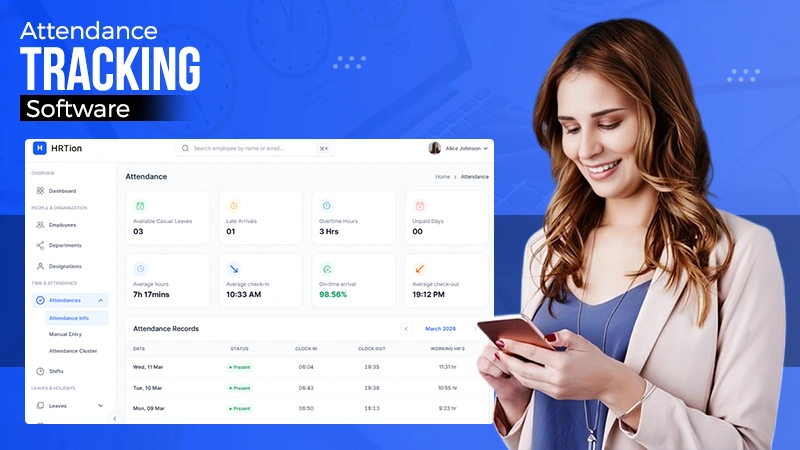
Real-time attendance tracking leads to accurate analytics and no over- or underpayments, ultimately boosting motivation and productivity.
Key Features of the HRTion as the Best Leave Management Software
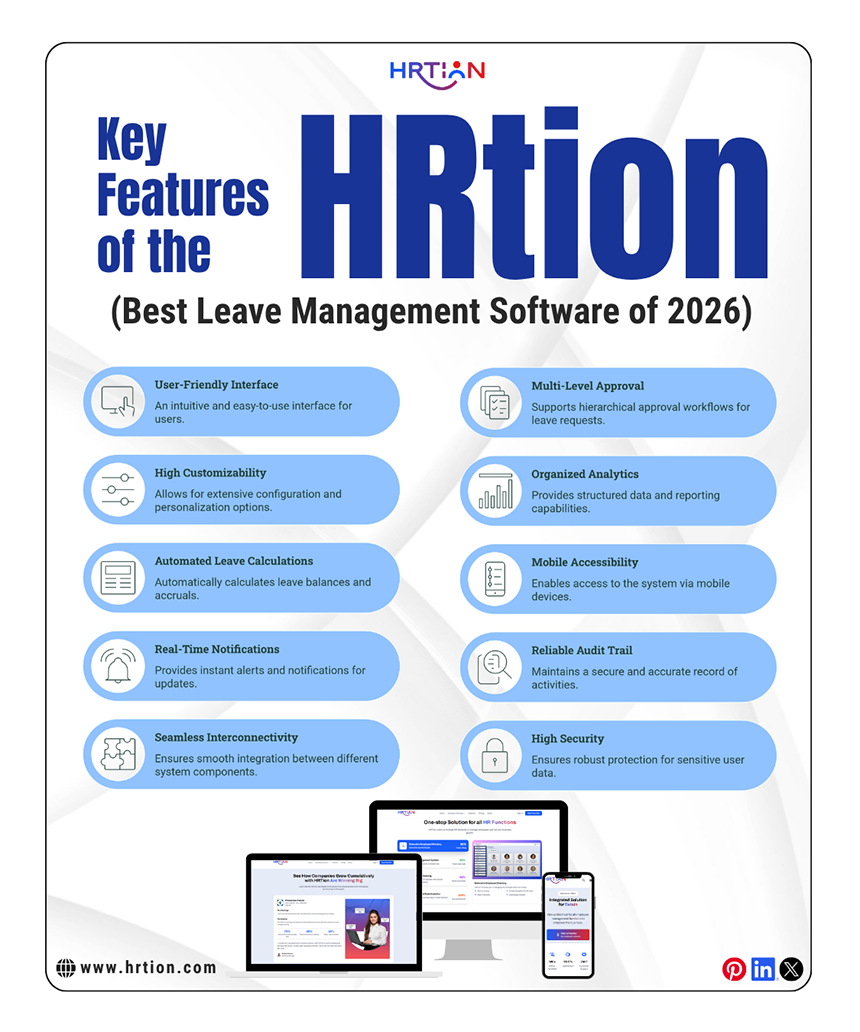
HRTion is the best leave management software that streamlines attendance and payroll with its cutting-edge features such as a user-friendly interface, high customizability, automated leave calculations, real-time notifications & alerts, seamless interconnectivity, ease of multi-level approval, organized data, mobile accessibility, reliable audit trail, and high security.
1. User-Friendly Interface
HRTion offers a highly beginner-friendly atmosphere where even a non-technical person can sail through its multi-level functionalities without steep learning curves. This reduces the training period and eases adaptability.
2. High Customizability
HRTion is the highly flexible HR leave management system. This platform has been built and tailored to meet the needs of all organizations alike without fail. One company’s policies and regulations might differ from another’s. And that is why HRTion features a solution that completely adapts to varying workflows.
3. Automated Leave Calculations
Another best aspect of HRTion employee leave management software is that it leverages automation for leave calculations. As a result, the human errors are eliminated from the process, and the payroll becomes accurate, saving time and operational costs.
4. Real-Time Notifications & Alerts
HRTion keeps everyone updated with instant notifications in real-time for leave requests, approvals, and rejections. So, the important human actions can be taken on time by the concerned authorities. This supports amicability between employees and managers or team leaders for the best.
5. Seamless Interconnectivity (i.e., Between Payroll and Attendance)
The HRTion, as the top leave management software, doesn’t just simply provide an effective way to handle attendance and leave, but provides it in a highly interconnected or integrated manner. The payroll is integrated with attendance so that the automated calculation can speed up the process.
6. Ease of Multi-Level Approval
HRTion is also perfect for multi-level approval processes. In many companies, asking for leave and its approval doesn’t just involve only two people, but more. There might even be involved HR, team leaders, managers, and even one of the directors in smaller firms. So, no matter how many layers there are, HRTion is the perfect solution.
7. Organized Data or Analytics
Whether a medium-sized or a large company, this HR software leverages the power of the cloud to accommodate all the attendance and leave-related data, and then sorts it out really fast into useful categories as per the needs of the organization.
8. Mobile Accessibility
HRTion, the best absence management software, is also highly mobile-friendly. Thus, the users can directly access the interface from the comfort of their mobile screens, without having to open their personal computers. It promotes ease of use on the go.
9. Reliable Audit Trail
The platform, with the help of this reliable audit trail feature, ensures that every action is logged into the system for future reference and decision-making. These actions mainly involve the employee who requested the leave, the person who approved it, and also the events like rejections of the leave, along with the timings. It promotes accountability and eliminates future disputes.
10. High Security
Robust security is a non-negotiable aspect of any software. Thus, HRTion offers the most reliable and secure channel for quality employee attendance management. All the layers, like data encryption, multi-factor authentication, and regular backups, are sufficiently integrated into the system.
Manage the payroll, attendance, shift roles, and more in an all-encompassing HR suite. Your ultimate HR toolkit is just a click away.
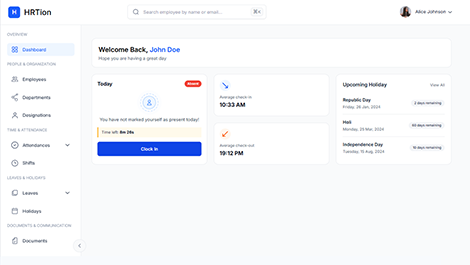
Major Signs You Need HRTion as an Online HR Leave Management System
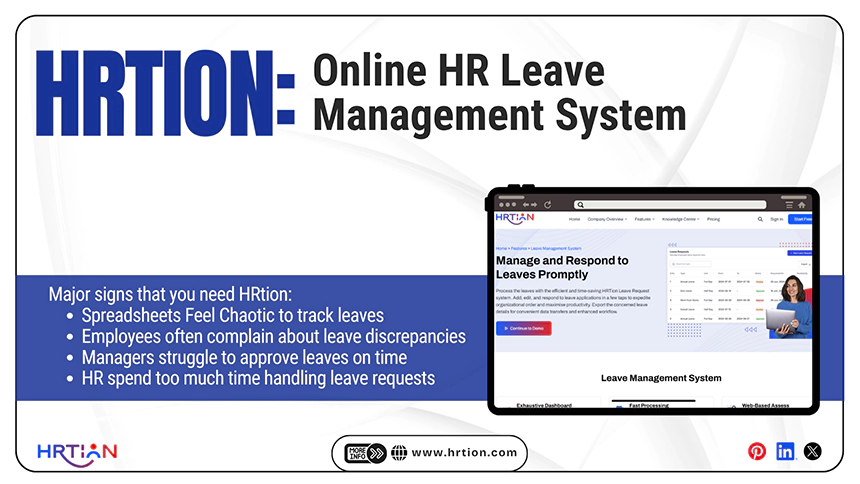
The major signs or indications that you need HRTion, the ultimate HR leave management system, are fourfold, as mentioned and elaborated below:
- Spreadsheets Feel Chaotic to track leaves
- Employees often complain about leave discrepancies
- Managers struggle to approve leaves on time
- HR spend too much time handling leave requests
1. Spreadsheets Feel Chaotic to Track Leaves
Is your company still using basic spreadsheet software, or even the pen and paper approach? If yes, you are in dire need of the HR solution. That will streamline the process and boost productivity manyfold.
2. Employees Often Complain about Leave Discrepancies
Out of the first approach to employee attendance handling, it is most likely that mistakes in the manual records will happen, leading to leave discrepancies. Thus, suppose you frequently face such problems as the employees’ side of the leave record doesn’t match the company’s side of the record.
In this case, you need one of the top leave management software systems available in the market to be used as a single source of the truth.
3. Managers Struggle to Approve Leaves on Time
Many companies start small but grow over time, thus requiring an efficient method to handle regular activities related to human resources. As the team gets bigger, maintaining records of attendance and leave on spreadsheets or paper becomes cumbersome and almost impossible.
The problem often manifests as managers or authorities struggling to approve leaves on time, causing disturbance in schedules across teams. This is also one of the signs you need to consider an online HR management solution.
4. HR Spend Too Much Time Handling Leave Requests
The fourth and final indication in this regard is this one. Analyse if the HR is taking too much time in processing leave requests. It might also be the case that most of the requests stay pending for days and are yet to be considered for approval.
Most firms handle leaves by email or online messaging apps, which leads to a tremendous backlog. If you are one such player in the economy, you need a smarter way to manage employee attendance at work and time off.
How Does the HRTion Streamline Your Leave Management System?
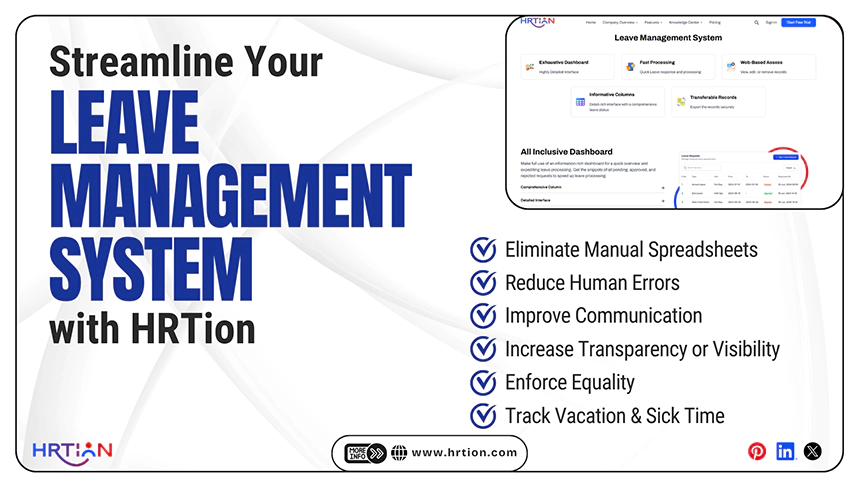
The employee leave management software HRTion streamlines workflow in the following ways, as elaborated below. In short, the software helps:
- Eliminate paperwork or manual spreadsheets
- Reduce human errors
- Improve communication
- Increase transparency or visibility
- Enforce equality
- Track vacation & sick time
1. Eliminate Paperwork or Manual Spreadsheets
HRTion solution manages employees’ work and leave days in a streamlined manner. With multi-level access, each user can go to the dashboard from their end and log the required information.
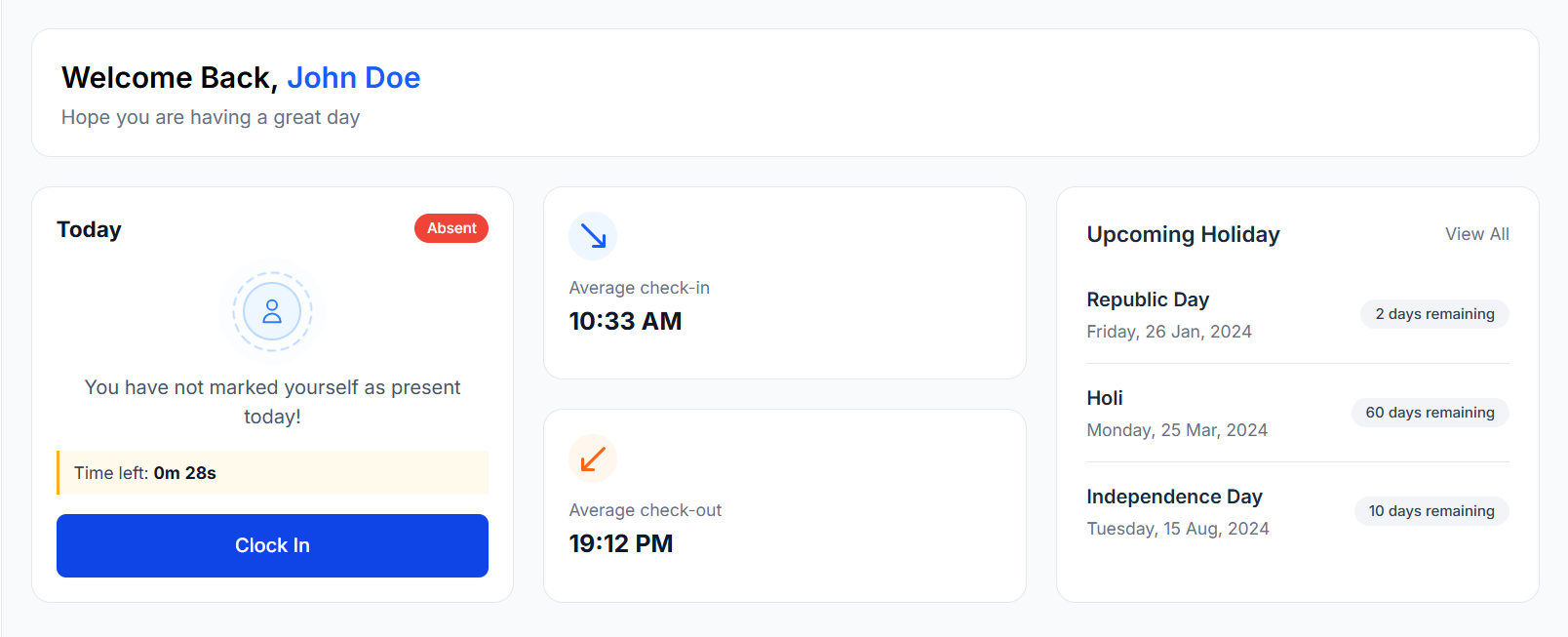
For example, the employee can log in and log out using the system and ask for leave on specific days. Afterwards, the HR or other concerned authorities can use this data or information to prepare the payroll without paper or spreadsheets.
2. Reduce Human Errors
The power of automation is immense. Thus, HRTion HR management software automates repeated tasks in the context of work attendance and payroll. With the cloud-based, centralized database, there is no need to calculate on paper or spreadsheets.
You just sort out the data as per the requirements, with just a few clicks, and get accurate numbers or deductions. The least involvement of humans in the calculation part reduces mistakes to a minimum.
3. Improve Communication
HRTion, as the top leave management software, provides a single source of truth. It is the all-in-one place where all employees’ attendance and leave information is recorded. Furthermore, whenever anyone needs to take leave, they have to make a request using the same platform. It ultimately improves communication, leading to fewer disputes.
4. Increase Transparency or Visibility
Next, the HRTion software streamlines the workflow by fostering transparency. Every stakeholder can access the data in its original form and facilitate the right decision at the moment. Furthermore, there is no need to ask for permission from an authority for such access.
5. Enforce Equality
With power, misbehavior is a common scenario. Thus, HRTion makes sure that, in your office or organization, every leave request is treated equally and fairly. When all leave requests are made through a centralized system that is visible to everyone, it promotes equality and fairness of treatment effortlessly.
6. Track Vacation & Sick Time
Finally, HRTion, being the best absence management software, effectively records vacation and sick leave days. Thus, there is no need to worry about sorting leaves into the desired categories. You can simply access the data in the desired format the moment you need it.
Quick Comparison Table: Best Leave Management Software for Modern HR
HRTion is the best leave management software, and that is what the summary comparison below highlights. The all-in-one solution, HRTion, at the top of the table, offers key insights into why it is the best among many available options.
| Software | Best for | Key Strengths | Free Trial | Pricing (approx.) |
| HRTion | All companies or organisations | A complete HRMS solution laden with the latest features and robust automation | Yes | $999 (depending on the plan and version) |
| BambooHR | Small or mid-sized companies | User-friendly, strong tracking, good reporting | Yes | $250/month |
| Rippling | Automation | Fast onboarding, comprehensive HRIS integration | Yes | $8/user/month |
| Workday | Enterprise | Advanced compliance, deep analytics | Yes | Not disclosed publicly |
| UKG Ready | Compliance | Powerful FMLA tracking, configurable workflows | No | $21–$29 per employee/month |
| ADP Workforce Now | All-in-one | Seamless payroll/benefits integration | No | $18–$27 per employee/month |
| Calamari | Global/remote | International compliance, QR codes, Slack/Google integration | Yes | $2.50 per employee/month |
| Vacation Tracker | Multi-level approval | Simple interface, Slack/Teams integration | Yes | $2/user/month |
| Zoho People | Small or mid-sized companies | Customizable, affordable, solid reporting | Yes | $1.25–$1.50/user/month |
| Leave dates | Visual tracking | Highly visual, good mobile app | Yes | $0.98 USD per user/month |
| Kissflow HR | Customization | Flexible, cloud-based, and automation-rich | Yes | $1,500/month |
Conclusion
HRTion is the best leave management software with its various cutting-edge features, such as a user-friendly interface, high customizability, automated leave calculations, real-time notifications & alerts, seamless interconnectivity between payroll and attendance, and many more, as highlighted above. It is the ultimate suite to revolutionize human resource management at every type of company, whether small or big, national or international.
FAQs
Does HRTion offer a free trial?
Yes. Free trials are available without the requirement of a credit card.
Is HRTion an expensive platform?
No. HRTion is not costly at all. It offers plans or upgrades at affordable prices.
Does HRTion provide 24/7 support?
At HRTion, you avail of 24/7 customer support without any extra charges.

Sunita Kumari is a Freelance Contributor Writer at HRTion, writing accurate, reliable, and informative content. She completed her Bachelor's from Rajdhani College of the University of Delhi. She has been a Human Resources Recruiter for almost 2 years, including over 1 year with Battersea Web Expert. Drawing on her recruitment and HR processes experience, she writes clear and practical payroll-related guides that help employees and job candidates better understand HR procedures and workplace practices.