- What is Employee Monitoring?
- What is Workplace Surveillance?
- Main Differences Between Employee Monitoring vs. Workplace Surveillance
- Examples of Employee Monitoring vs. Workplace Surveillance
- Pros and Cons of Employee Monitoring
- Pros and Cons of Workplace Surveillance
- Common Methods of Employee Monitoring
- Best Ways to Ethically Monitor Employees Without Surveillance
- Why Workplace Surveillance is a Grey Area
- HRtion: The Best Employee Monitoring Tool
- Conclusion
- FAQs
How would an employee react when they find that their every click, keystroke, and screen activity is being tracked?
“Breached!” Is the answer to this!
Even the numbers are revealing.
Thus, employee monitoring challenges HR professionals, especially when they are trying to move away from workplace surveillance.
Here’s a guide to help you draw the line between employee monitoring and workplace surveillance, balancing productivity, employee privacy, trust, and transparency without turning the workplace into a surveillance zone.
What is Employee Monitoring?
Employee monitoring refers to the process of tracking employees and evaluating work-related activities only. It includes attendance, performance, and productivity during working hours.
Various tools and technologies can help employers monitor how employees perform their duties, use company resources, and manage their time without invading their personal space.
The primary goal of monitoring is to improve workforce management, identify performance gaps, ensure accountability, and make informed HR decisions.
A few examples of employee monitoring are:
- Time and attendance tracking: Recording employees’ working hours, breaks, overtime, and attendance.
- Task and project tracking: Monitoring project progress, deadlines, and task completion.
- Performance reviews: Evaluating employee performance through KPIs, goals, and feedback.
- Application usage tracking: Understanding how employees use work-related applications and software.
- Productivity reporting: Reviewing completed tasks, workload distribution, and overall performance.
- Remote work tracking: Monitoring work schedules, project updates, and availability in distributed teams.
In a nutshell, employee monitoring isn’t the process of watching employees continuously throughout the day but rather focusing only on work-related activities.
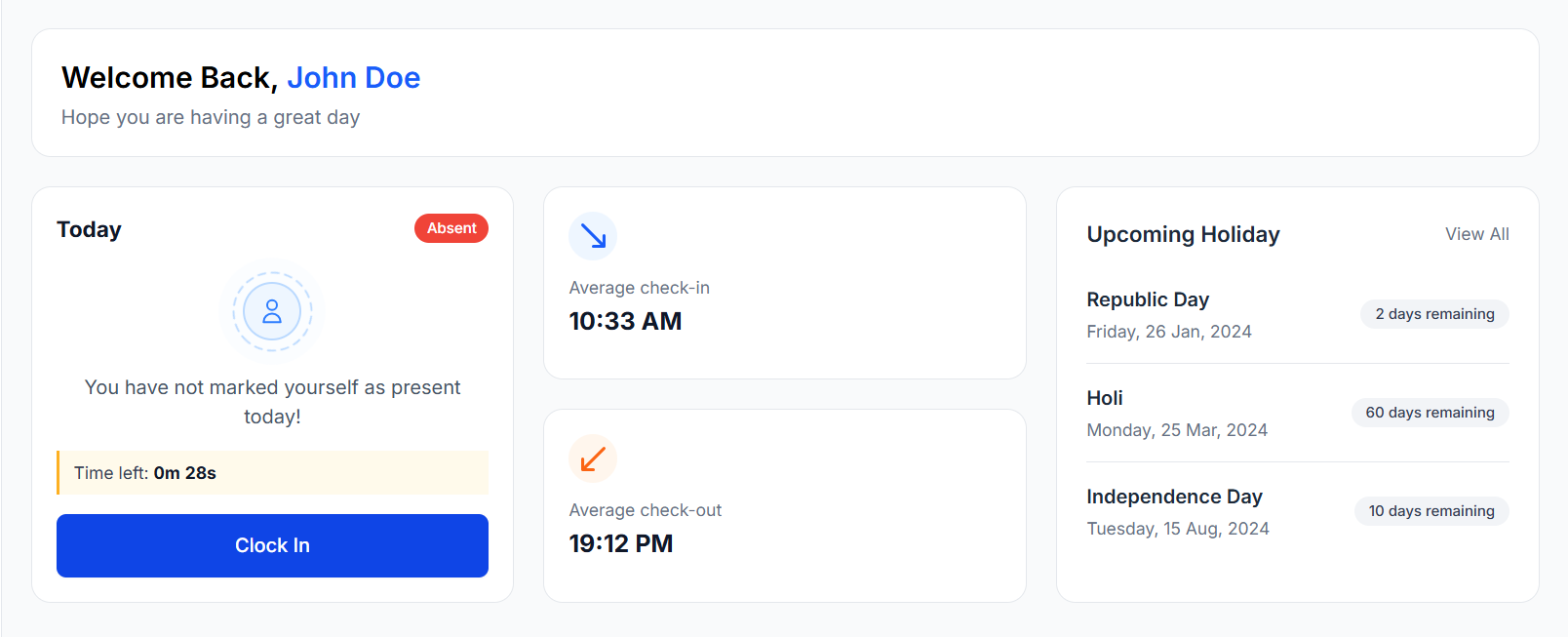
Manage the payroll, attendance, shift roles, and more in an all-encompassing HR suite. Your ultimate HR toolkit is just a click away.
What is Workplace Surveillance?
Workplace surveillance refers to observing, recording, or tracking activities and behavior in the workplace. It often involves technology-based methods that allow monitoring of every trivial to critical activity, such as digital movements, physical presence, communications, and more.
Organizations use workplace surveillance to protect company assets, prevent misconduct, maintain workplace safety, and ensure compliance.
Surveillance usually involves more detailed observation that can lead to privacy concerns.
A common example of workplace surveillance includes:
- CCTV cameras: Recording activities in offices, warehouses, parking areas, and other locations.
- Screen surveillance: Capturing employees’ computer screens through screenshots or screen recordings.
- Keystroke logging: Recording keyboard activity to understand computer usage.
- Email and communication monitoring: Reviewing work-related emails, messages, and communication channels.
- GPS tracking: Tracking the location of employees using company vehicles or work devices.
- Webcam monitoring: Using cameras to observe employees during working hours.
- Access control systems: Recording when employees enter or leave the workplace.
Workplace surveillance is ethical if it is serving legitimate business purposes. However, problems may occur when a company collects more information than required without transparency, resulting in a privacy breach.
Main Differences Between Employee Monitoring vs. Workplace Surveillance
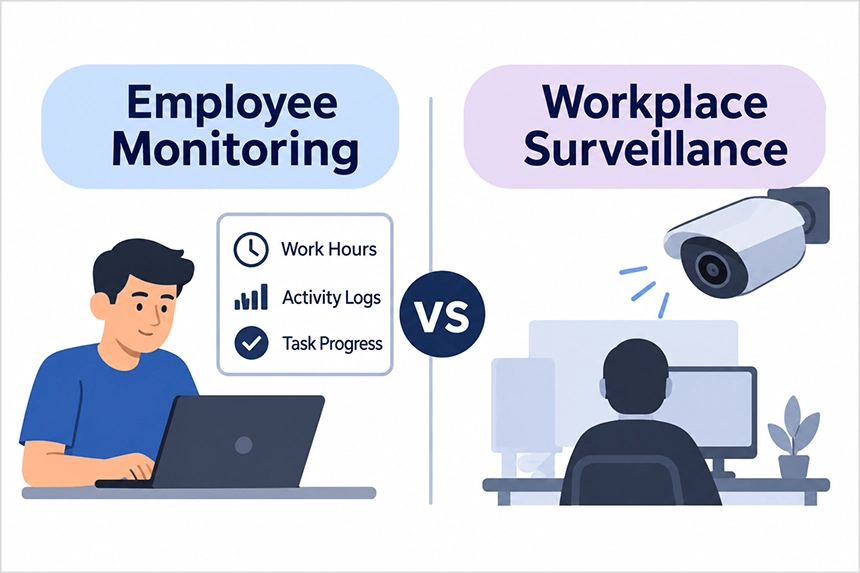
Employee monitoring and workplace surveillance share some similarities, but they differ in their purpose, scope, methods, and level of intrusiveness.
The biggest distinction is that employee monitoring generally focuses on work-related performance, PPIs, and activities, whereas workplace surveillance can involve broader tracking or observation of employee behavior, communications, and movements.
Here is a comparison to understand the differences:
| Comparison Factor | Employee Monitoring | Workplace Surveillance |
| Primary purpose | Track productivity, attendance, and performance | Observe activities and maintain workplace security |
| Main focus | Work-related activities and outcomes | Employee behavior, movements, and activities |
| Scope | Usually limited to specific work-related information | Can involve continuous or detailed observation |
| Common methods | Timesheets, performance reports, project tracking, and productivity software | CCTV, screen recording, GPS, webcam monitoring, and keystroke logging |
| Technology | HR software, attendance systems, and project management tools | Surveillance cameras, tracking software, and monitoring systems |
| Privacy concerns | Generally lower when limited to necessary work data | Can be higher due to extensive data collection |
| Employee awareness | Usually communicated through company policies | May involve visible or less obvious monitoring, depending on the practice and applicable law |
| HR application | Performance management and workforce planning | Security, compliance, and risk prevention |
Examples of Employee Monitoring vs. Workplace Surveillance
Consider a company with 50 remote employees.
The HR team uses time-tracking software to record working hours, project management software to review task completion, and monthly performance reports to evaluate employee progress.
Now, when the same company uses software that tracks every keystroke, monitors employees’ screens, includes webcams, and follows their computer activity at every moment, it becomes intrusive workplace surveillance.
Both approaches work on the basic agenda of collecting employee information, but their level of observation and potential impact on privacy are different.
Pros and Cons of Employee Monitoring
Employee monitoring can help organizations improve workforce productivity, manage workloads, and evaluate employee performance. However, if companies rely heavily on monitoring systems, employees may feel pressured or micromanaged.
Understanding both sides helps HR people to form monitoring practices that support business goals without negatively affecting workplace culture.
Pros of Employee Monitoring:
- Improved productivity: Employee monitoring helps employees understand how they spend working hours, identify distractions, and improve overall productivity.
- Increased accountability: Monitoring encourages employees to take responsibility for their tasks and ensures that work is completed within the expected deadlines.
- Enhanced security: It helps companies detect suspicious activities, prevent data breaches, and protect confidential business information.
- Better performance management: Employers can evaluate employee performance with measurable data, identify areas of improvement, and provide appropriate feedback.
- Effective time management: Monitoring tools help track working hours, attendance, and task completion, helping organizations to manage time and resources more effectively.
- Remote workforce management: For businesses with remote or hybrid employees, monitoring helps managers maintain visibility into work progress and ensure smooth coordination.
Cons of Employee Monitoring
- Privacy concerns: Continuously tracking employee activities can be overwhelming, as they may feel their personal space and privacy are being invaded.
- Reduced employee trust: Excessive monitoring can create an environment of suspicion, making employees feel that management doesn’t trust their abilities and professionalism.
- Increased stress and anxiety: Constant supervision and performance tracking may increase workplace pressure, causing stress, dissatisfaction, and burnout.
- Reduced creativity and independence: The feeling of constantly being watched can make employees less comfortable doing anything out of the box, experimenting with new ideas, or making independent decisions.
- Implementation costs: Employee monitoring software, equipment maintenance, and training can create additional expenses for organizations.
- Misinterpretation of data: Monitoring systems may not accurately reflect how employees are actually contributing; thus, it doesn’t give realistic tracking on productivity.
Pros and Cons of Workplace Surveillance
Workplace surveillance is not always welcomed by employees because it raises concerns about employee privacy, trust, and workplace well-being. But if done correctly, it can offer several benefits.
Pros of Workplace Surveillance
- Improved productivity: Monitoring employees’ work activities helps find inconsistencies and inefficiencies. Also, it ensures all deadlines are met.
- Enhanced security: Surveillance systems can help prevent data theft, unauthorized access, misconduct, or misuse of company resources.
- Better employee accountability: Monitoring encourages employees to remain focused on their responsibilities and follow company policies and procedures.
- Performance evaluation: Employers can use monitoring data to evaluate employee performance, find areas of improvement, and provide the right training and feedback.
- Prevention of misconduct: Workplace surveillance can discourage activities like harassment, fraud, theft, and inappropriate behavior.
Cons of Workplace Surveillance
- Violation of employee privacy: Constant monitoring of emails, calls, internet usage, and workplace activities can make employees feel that their personal privacy is being invaded.
- Increased stress and anxiety: Being continuously monitored can impose pressure, stress, and anxiety, which can cause poor mental well-being.
- Reduced trust: Excessive surveillance may create an atmosphere of suspicion between employers and employees, weakening workplace relationships.
- Lower employee morale: Continuous monitoring can make employees feel controlled rather than trusted, affecting job satisfaction, motivation, and creativity.
- Misinterpretation of data: Monitoring tools may not accurately reflect an employee’s actual contribution or performance.
- Risk of data misuse: Surveillance systems can collect sensitive information that can be misused or exploited in data breaches.
Common Methods of Employee Monitoring
Employee monitoring methods depend on their industry, workforce size, business requirements, and workplace policies.
Some methods measure work outcomes, while others focus on collecting employee information based on digital activities and physical movements.
Here are the most commonly used monitoring methods.
1. Time and Attendance Tracking
Time and attendance tracking is one of the most common forms of employee monitoring. It records when employees start and finish work, how many hours they work, and whether they follow the assignments on time.
Organizations use attendance management software, digital timesheets, biometric systems, and employee self-reporting tools to maintain accurate records.
This method helps HR teams manage payroll, calculate overtime, track absenteeism, and monitor attendance patterns.
2. Computer and Screen Monitoring
Computer monitoring software tracks how employees use work devices. It depends on the software and settings; it may record application usage, website visits, active and idle time, screenshots, and even screen recording.
These tools help understand work patterns, protect company systems, and identify potential security risks.
Important Note: HR should avoid treating screen activity just to track employee productivity.
3. Email and Internet Monitoring
Some organizations monitor communication channels, email accounts, and internet usage to protect confidential and sensitive data and prevent inappropriate use of company resources.
But the company must communicate which platforms are being tracked to collect data, and they must take care of the related privacy requirements
4. GPS and Location Tracking
GPS tracking lets organizations monitor employees’ locations, especially those who work outside traditional office environments.
These methods are common in industries like transportation, logistics, delivery, field services, and construction.
For example, a delivery company may use GPS tracking to monitor vehicle locations, plan routes, and estimate delivery times.
But the company must avoid unnecessary location tracking outside of working hours or when employees are using personal devices.
5. Video Surveillance and CCTV
CCTV cameras are used widely in offices, warehouses, retail stores, manufacturing facilities, and other business premises.
They help organizations monitor workplace security, prevent unauthorized access, and investigate incidents.
However, cameras should be positioned carefully. Monitoring private areas, such as restrooms and changing rooms, can raise serious privacy and legal issues.
6. Project and Task Monitor
Project management tools allow managers to track assigned tasks, deadlines, project progress, and employee responsibilities.
Unlike continuous surveillance, this method is ideal for observing throughout the day.
7. Biometric Monitoring
Biometric systems use unique physical or behavioral characteristics, such as fingerprints, facial recognition, or iris patterns, to verify employee identities.
Companies may use these systems for attendance management and restricted-area access.
However, biometric information is sensitive personal data in many legal frameworks. HR teams should carefully assess the necessity, security, retention, and legal requirements before implementing such methods.
Best Ways to Ethically Monitor Employees Without Surveillance
1. Promote Transparency
Organizations should clearly inform employees about any monitoring practices, including what information is collected, why it is collected, and how it will be used.
Being transparent helps build trust and reduces concerns about hidden surveillance.
2. Limit Tracking to Professional Data
Employers should focus on collecting work-related information, such as project progress, task completion, and performance results, rather than tracking employees’ personal activities.
Personal emails, private messages, and unrelated browsing activities must be protected from unauthorized access.
3. Establish Clear Privacy Boundaries
Organizations should maintain a clear distinction between employees’ professional responsibilities and personal lives. Monitoring should be proportionate to business requirements and should avoid unnecessarily strict measures.
Webcam access, audio recording, personal device tracking, and surveillance in private spaces are not appropriate measures. Respecting these boundaries helps protect employee dignity and mental well-being.
4. Create a Clear Company Policy
It is important to establish a clear written employee monitoring policy or employee handbook explaining what monitoring is conducted, its purpose, the type of data collected, and what information is stored.
Employees should have easy access to this policy so they understand their privacy rights and workplace responsibilities.
5. Use Regular Feedback and Check-ins
Instead of constantly tracking employee activities, managers should conduct regular one-on-one meetings and performance discussions.
According to Gallup and Workhuman’s 2024 research, “employee engagement was 48% among employees receiving feedback weekly, compared with just 23% among those receiving feedback a few times a year.” This highlights the importance of regular communication and constructive feedback.
6. Promote Self-Reporting
The company must encourage employees to share their work progress through weekly updates, project reports, and task management tools.
This allows managers to understand project performance without continuously monitoring screens, keystrokes, or online activities.
7. Encourage a Trust-Based Work Culture
Employers should create a supportive environment where employees feel trusted and valued rather than constantly watched.
Rather, focus on work quality, results, teamwork, and employee development can improve workplace relationships. It is important to build a stronger workplace culture.
Overall, ethical employee monitoring is not about tracking them aggressively but about maintaining accountability, improving performance, and protecting organizational interests.
But constant and intense workplace surveillance can be counterproductive. This can create serious concerns about personal privacy and autonomy in workplaces.
Why Workplace Surveillance is a Grey Area
Workplace surveillance is considered a grey area because employers have legitimate reasons to monitor business activities, but employees also have privacy rights and reasonable expectations of personal space.
- Disturbance between privacy and productivity: Employers have the right to monitor workplace activities to ensure productivity, but employees also have the right to personal privacy.
- Security vs. employee freedom: Surveillance helps organizations prevent data leaks, theft, and misuse of company resources. However, excessive monitoring can make employees feel constantly watched.
- Unclear boundaries: There are no universally accepted boundaries regarding how much surveillance is appropriate, making it difficult to distinguish between reasonable supervision and invasion of privacy.
- Lack of transparency: Employees may not always be fully informed about what data is being collected, how it is monitored, and how it will be used.
- Legal vs. ethical issues: Some forms of workplace surveillance may be legally permitted but can still raise ethical concerns about employee dignity, trust, and freedom.
- Impact on employee mental health: Constant monitoring can create stress, anxiety, and pressure and can reduce employee motivation and job satisfaction.
- Misuse of collected data: Information gathered through surveillance could be misused, shared without proper authorization, or used unfairly to evaluate employee performance.
- Consent and awareness: Employees may have limited control over workplace monitoring, especially when surveillance is introduced without clear communication or meaningful consent.
- Data security and misuse: Collected personal details can be accessed, leaked, or used for purposes other than what they were meant for.
HRtion: The Best Employee Monitoring Tool
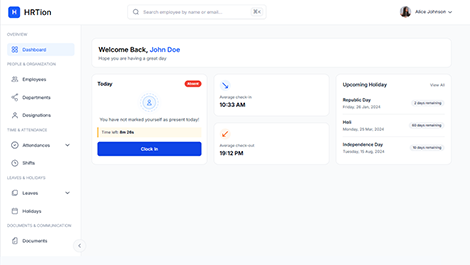
HRtion is an employee monitoring and workplace management solution designed to help organizations manage productivity, track work activities, and improve team performance.
It allows companies to gain insights into employees’ work patterns while supporting better workforce management and accountability.
Unlike excessive surveillance practices, organizations should use tools like HRtion responsibly, focusing on work-related performance and productivity rather than unnecessarily invading employees’ personal lives.
Some of the key benefits of using HRtion include:
- Employee productivity tracking
- Work activity and monitoring
- Performance management
- Workforce management
- Improved accountability
HRtion can be highly useful for companies looking to balance productivity with responsibility and ethical monitoring.
Conclusion
Employee monitoring and workplace surveillance may serve similar business purposes, but they are different in terms of scope, methods, and potential impact on employee privacy.
Both approaches can benefit the company but may not benefit employees if not used responsibly.
HR professionals can use tools and technology to establish transparent policies, respect employee privacy, and focus on measurable work outcomes rather than continuous monitoring.
FAQs
What is the difference between employee monitoring and workplace surveillance?
Employee monitoring focuses on tracking work-related activities, attendance, productivity, and performance. On the other hand, workplace surveillance involves observing employees through cameras, screen recordings, GPS tracking, and other technologies.
Is employee monitoring legal?
Employee monitoring is generally permitted in many places when organizations follow applicable employment, privacy, and data protection laws.
Can employers monitor employees without their knowledge?
The rules depend on the country and circumstances. Some jurisdictions require employers to inform employees about monitoring. But limited and proper monitoring is allowed in certain situations, including specific investigations.
How can HR monitor employees without invading their privacy?
HR teams can use performance reviews, project management software, clear KPIs, regular check-ins, and employee feedback to evaluate performance. Next, communication is key. Let employees know about policies clearly and collect only necessary information for legitimate business purposes.

Bhavesh is a Guest Writer at HRTion with an academic background in HR. He did an HR management course in 2025. Before transitioning to HR content writer, he worked as an Academic Content Writer at Trident Management for over 6 years. His expertise in recruitment processes & strategies helps him write detailed and clear content that is not only informative but also accessible for everyone.